
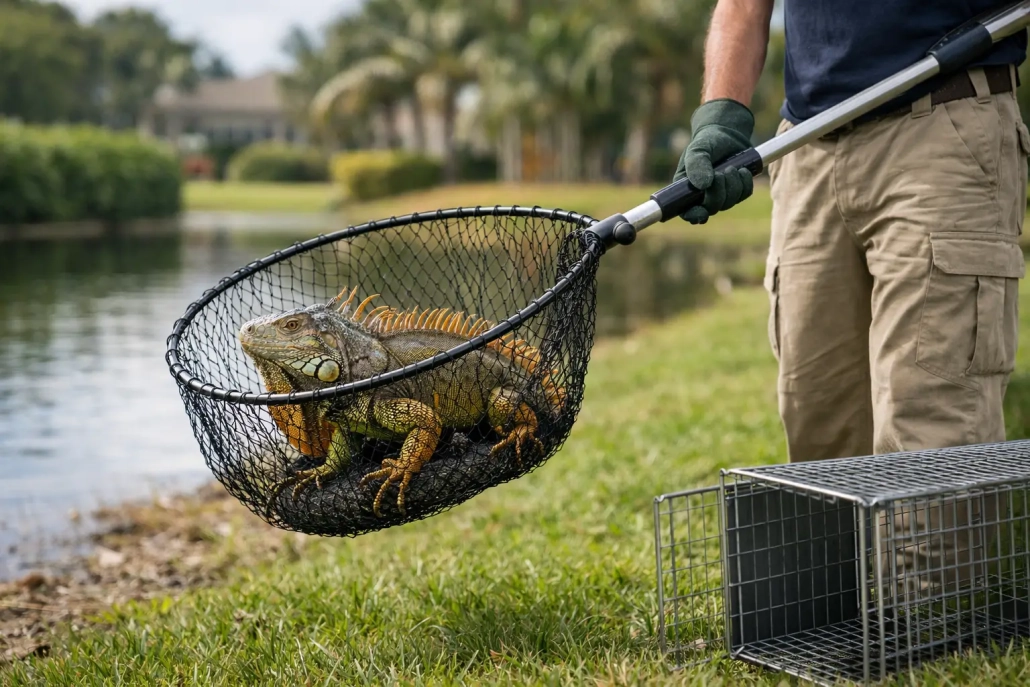
How to Remove Iguanas Safely From Your Property
An iguana on a fence is one thing. Iguanas digging beneath a pool deck, seawall, walkway, or air-conditioning unit are a property problem that can get expensive fast. Knowing how to remove iguanas safely means protecting people, pets, and the structure they are already working to undermine.
In South Florida, green iguanas are invasive. They reproduce quickly, settle near water and warm cover, and return to places where food, shelter, and burrowing space are easy to find. Waiting for them to move along is rarely a reliable plan. If the conditions stay favorable, the iguanas usually do too.
Start by Identifying the Real Problem
A single adult iguana may be visible only during the day, but the damage can continue after it disappears into landscaping or a burrow. Adult males can be especially territorial, and nesting females may excavate repeatedly in loose soil around foundations, retaining walls, pool equipment, and seawalls.
Look for fresh holes with loose soil pushed outward, claw marks near patio edges, droppings on docks or pool decks, chewed plants, and iguanas gathering in sunny areas near a water source. Commercial properties may see damage near restaurant patios, marina slips, golf-course cart paths, storage yards, and mechanical equipment.
Burrows deserve immediate attention. A hole beneath a slab, driveway, or seawall is not just a landscaping issue. Repeated excavation can wash out soil, weaken support, create trip hazards, and contribute to much larger repairs after heavy rain or high water.
Why DIY Iguana Removal Can Go Wrong
Many property owners first try to chase iguanas away with a hose, loud noises, or a dog. That may move one animal for a few minutes, but it does not fix the habitat that drew it in. It can also push an iguana deeper into a burrow, under a deck, or into equipment areas where removal becomes harder.
Trying to grab an iguana is a bigger mistake. They can bite, scratch, whip with their tails, and carry salmonella in their droppings. A cornered animal may also bolt through a screened enclosure, jump into a pool, or wedge itself behind HVAC equipment. Children and pets should be kept away from active iguana areas, especially where droppings are present.
Do not use poison, glue boards, homemade snares, or improvised traps. These methods can injure non-target wildlife, create risks for pets, and leave a homeowner with a distressed animal and a legal problem. Do not relocate an iguana without understanding current Florida rules. Wildlife regulations and approved methods can change, and the location, species, and property type all matter.
How to Remove Iguanas Safely: Control Access First
Safe removal starts with making the property less inviting. This is not a substitute for removing established iguanas, but it helps stop the same cycle from repeating after service is complete.
Remove fallen fruit and avoid leaving pet food outdoors. Keep trash lids secure, clean up birdseed, and eliminate standing water where practical. If an iguana has regular access to a dock, pool ledge, open patio, or low roof, it has a travel route worth addressing.
Trim dense vegetation around structures and remove clutter that creates cool hiding spots. Protect vulnerable ornamental plants with appropriate barriers. Fence gaps, damaged screens, and openings around utility lines should be repaired when they are safe to access. On waterfront property, the goal is not to seal off every inch of the landscape. It is to reduce easy shelter and protect the places where burrowing would cause the most damage.
Do not fill an active burrow while an iguana may still be inside. That can create an animal-welfare issue and may cause the iguana to dig an alternate exit closer to a foundation or hardscape. A burrow should be inspected, cleared using an appropriate removal plan, and then repaired with material suited to the location.
Use a Professional When There Is Damage or Recurring Activity
A licensed, insured wildlife-control professional is the sensible choice when iguanas are burrowing, entering structures, damaging equipment, or returning after basic deterrents. Professional removal is not just about catching what is visible. It means assessing where the animals are feeding, nesting, hiding, and moving across the property.
That matters on a residential lot, and it matters even more at a marina, condominium, hotel, golf course, or commercial facility. A recurring iguana issue can affect guest areas, employee safety, sanitation, landscaping budgets, and the condition of costly infrastructure. One weak section near a seawall or drainage feature can become an emergency repair after a major storm.
A qualified provider can use lawful, humane, property-appropriate methods and explain what work is being performed. They should be able to identify active areas, remove the nuisance animals, and recommend practical exclusion or site changes. Ask direct questions about licensing, insurance, removal methods, expected timing, and whether burrow repair or prevention recommendations are included. Straight answers are a good sign.
Florida Iguana Ops takes that practical approach: show up, assess the damage, remove the problem safely, and help protect the property from the next round of activity. No gimmicks or vague promises. Just local service focused on the areas iguanas target most.
Protect People From Droppings and Contaminated Areas
Iguana waste is not something to ignore, particularly near pools, outdoor kitchens, docks, children’s play areas, and restaurant seating. Droppings can contain bacteria, including salmonella. The risk rises when waste is tracked indoors on shoes, washed into water features, or left where children or pets may touch it.
Wear gloves when cleaning droppings and avoid dry sweeping, which can scatter contaminated dust. Pick up solid waste with disposable materials, bag it, and disinfect the surface using a cleaner suitable for that surface. Wash hands thoroughly afterward. If waste has collected near food-preparation areas, pool furniture, or HVAC equipment, give those locations extra attention.
For larger accumulations or areas with difficult access, it is better to have the site evaluated than to send maintenance staff into a confined space with an active iguana problem. Safety procedures should match the property, especially where ladders, roofs, docks, electrical equipment, or unstable ground are involved.
Watch for These Signs That the Problem Is Growing
Iguana activity tends to increase before property owners realize it. Act sooner if you notice several animals using the same area, new burrows appearing after they are filled, repeated droppings in high-traffic spaces, or landscaping and hardscape damage expanding from one spot to another.
Also pay attention after cold weather. Iguanas can become sluggish in low temperatures, but they are not automatically gone or dead. Handling a cold-stunned iguana can still lead to injury when it warms up and becomes active. Keep your distance and arrange proper removal rather than treating it as harmless.
The same goes for iguanas near water. They are strong swimmers and can disappear quickly, then return to the same shoreline, dock, or canal-side landscaping. A removal plan should account for the surrounding habitat, not just the animal seen at that moment.
Do Not Let a Small Burrow Become a Major Repair
Iguanas are easier and less costly to address before burrows spread beneath concrete, retaining walls, or utility areas. If you see fresh digging, droppings, structural gaps, or repeated iguana traffic, document the area, keep people and pets clear, and get a professional assessment.
Quick action protects more than your landscaping. It helps preserve the pool deck, seawall, foundation, equipment, and outdoor spaces you paid for. The right time to deal with an iguana problem is while it is still a nuisance, not after it turns into a repair bill.



Leave a Reply
Want to join the discussion?Feel free to contribute!