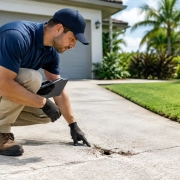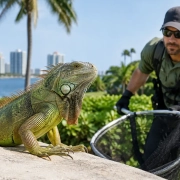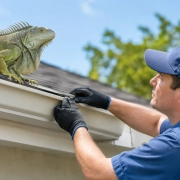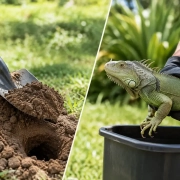
A fresh iguana burrow beside a pool deck, seawall, driveway, or HVAC pad is not just a hole in the ground. It is a warning that soil is being displaced where your property needs support. The question of burrow filling versus iguana removal comes up often because filling a hole feels like the fastest fix. But if the iguanas are still on-site, they can reopen that burrow or start another one nearby.

For most South Florida properties, removal and burrow repair are not competing solutions. They are two parts of the same property-protection job. The order matters: address the active iguanas first, then inspect and repair the damage they leave behind.

Why Filling an Active Burrow Usually Fails

Iguanas burrow for shelter, nesting, and protection from weather. Once they find a favorable area with loose soil, cover, warmth, and access to food or water, they may keep returning. A filled burrow does not remove those conditions, and it does not remove the animal that created the problem.

A homeowner may pack soil into an opening on a Friday, only to find fresh digging by Monday. That can be frustrating around landscaping. Near a seawall, foundation, retaining wall, sidewalk, dock, or pool deck, it can become costly.

The concern is not always the visible entrance. Burrows can extend farther underground than expected, leaving voids that weaken surrounding soil. Water can move through those disturbed areas, particularly after hard rain or irrigation. Over time, that movement may contribute to settling, cracking, erosion, or instability around structures that were never designed to sit over hollowed-out ground.

Filling first can also make it harder to tell whether the burrow is still active. If an iguana is inside, sealing the entrance is not a dependable removal method. The animal may find another exit, dig around the fill, or move its activity to another vulnerable part of the property.

Burrow Filling Versus Iguana Removal Is the Wrong Choice

The better question is: what needs to happen first, and what level of repair does this location need?

Professional iguana removal addresses the cause of recurring burrows. A trained wildlife-control team evaluates activity across the property, not just at the one hole you noticed. That matters because one visible burrow can be part of a larger pattern around canal edges, dense landscaping, rock piles, sheds, docks, pool equipment, or warm mechanical areas.

After active iguanas are removed, the affected area can be assessed more accurately. Small, shallow holes in open landscaping may need straightforward backfilling and restoration. Damage beside a seawall, concrete slab, paved drive, retaining wall, or building foundation deserves more caution. In those areas, the right repair may require compaction, drainage review, or evaluation by a qualified structural or marine professional.

Removal does not replace repair. Repair does not replace removal. Skipping either step can leave the property exposed.

When a Burrow Needs Immediate Attention

Not every hole in a lawn is an emergency, but location changes the risk. A burrow that appears near a seawall, pool deck, walkway, dock, driveway, foundation, or air-conditioning equipment should be treated seriously. The same goes for areas where soil is sinking, pavers are shifting, concrete is cracking, or water is washing into the opening.

Commercial properties have additional exposure. At a marina, a damaged bank or compromised walkway can create a safety issue for guests and staff. At a golf course or community property, recurring digging near cart paths, landscaping, and water features can create maintenance headaches that never seem to end. For property managers, waiting until the damage becomes obvious is usually the expensive route.

If you see an active iguana entering or leaving the burrow, fresh soil piled at the entrance, claw marks, droppings, or new openings nearby, do not assume a quick shovel-and-soil repair will solve it. Document the area, keep people and pets away from unstable ground, and get the animal activity addressed before closing up the site.

What Professional Iguana Removal Changes

A professional service is not just about taking one iguana off a property. It is about reducing the repeat activity that keeps damaging the same areas.

A proper visit starts with identifying where iguanas are feeding, basking, hiding, and entering the property. That may include inspection around landscaping, fences, water edges, utility areas, patios, rooflines, docks, and pool equipment. The goal is to remove active nuisance iguanas safely and legally while helping the owner understand where the property remains vulnerable.

This approach also protects people from unnecessary risks. Iguanas can scratch, bite, and whip with their tails when handled. Their droppings can create sanitation concerns near patios, pools, docks, outdoor kitchens, and shared common areas. Trying to trap or handle an animal without the right experience can turn a property issue into a personal injury or cleanup problem.

Florida Iguana Ops provides licensed and insured removal for homeowners and commercial properties that need a straight answer and a job done right. No gimmicks, no runaround. The focus is on removing invasive iguanas before their digging creates a bigger repair bill.

Repairing Burrows the Right Way After Removal

Once the active animal issue is under control, repair should match the site. Simply covering a burrow entrance with loose topsoil may make the lawn look better for a day, but it may not restore support below the surface.

For a shallow landscape burrow, the work may involve clearing loose material, filling the void with appropriate soil, compacting in layers, and restoring sod or mulch. The area should be watched for renewed digging or settling, especially after rain.

For burrows near hardscapes or structural features, a deeper inspection is the smart move. Soil loss beneath pavers, slabs, seawalls, and equipment pads is not something to guess at. If the ground is soft, sunken, cracked, or washing away, contact the appropriate repair professional before placing weight on the area or covering up the evidence.

Do not pour concrete into an active burrow or attempt to flood it. Those shortcuts can push the problem elsewhere, harm surrounding landscaping, affect drainage, and complicate a later inspection. They also do nothing to control other iguanas already using the property.

Prevention After the Burrow Is Closed

No property can be made completely unattractive to wildlife, especially near canals, lakes, and coastal areas. Still, a few practical adjustments can reduce repeat pressure after removal and repair.

Keep fallen fruit picked up, secure pet food, and avoid leaving food scraps in outdoor areas. Trim dense ground cover where iguanas can hide. Repair damaged fencing where practical, and pay close attention to gaps around sheds, docks, equipment enclosures, and landscaping borders. Regular monitoring matters most after heavy rain, during nesting activity, and when you have seen iguanas repeatedly using the same part of the property.

The key is not to mistake prevention for a substitute for removal. If iguanas are already established and burrowing, reducing attractants alone is rarely enough. Active control comes first, then maintenance helps protect the work.

Protect the Ground Before Damage Spreads

A burrow can look minor until rain, erosion, and repeat digging turn it into a compromised walkway, damaged deck edge, or costly seawall concern. Filling it may be part of the fix, but it should not be the whole plan.

If you are seeing fresh iguana activity or recurring holes around your South Florida property, act while the damage is still limited. Remove the animals, inspect the ground honestly, and repair the area based on the risk instead of hoping the next shovel full of dirt holds.
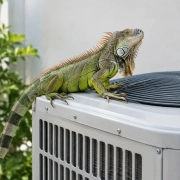
A warm outdoor condenser can become a regular iguana hangout fast. It offers a raised perch, heat from the equipment, nearby landscaping, and shelter around the pad or line set. So, can iguanas damage air conditioners? Yes. The damage is not always a dramatic broken unit on day one, but repeated iguana activity can create repair bills, poor system performance, unsanitary conditions, and a bigger property-control problem.

For South Florida homeowners, property managers, and business owners, the right move is to treat iguanas around HVAC equipment as more than a nuisance. Protect the unit, address the animals safely, and do not wait until a small issue becomes an emergency service call during the hottest part of the year.

How Iguanas Damage Air Conditioners

Iguanas do not have to chew through a wire to cause trouble. Their weight, claws, tails, droppings, digging behavior, and repeated use of the area can all affect an outdoor AC unit and the ground supporting it.

A large adult iguana climbing on a condenser can bend or loosen a fan guard, damage light panels, and leave scratches on housing components. If an animal gets inside a damaged or open cabinet, it can interfere with the fan or electrical components. That is a safety concern as much as an equipment concern.

Droppings are another problem. Iguana waste can build up on top of the unit, around the fan guard, and near the pad. Rain can carry that waste into surrounding areas, while dried debris and nesting material can restrict airflow. A condenser needs open space and steady airflow to shed heat. When airflow is reduced, the system has to work harder, which can raise energy use and place added strain on the compressor.

The ground around the unit matters too. Iguanas are known for burrowing. When they dig under or beside a concrete pad, pavers, or a landscaped equipment area, they can undermine the soil that keeps the condenser level. A tilted or settling pad may stress refrigerant lines, drainage connections, and electrical conduit. It can also make future HVAC service more difficult.

The Risk Is Often Indirect, but Still Expensive

Not every iguana near an air conditioner will cause immediate damage. A single animal passing through the yard is different from several iguanas using the same unit as a daily sunning spot or shelter. The concern rises when there are visible droppings, repeated climbing, fresh burrows, or signs that the unit has become part of an established route through the property.

The most expensive issues are often indirect. A loose panel can let more debris into the cabinet. A shifted pad can put tension on a line. A fan that cannot move air properly can contribute to overheating. None of those problems should be written off as normal wear when there is active iguana traffic around the equipment.

Commercial properties have more at stake. One damaged or poorly performing condenser can affect tenants, guests, restaurant operations, office comfort, equipment rooms, or customer areas. At a marina, golf course, condominium, or retail site, recurring iguana activity around mechanical equipment can also create a sanitation and appearance issue. Waiting for a full breakdown is usually the costly choice.

Signs Iguanas Are Affecting Your AC Unit

Look around the entire unit, not just on top of it. Fresh droppings, claw marks, scattered mulch, disturbed soil, and burrow openings near the pad all point to repeat activity. You may also notice bent fan guards, debris caught around the housing, or a new lean in the concrete pad.

Pay attention to changes in how the system runs. Rattling, banging, reduced cooling, frequent cycling, or an outdoor fan that sounds strained should be checked by a qualified HVAC technician. Those symptoms do not prove iguana damage, but they are not something to ignore when reptiles have been active around the condenser.

If you see an iguana inside the equipment area or hear an animal moving in the cabinet, keep clear. Do not reach through a fan guard, remove electrical panels, or spray the animal with water. Outdoor AC equipment carries electrical hazards, and a cornered iguana can bite or whip with its tail.

What to Do When Iguanas Are Around Your Condenser

Start by giving the unit a safe visual inspection from a distance. Check for fresh waste, burrows, settling soil, damaged guards, and overgrown vegetation. Take photos if you manage a commercial property or need to document recurring conditions for maintenance records.

If the unit is making unusual noise, has visible damage, or is not cooling properly, contact an HVAC professional. They can inspect the fan, electrical components, refrigerant lines, mounting pad, and airflow clearance. Wildlife removal and HVAC repair are different jobs, and treating only one side of the problem can leave you right back where you started.

For active iguana activity, professional removal is the practical next step. Trying to chase iguanas away may work for an afternoon, but it does not solve the reason they keep returning. A trained wildlife-control team can remove the animals safely and help identify the travel paths, burrows, and habitat conditions that are putting your equipment at risk.

Florida Iguana Ops handles invasive iguana removal with property protection in mind. That means looking beyond the animal on the condenser and addressing the activity around the pad, landscaping, walls, walkways, and other vulnerable areas. No gimmicks, no runaround – just local professionals who show up and do the job right.

Preventing Iguanas From Returning to HVAC Equipment

Once the animals are removed and the unit has been inspected, make the area less inviting. Keep shrubs and groundcover trimmed back so iguanas do not have easy cover right beside the condenser. Clear leaf litter, loose piles of branches, and stored items that create hiding places. Repair broken fencing or gaps that give iguanas an easy route into a courtyard, equipment yard, or pool area.

Physical barriers can help, but they need to be installed carefully. Any enclosure around an AC unit must preserve manufacturer-required airflow and technician access. A barrier placed too close to the condenser can create the same airflow problem you are trying to avoid. Before adding screens, fencing, or covers, confirm the clearances with an HVAC professional.

Burrows near the pad should not simply be filled while an iguana may still be using them. That can force the animal to dig elsewhere, potentially closer to a foundation, driveway, seawall, or another mechanical unit. Removal first, then proper burrow management and site cleanup, is the safer sequence.

It also helps to think beyond the condenser itself. A property with ripe fruit, dense waterfront vegetation, open access under decks, and warm paved surfaces gives iguanas plenty of reasons to stay. You may not eliminate every attractant, but reducing shelter and addressing the active population can make a real difference.

Do Not Let a Perch Become a Repair Bill

An iguana sitting on an air conditioner may look like a minor backyard annoyance. Repeated activity is different. Droppings, debris, digging, and physical contact can turn a reliable cooling system into a maintenance headache, especially when South Florida heat makes AC failure hard to tolerate.

If you are seeing iguanas on or around your condenser, act before the unit starts showing symptoms. Get the equipment checked when needed, remove the animals safely, and protect the ground and access points around the system. A little attention now can keep your air conditioner from becoming the next expensive part of an iguana problem.

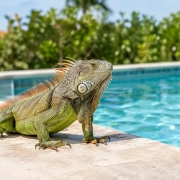
An iguana stretched out beside the pool may look like a nuisance you can deal with later. Around South Florida pools, later can mean droppings on the deck, fresh burrows under pavers, damaged landscaping, and an animal that has learned your property is a reliable place to eat, warm up, and hide. Pool iguana safety means protecting people, pets, and the structure around the water before a small sighting becomes a recurring property problem.

Iguanas are invasive in Florida, and they are drawn to pool areas for the same reasons homeowners enjoy them: sun, water, cover, and landscaped food sources. A clean-looking deck can hide a bigger issue underneath. If iguanas are burrowing along a pool edge, retaining wall, or patio, the risk is not just an unpleasant encounter with wildlife. It is damage that can become expensive to repair.

Why Iguanas Create Pool Safety Problems

Iguanas are not usually looking for a fight, but they can bite, scratch, whip with their tails, and react defensively when cornered. That matters when children, guests, pets, or maintenance crews are moving through a confined pool area. Never try to grab an iguana, chase it into a corner, or use a pool net to remove it. A startled animal can injure someone or end up trapped in the water.

The more common concern is sanitation. Iguana droppings can carry salmonella and other bacteria. On a pool deck, patio furniture, outdoor kitchen counter, or walkway, that waste is more than an eyesore. It creates a contamination concern where people are barefoot, children play, and food may be served.

Droppings can also create a slip hazard when they are wet or stepped on. Treat any area with fresh waste carefully. Keep children and pets away, wear gloves, clean the surface thoroughly, and wash your hands afterward. Do not pressure wash droppings directly into the pool or toward drains without first removing the solid waste safely.

The Damage You Cannot Always See

A pool deck is not just concrete or pavers on top. Beneath it may be compacted fill, plumbing, electrical lines, drainage components, and structural support that keeps the surface level. Iguanas dig burrows for shelter and nesting, and those burrows can undermine soil around decks, walkways, planters, and nearby foundations.

Early warning signs include a hole near the deck edge, loose pavers, sinking spots, cracks that seem to be growing, or soil washing out after rain. You may also see claw marks, tracks, fresh dirt pushed out of a hole, or repeated iguana activity around the same hedge line or retaining wall.

One burrow does not automatically mean your pool deck is failing. The risk depends on its location, depth, soil conditions, drainage, and how much traffic the area gets. But it is not something to ignore. A soft spot beside a pool can turn into a tripping hazard, and repair costs rise quickly once pavers shift or concrete settles.

Iguanas also use equipment areas for shelter. Check around pool pumps, heaters, filters, electrical conduits, and landscape beds near the equipment pad. Their presence can leave waste around service areas and create difficult access for technicians. If you notice animals repeatedly entering an equipment enclosure, do not seal it up while they may still be inside.

Pool Iguana Safety Starts With Smart Habits

The first job is to make the pool area less attractive without creating a risky confrontation. Remove fallen fruit, keep pet food indoors, and avoid leaving food scraps in outdoor trash cans. If iguanas are feeding on ornamental plants near the pool, consider whether those plants need protection or replacement after the active problem is handled.

Keep gates closed and inspect the lower edges of fencing around the pool and yard. Iguanas are capable climbers, so fencing alone will not solve every problem. Still, closing easy access points and reducing hiding cover around the deck can make the property less convenient for them.

Pay attention to the water itself. Iguanas can end up in pools and may struggle to get out, especially in pools with steep walls. A pool escape ramp designed for small wildlife can reduce the chance of an animal drowning in the water. It is a preventive measure, not a removal plan. If an iguana is actively using your pool area, the underlying attraction and access points still need to be addressed.

For daily safety, teach children not to approach iguanas, feed them, or throw objects at them. Keep dogs on a leash when an iguana is nearby. Dogs often trigger a defensive response, and a fast-moving chase around wet decking is a bad situation for everyone.

What to Do When an Iguana Is Near the Pool

Give the animal space and move people and pets away from the immediate area. If the iguana has a clear route out of the yard, do not block it. Keep an eye on where it goes, particularly if it disappears under a deck, into a hedge, behind pool equipment, or into a visible burrow.

If the animal is in the pool, do not jump in after it or try to capture it by hand. Keep swimmers out of the water. A professional can assess the situation and remove the animal without turning a wildlife problem into an injury or sanitation issue.

Afterward, inspect the surrounding area. Look for droppings, disturbed soil, holes along the deck, and signs of additional iguanas. Seeing one large iguana may mean there are others using the same food source, basking area, or burrow system. Repeated sightings deserve more than a quick cleanup.

Avoid DIY methods that can injure animals, damage your property, or put you on the wrong side of local and state rules. Glue traps, poison, improvised snares, and sealing active burrows are not responsible answers. Wildlife control needs to be handled with the right equipment, experience, and legal compliance.

When Professional Removal Makes Sense

Professional removal is the clear next step when iguanas are repeatedly appearing around the pool, leaving droppings, nesting or burrowing near hardscapes, getting into equipment areas, or creating concerns for guests and pets. This is especially true for community pools, hotels, golf properties, marinas, and rental properties, where one unsafe area can create a larger liability issue.

A proper service call should focus on the active animals and the conditions that are keeping them there. That means identifying travel routes, burrows, food sources, and shelter areas, then removing the iguanas safely and advising you on practical next steps for the property. Fast removal matters, but so does doing the job thoroughly enough that you are not dealing with the same animals week after week.

Florida Iguana Ops provides licensed and insured iguana removal for South Florida homes and commercial properties. We show up on time, explain what we find, and focus on protecting the parts of your property that cost the most to repair – decks, walkways, landscaping, equipment areas, seawalls, and foundations. No gimmicks, no runaround.

Clean Up and Repair After Removal

Once the active iguana issue is addressed, clean and inspect the pool area before returning it to normal use. Remove droppings with gloves and a dedicated disposable tool or bag, then disinfect hard surfaces according to the product label. Keep cleanup materials away from pool water and food-preparation areas.

If a burrow is near the deck, do not simply pack it with loose soil and assume the problem is solved. The area may need evaluation for voids, erosion, or shifting material, particularly if you see cracking, settling, or water drainage toward the hole. A pool contractor, paver professional, or qualified structural professional can advise on repairs when damage is visible.

The goal is not to make your backyard feel like a fortress. It is to keep a relaxing pool area from becoming an animal-control, sanitation, and repair problem. When iguanas start treating your deck like home, act early. The safest pool is the one where swimmers, pets, and expensive hardscape are not sharing space with an invasive reptile.

A small hole at the edge of a driveway can look harmless until the soil beneath the slab starts washing out. In South Florida, this driveway burrow inspection guide is built around a common problem: invasive iguanas digging under concrete, pavers, walkways, pool decks, and nearby foundations. The visible opening is only part of the concern. What matters is where the tunnel goes, whether the ground is losing support, and whether active animals are still using it.

A driveway is not the place to guess. Burrows can create hidden voids below areas that carry the weight of cars, delivery trucks, golf carts, and foot traffic. Catching activity early gives you more options. Waiting until concrete cracks, settles, or breaks apart can turn a wildlife issue into a costly repair.

Start Your Driveway Burrow Inspection Safely

Do not stick your hand, foot, hose, or tools into a suspected burrow. Iguanas can bite and whip with their tails when cornered, and a hole may also hold other wildlife. More importantly, probing an opening can collapse loose soil into the tunnel and make it harder to tell how extensive the damage is.

Inspect in daylight and work from the stable side of the driveway. Walk the perimeter slowly, especially where concrete meets landscaping, mulch beds, retaining walls, seawalls, utility equipment, or drainage areas. Iguanas often use soft, protected soil beside hardscape because it is easier to dig and stays warmer and drier than exposed ground.

If the driveway edge feels soft, sinks under light pressure, or has a crack that is widening, keep vehicles away from that section until it can be assessed. A burrow beside a driveway is more urgent when it is near a support area, a slope, a seawall, or a drainage route that can carry soil away during heavy rain.

What an Active Iguana Burrow Usually Looks Like

An iguana burrow often has an oval or rounded entrance in loose soil. Openings can vary in size, but they are commonly large enough to be obvious once you look along the driveway edge. Freshly disturbed dirt, loose sand pushed outward, claw marks, and nearby droppings are stronger signs than the hole alone.

Look for a worn path between the opening and a nearby hiding place, water source, sunning area, or food source. That may be a hedge, canal bank, pool deck, dock, rock border, fruiting tree, or thick landscape bed. Green iguanas are strong climbers and swimmers, so their travel routes are not always limited to ground-level paths.

Fresh droppings can help confirm activity, but avoid touching them. Iguana waste can carry salmonella, and rain can spread it across patios, driveways, pool areas, and walkways. Keep children and pets away from the area until it has been cleaned and the animal problem is handled.

Signs the Burrow Is Affecting the Driveway

The entrance may be several feet from the actual weak spot. Iguanas can tunnel beneath the surface, and Florida’s sandy soils can shift quickly when water gets into an existing void. Pay attention to changes in the concrete and the ground around it, not just the opening itself.

Watch for these four warning signs:

  • Cracks running from the driveway edge toward the center of the slab, particularly new cracks or ones that are getting wider.
  • Low spots, hollow-sounding areas, or a section of concrete that no longer sits level with an adjoining slab.
  • Soil washing out after rain, including small gaps along the driveway edge or sand collecting in nearby drains.
  • Pavers that rock, separate, or drop lower than the surrounding surface.

A single hairline crack does not automatically mean a burrow caused structural damage. Concrete moves for many reasons, including age, tree roots, poor drainage, and normal settlement. But an active burrow beside a new crack or soft edge deserves quick attention. The risk rises when the area carries vehicle traffic or sits close to a home, garage, pool deck, or seawall.

Check Drainage Before the Next Storm

Water is what turns a manageable hole into a larger problem. During a dry inspection, look for downspouts, sprinkler heads, leaking hose connections, broken irrigation lines, or grading that directs water toward the burrow. After rainfall, check whether soil has washed from the entrance or whether puddling forms near the driveway edge.

Do not flood the hole to chase an iguana out. That can undermine soil, push the animal deeper into the property, and send dirty water toward a driveway, pool, or storm drain. It also does not solve the reason the animal selected the area in the first place.

For commercial properties, drainage checks matter even more. A burrow near a parking area, service lane, golf-cart route, marina walkway, or mechanical pad can create a liability issue before a visible collapse occurs. Mark the spot, limit access where needed, and document changes with dated photos for maintenance records.

Do Not Seal an Active Burrow Yourself

Filling or covering a hole before confirming it is inactive can trap an iguana underground or simply encourage it to dig another exit beside the driveway. That new exit may be closer to the slab, a foundation, irrigation line, or retaining structure.

There is also a practical issue: a quick patch of dirt or concrete does not restore soil that has already been displaced. If a void is present under the driveway edge, the surface may still settle after the visible entrance is closed. Removal, exclusion, and repair are separate parts of the job, and the order matters.

A professional inspection can identify active iguana use, assess obvious burrowing patterns, and help determine whether a concrete, drainage, seawall, or landscape contractor should evaluate the affected structure. For properties with repeat burrows, the goal should not be just closing the latest hole. It should be stopping the animals responsible and reducing the conditions that keep drawing them back.

When to Call for Professional Iguana Removal

Call promptly if you see iguanas entering or leaving the burrow, notice fresh excavation near a driveway crack, find repeated droppings, or discover a hole close to a foundation, pool deck, seawall, or utility equipment. The same goes for any driveway section that feels unstable or shows sudden settlement.

Florida Iguana Ops handles invasive iguana removal with the property-protection side of the problem in mind. For homeowners, that may mean keeping digging away from a driveway and pool area. For property managers, marinas, and commercial sites, it may mean addressing recurring activity before it affects guest areas, access routes, or expensive infrastructure.

Take clear photos from a safe distance, note when you first saw the opening, and keep vehicles off any questionable edge. That simple record helps show whether the problem is active and whether the ground is changing over time.

A burrow does not need to become a collapsed driveway to deserve attention. Treat the first fresh hole, loose soil, or unexplained settling as a reason to act while the repair is still smaller, safer, and easier to control.

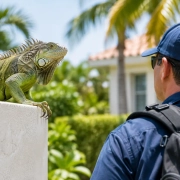
A fruit tree can look fine one morning and stripped by the next. In South Florida, green iguanas do not just take a few bites from low-hanging fruit. They climb, feed on tender leaves and blossoms, knock down immature fruit, and return to the same reliable food source. If you need to stop iguanas eating fruit trees, the answer is not one spray or a plastic owl. It takes physical protection, cleaner conditions around the tree, and removal when the animals have made your property part of their routine.

For homeowners, a damaged mango, papaya, avocado, or citrus tree is frustrating enough. For property managers, golf courses, marinas, and commercial sites, an established iguana population can also mean droppings around walkways, burrows near hardscape, and repeat damage across landscaped areas. Protecting the tree matters, but stopping the infestation is what prevents the cycle from continuing.

Why Iguanas Keep Coming Back to Fruit Trees

Iguanas are invasive reptiles in Florida, and a productive fruit tree gives them exactly what they are looking for: easy food, cover from predators, and often nearby warmth and water. They are strong climbers. A fence around the yard does little if a branch, trellis, roofline, or neighboring tree gives them a route into the canopy.

Fruit is only part of the attraction. Iguanas also eat leaves, shoots, flowers, and fallen produce. A tree with a messy drip line can become a dependable feeding station, especially when overripe fruit is left on the ground. Once an iguana learns where food is available, it may return daily. Other iguanas can follow the same pattern.

The damage can be more than cosmetic. Repeated feeding on new growth can slow a young tree’s development. Heavy animals climbing through branches can break limbs, and waste left below the tree creates a sanitation issue for families, pets, guests, and maintenance crews. Iguana droppings can carry bacteria, including salmonella, so they should be handled carefully and cleaned up promptly.

How to Stop Iguanas Eating Fruit Trees

The most effective approach is layered. Start by making the tree harder to access and less rewarding to visit, then deal with the iguanas already using the property.

Protect the trunk and lower access points

A smooth metal trunk guard can make climbing more difficult on single-trunk trees with a clear, straight lower section. The guard needs to be installed securely and sized correctly so an iguana cannot simply climb around it or use low branches as a ladder. This works best on younger trees or trees that can be pruned to maintain clearance.

Keep lower limbs trimmed well above the ground where appropriate for the health of the tree. Remove branches that touch fences, sheds, roofs, utility structures, or nearby vegetation. Iguanas do not need a direct climb up the trunk if they can jump from a fence rail or walk across a connected canopy.

Do not wrap trunks tightly with materials that hold moisture, rub bark, or interfere with the tree’s growth. Fruit trees need air circulation and room to expand. If you are unsure whether a barrier could harm a valuable tree, ask a qualified arborist about the tree side of the work and a wildlife professional about the iguana side.

Harvest early and clean up every day

Waiting for fruit to become fully soft on the tree gives iguanas extra time to find it. Harvest edible fruit as soon as it is mature enough to ripen off the tree, particularly during periods of heavy iguana activity. Pick up fallen fruit daily, including damaged pieces that may seem too small to matter.

This is one of the simplest steps, but it only works when it is consistent. A single weekend of fallen mangoes, papayas, or figs can reinforce the idea that your yard is an easy meal. Compost piles should be covered or managed so discarded produce does not create another feeding spot nearby.

Use fruit protection where it makes sense

Individual fruit bags or protective mesh can help save a limited crop on smaller trees. They are useful when you have a few prized mangoes, avocados, or citrus fruits within reach. The material must allow airflow and be checked regularly so it does not trap moisture, insects, or developing fruit.

Netting over an entire tree can be more complicated. Loose netting can catch birds, lizards, and other wildlife, while poorly secured netting often gives iguanas a surface to climb. If you choose netting, use a wildlife-safe product, install it tautly, and inspect it often. On a large mature fruit tree, this may be more work than it is worth unless the iguana population is removed first.

Reduce nearby shelter and attractants

Iguanas rest in dense vegetation, under decks, near rock piles, and around water features. They also burrow in sunny banks and along seawalls, walkways, patios, and foundations. A fruit tree near these areas is especially likely to be visited.

Keep landscape beds maintained and clear out heavy piles of yard debris. Repair gaps under sheds, decks, and equipment pads where practical. Do not leave pet food outside, and keep trash containers closed. These steps will not remove iguanas on their own, but they reduce the number of reasons for them to stay.

Skip gimmicks that do not solve the problem

Motion sprinklers, decoys, reflective tape, and homemade repellents may cause a brief disturbance, but iguanas adapt quickly when food remains available. Strong-smelling products can also create problems around edible crops, pets, pools, and outdoor living spaces.

Repellents are especially disappointing when the real issue is an established population with protected hiding places and access routes. If iguanas are already feeding daily, burrowing nearby, or gathering in multiple trees, spending weeks rotating scare tactics usually means more lost fruit and more property damage.

Signs You Need More Than Tree Protection

A barrier may protect one tree, but it cannot resolve a property-wide iguana issue. Pay closer attention if you see repeated activity such as:

  • Fresh droppings beneath trees, along pool decks, patios, docks, or walkways
  • Burrows near seawalls, foundations, driveways, landscape edges, or retaining areas
  • Multiple iguanas sunning on roofs, docks, seawalls, or HVAC equipment
  • Chewed leaves and broken branches across more than one landscaped area
  • Iguanas returning shortly after you clean up fallen fruit or block a climbing route

These signs mean the animals are not passing through. They are using your property for food, shelter, and travel. That is when removal becomes the practical next step.

Professional Removal Protects More Than the Harvest

A professional iguana-control plan begins with the areas that make the property attractive: fruit trees, shoreline edges, roofs, dense landscaping, burrows, docks, and mechanical equipment. The goal is to remove the active nuisance animals safely and lawfully, then help prevent new ones from settling into the same pattern.

This matters on waterfront homes and commercial properties where burrows can undermine soil near seawalls and paved surfaces. It matters around pools and patios where droppings create an unpleasant sanitation issue. It also matters near outdoor HVAC units, where large reptiles can create operational problems and expensive service calls.

Florida Iguana Ops provides local, licensed, and insured removal for South Florida properties dealing with active iguana problems. There are no gimmicks and no runaround. A proper service visit looks at where the iguanas are feeding, where they are hiding, and what conditions will keep drawing them back after removal.

Do not try to handle a large infestation by grabbing, relocating, or poisoning iguanas yourself. Iguanas can bite, scratch, whip with their tails, and carry bacteria. Wildlife rules and disposal requirements also apply, and the wrong approach can put people, pets, and other animals at risk.

Keep Your Fruit Tree From Becoming a Feeding Station

The best time to act is before the next fruiting cycle turns one iguana into a regular group of visitors. Harvest early, remove fallen fruit, cut off climbing routes, and address shelter around the yard. If you are seeing burrows, daily feeding, or repeat damage despite those steps, treat it as a property-protection problem, not a gardening nuisance. Taking care of the iguanas now gives your trees a real chance to produce for you instead of feeding an invasive population.

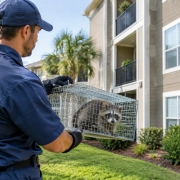
A real apartment complex wildlife removal example often starts with what looks like a landscaping complaint: iguanas near a retention pond, droppings on a pool deck, or a new hole beside a sidewalk. Then maintenance finds that the hole leads under a walkway, irrigation lines are exposed, and residents are reporting reptiles near first-floor patios. At that point, it is no longer a minor nuisance. It is a property-protection issue that needs a fast, organized response.

For South Florida apartment managers, invasive iguanas create a difficult mix of tenant concerns, sanitation problems, landscaping loss, and expensive infrastructure risk. The right wildlife removal plan does more than pick up a few visible animals. It identifies where iguanas are living, removes them legally and professionally, and helps the property stop feeding the same problem week after week.

Apartment Complex Wildlife Removal Example: From Complaint to Control

Consider a mid-sized apartment community with several low-rise buildings, a pool area, lake frontage, and decorative plant beds along the sidewalks. Residents begin seeing green iguanas on patios and around the pool furniture. The maintenance team notices droppings near the mail center and chewed vegetation around the water’s edge.

At first, the issue seems manageable. Staff members chase iguanas away when they see them, and landscaping crews refill a few shallow holes. But iguanas are territorial, and a property with water, sun, dense plants, and easy food sources gives them exactly what they need. Chasing one away does not remove it from the site, and filling a burrow without addressing the animal can lead to new digging nearby.

Within a few weeks, the situation grows. A larger burrow appears along a pond bank near a pedestrian path. Another is found close to a ground-level HVAC pad. The property manager now has three immediate concerns: keeping residents away from unstable areas, preventing more damage, and getting control of the infestation before the next inspection or resident complaint.

A professional assessment starts by walking the grounds and looking beyond the iguanas in plain sight. Experienced removal teams check pond edges, canal banks, rock piles, dense shrubs, pool equipment areas, drainage structures, rooflines, and the quiet gaps behind buildings. These are common places for iguanas to hide, bask, nest, and travel through a property without being noticed.

The assessment should also document active burrows, droppings, damaged plants, and any signs of soil movement near concrete, walls, decks, or utility equipment. This gives the manager a clear record of the issue and helps prioritize the areas where damage could become costly.

Why Iguanas Are a Bigger Risk at Multifamily Properties

An apartment complex has more moving parts than a single-family home. There are residents, visitors, vendors, maintenance staff, pool guests, pet areas, parking lots, and shared outdoor spaces. One iguana problem can affect all of them.

Burrowing is often the largest concern. Iguanas dig into soft ground along lakes, canals, seawalls, sidewalks, patios, and foundations. Not every burrow causes structural failure, but repeated digging can remove soil from where it needs to stay. That can contribute to cracked concrete, uneven walkways, compromised landscaping, erosion along a shoreline, and damage around pool decks or equipment pads.

The sanitation side matters too. Iguana droppings are unpleasant around entrances, patios, pool areas, and playground-adjacent spaces. They can carry salmonella, creating a concern for residents, children, pets, and employees who may come into contact with contaminated surfaces. Droppings also attract insects and can make an otherwise well-kept community look neglected.

There is a business cost as well. A property manager may spend money repeatedly replacing plants, repairing irrigation, cleaning common areas, and sending maintenance staff to respond to wildlife complaints. Those small expenses add up. If a burrow contributes to drainage damage, a damaged seawall, or a safety issue near a walkway, the repair bill can rise quickly.

What Professional Removal Looks Like

The removal plan for an apartment community should fit the property, the infestation level, and the areas at risk. A one-time visit may be enough for a small, isolated issue. A large lakefront complex with established iguana activity may need scheduled service to bring numbers down and keep them from rebuilding.

A professional team works in a way that respects residents and keeps the site operating. That means coordinating access with management, avoiding disruption near occupied units, and handling removal according to applicable Florida rules. Staff should not be left to improvise with traps, poisons, or risky attempts to catch large reptiles around residents and pets.

For the example property, removal efforts focus first on the active pond bank, pool perimeter, and HVAC area. The goal is to reduce the animals creating immediate risk, then address the travel routes and hiding areas that allow more iguanas to settle in. The property manager receives clear communication about what was found, what was removed, and where the remaining risks are located.

Florida Iguana Ops approaches this work as a property-protection job, not a gimmick. Licensed and insured local service matters when wildlife activity is happening around tenant spaces, valuable equipment, and infrastructure that cannot be left exposed.

Fix the Conditions That Keep Bringing Iguanas Back

Removal is the necessary first step, but a complex also needs practical prevention. No property can be turned into a zero-wildlife zone, especially near water. The goal is to make the grounds less attractive and catch new activity before it becomes a larger problem.

Start with food sources. Residents should not feed iguanas or leave pet food outside. Fallen fruit should be cleared from common areas when possible, and open trash should be managed. Even unintentional feeding teaches iguanas that a community is an easy place to return to.

Landscaping deserves attention as well. Dense vegetation along water and buildings can give iguanas protected cover. A landscaper does not need to strip the property bare, but trimming back excessive hiding spots and protecting high-value plantings can reduce damage. Maintenance staff should also know to report fresh digging instead of simply covering it over.

For active burrows near structural features, the sequence matters. First, confirm that removal has been handled. Then have qualified professionals assess and repair the affected area as needed. Closing a burrow while an animal is still using it can create another problem, and ignoring unstable soil near concrete or a seawall is not a cost-saving move.

Give Residents a Clear Way to Report Activity

Property managers do not need residents taking wildlife control into their own hands. They do need residents to report what they see. A short notice can direct tenants to contact the office when they notice burrows, repeated iguana activity near a unit, droppings in common areas, or damage to plants and outdoor equipment.

It helps to explain that sightings are useful, but location and timing are even more useful. “Large iguana behind Building 4 near the east stairwell at 8 a.m.” gives maintenance and removal crews something they can act on. A vague report after the animal is gone may not reveal where it is nesting or traveling.

Managers should also set a firm expectation: do not feed, corner, touch, or attempt to capture iguanas. Large adults can bite, scratch, whip with their tails, and create a scene in a shared living area. Keeping residents informed protects them and gives the removal process a better chance of working.

When an Apartment Complex Should Call for Help

A single iguana sighting does not always call for an emergency response. Repeated sightings, active burrows, droppings near amenity areas, damaged landscaping, or activity around a seawall, deck, sidewalk, or HVAC equipment are different. Those are signs that the property has an established issue, not a passing visitor.

The best time to act is before maintenance costs and tenant complaints start stacking up. Document the locations, keep people clear of questionable ground, and bring in a qualified removal team that can assess the full property instead of reacting to one reptile at a time. A clean, safe community is easier to maintain when invasive wildlife is handled early and handled right.

A residential iguana response case study is most useful when it shows what homeowners actually face: not one lizard on a fence, but a growing property problem under the pool deck, around landscaping, and near the home’s outdoor equipment. The following representative South Florida response reflects the conditions our crews regularly see. Details are adjusted to protect homeowner privacy, but the damage risks and response process are real.

The Call: Burrows Near a Pool Deck

The homeowner called after seeing several large green iguanas crossing the backyard each morning. At first, the concern was mainly the mess. Droppings had built up along the pool coping, patio furniture, and a narrow walkway between the house and the property line.

Then the homeowner noticed a soft spot beside the pool deck. A closer look showed an opening near the edge of a landscaped bed, with loose soil pushed onto the pavers. There were additional openings behind ornamental shrubs and near an outdoor HVAC unit.

That changes the job. Iguanas are not just passing through when there are active burrows, regular feeding activity, and repeated sightings in the same area. They are using the property as shelter, and the longer that continues, the greater the chance of expensive damage.

What the Inspection Found

The first step was a careful property inspection, not a rushed attempt to grab the most visible animal. Iguanas can move quickly, climb, swim, and retreat into vegetation or burrows when disturbed. Removing one animal while ignoring the conditions attracting the rest does not solve much.

The inspection found fresh burrowing activity along the pool deck perimeter, several established travel paths through the landscaping, and droppings concentrated near the pool equipment area. The yard also had dense plant cover and an easy route to a nearby canal-side drainage area.

The biggest concern was the location of the primary burrow. It sat close enough to the deck edge that ongoing tunneling could undermine soil support. That does not mean every burrow causes an immediate collapse. It does mean a homeowner should not wait around to see how far the excavation spreads, especially around a pool, walkway, seawall, driveway, or foundation.

There was also a sanitation concern. Iguana droppings can carry bacteria, including salmonella. On a residential property, that matters most around pools, outdoor kitchens, children’s play areas, pet spaces, and any surface where people walk barefoot. The waste can also attract insects and create an unpleasant odor when rain and heat build up.

The Response Plan: Remove, Inspect, Then Reduce Return Visits

The homeowner needed a practical plan, not a gimmick or a vague promise that the iguanas would simply move along. The response focused on safe, legal removal of the active animals, a check of the burrowed areas, and recommendations to make the backyard less inviting afterward.

Targeted Removal Around Active Areas

Removal was scheduled around the times iguanas were most consistently visible. The crew worked the patio edge, landscaping, fence line, and equipment area where activity had been documented. The goal was controlled removal with as little disruption to the homeowner’s day and property as possible.

This is where experience matters. A large iguana cornered near a pool, roofline, or mechanical equipment can create a bigger problem if handled carelessly. Homeowners should not try to catch an adult iguana by hand. They can bite, scratch, whip with their tails, and bolt into tight spaces. A poorly handled attempt can also send the animal deeper into landscaping or under a structure.

After removal, the crew rechecked likely hiding spots rather than assuming the first visible animals were the only ones present. Iguana activity often comes in waves. A property with food, cover, water access, and established burrows can draw additional animals even after an initial service.

Burrow Assessment Before Any Repair

The open burrows were treated as a property-protection issue. Before a homeowner fills or repairs a hole, the area needs to be assessed for active use and for signs that soil loss has extended beyond what is visible from the surface.

In this case, the deck had not yet shown cracking or settlement. That was good news, but it was not a reason to ignore the condition. The homeowner was advised to have the deck edge monitored after the affected areas were properly addressed. If a paver, walkway, or concrete slab begins to shift, repair costs can climb fast.

The landscaping also needed attention. Loose soil around shrubs had weakened their support, and irrigation lines in the area were at risk of damage. Iguanas do not care whether a burrow path crosses expensive plantings, electrical conduit, or a sprinkler line. They go where the ground is workable and shelter is available.

The Results: A Cleaner Yard and a Better Plan

After the active removal work, the homeowner had a clear view of the affected areas and could move forward with cleanup and property maintenance. The immediate result was less iguana traffic around the pool and outdoor equipment, along with fewer fresh droppings on the patio.

More importantly, the homeowner understood that the job was not only about the animals seen that day. The burrows, hiding cover, and repeated access routes were the warning signs. Addressing those conditions early gave the homeowner a better chance of preventing a small wildlife nuisance from becoming a deck, landscaping, or equipment repair bill.

No honest wildlife company should promise that a South Florida property will never see another iguana. These are invasive reptiles, and they are well established in the area. Results depend on nearby water, vegetation, neighboring properties, food sources, and how much cover remains around the home.

What a professional response can do is reduce current activity, identify risks that are easy to miss, and give the property owner a realistic plan for staying ahead of the problem.

What Homeowners Can Learn From This Case

The early warning signs were all there: repeated sightings, droppings in the same places, disturbed mulch, loose soil, and holes near hardscape. None of those should be brushed off as normal backyard activity when they keep happening.

A single iguana on a sunny fence may not call for an emergency response. Multiple animals, active burrows, fresh waste around living areas, or activity near a pool deck or seawall is different. That is the point where delay can cost more than removal.

Homeowners can also make simple changes after service. Keep fallen fruit picked up, avoid leaving pet food outdoors, trim dense ground cover near structures, and watch for new soil piles or openings after heavy rain. These steps will not replace professional removal where an infestation is active, but they can reduce easy access and help spot a return problem sooner.

When to Call for Residential Iguana Removal

Call for help when you see fresh burrows near a pool deck, driveway, foundation, seawall, or walkway; when droppings are building up around areas people use; or when iguanas are regularly gathering near HVAC equipment, roofs, or thick landscaping. The faster the property is evaluated, the more options there usually are before damage spreads.

Florida Iguana Ops provides licensed and insured removal for homeowners who need straight answers and a crew that shows up ready to work. No runaround, no guesswork, and no pressure to ignore a problem that is getting worse.

If a hole near your deck is getting larger, treat it like the early warning it is. Taking action while the ground is still stable is a lot easier than explaining a damaged patio, broken irrigation line, or compromised structure later.

A patio should be where you drink your coffee, host family, or keep an eye on the pool – not where you find fresh droppings, chewed plants, and an iguana under the furniture. In South Florida, the best iguana deterrents for patios work by making the area less attractive while addressing the reason iguanas are already showing up.

That last part matters. A plastic owl may make a newly arrived iguana hesitate for a day. It will not solve an established problem when the animal has a warm hiding spot, easy food, water, and access to nearby burrows. If iguanas are repeatedly using your patio, pool deck, seawall, or landscaping, treat it as a property-protection issue, not a minor nuisance.

Why Iguanas Keep Returning to Patios

Patios give iguanas several things they look for. Pavers and concrete hold heat. Dense landscape beds, stacked materials, and open spaces beneath decks create cover. Pet food, fallen fruit, vegetable gardens, bird feeders, and ornamental plants can all supply food.

Water is another draw. Pool edges, fountains, irrigation runoff, and pet bowls offer a reliable drink, especially during dry conditions. Once an iguana learns that a patio is safe and predictable, it may return even after a temporary scare device has stopped working.

The concern is bigger than an unpleasant mess. Iguana droppings can carry bacteria, including salmonella. Burrowing near patios, walkways, pool decks, driveways, and seawalls can undermine soil over time. On commercial sites, iguanas can also damage landscaping and shelter around mechanical equipment. The longer the activity continues, the harder it is to make the site unattractive.

7 Best Iguana Deterrents for Patios

The most effective approach is not one product. It is a few practical changes that eliminate food, reduce shelter, and make the patio less comfortable for repeat visitors.

1. Remove food sources every day

Start with the simple things that keep iguanas coming back. Do not leave pet food or food scraps outside. Pick up fallen mangoes, berries, and other fruit promptly. Keep outdoor trash closed, and clean grilling areas after use.

Bird feeders can create a steady supply of dropped seed. If iguanas are active near the patio, move feeders away from the seating area or use a setup that limits spilled seed. A lush vegetable or herb garden beside the patio may also need protection, since iguanas readily feed on tender greens, flowers, and fruit.

2. Protect favored plants with barriers

Iguanas often target hibiscus, orchids, bougainvillea, vegetables, leafy ornamentals, and newly planted landscaping. A physical barrier around vulnerable plants is usually more dependable than a scent-based repellent.

Use sturdy garden fencing, wire mesh guards, or protected planter enclosures that prevent the animal from reaching the foliage. Make sure barriers are secured at ground level. An iguana does not need a large opening to reach a plant bed, and gaps can become easy entry points.

Plant protection will not remove an infestation by itself, but it stops your landscaping from functioning as an open buffet. That makes the rest of your deterrent plan more effective.

3. Cut back hiding places near the patio

Dense shrubs touching the patio, untrimmed ground cover, lumber piles, unused pots, and cluttered storage areas all give iguanas a place to wait out the heat or avoid people. Clear these areas so you can see beneath plants and around the edge of the slab.

Keep mulch beds neat and avoid leaving large gaps beneath raised decks, sheds, or outdoor cabinets. If an iguana can disappear under a structure, it is much harder to discourage it from using the property. Closing off access only works after you are sure no animal is trapped inside.

This is especially important along pool equipment pads and outdoor HVAC units. Iguanas may use the protected space around equipment for cover, while droppings and digging create an extra maintenance problem.

4. Use motion-activated water strategically

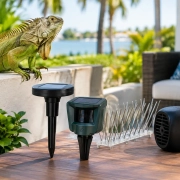
Motion-activated sprinklers can be useful for patios, garden edges, and travel routes where iguanas regularly enter. A sudden burst of water is a humane interruption and can make an open area feel less predictable.

Placement is everything. Aim the sensor at the route the iguana uses rather than the middle of the patio. Test it before relying on it, and expect to adjust it for wind, plant growth, or other animals.

This option has limits. It may not be practical around doors, guest walkways, delicate outdoor furniture, or areas where people regularly pass through. It also will not stop an animal that has an established den or a strong food source nearby. Think of it as reinforcement, not the whole plan.

5. Add visual deterrents, but rotate them

Reflective tape, moving pinwheels, and predator decoys may discourage an iguana that is passing through. They are inexpensive and can be worthwhile around a garden bed or the perimeter of a patio.

The trade-off is habituation. Iguanas are not fooled for long by an object that never changes. A stationary owl on the fence becomes part of the scenery. If you use visual deterrents, move them regularly and combine them with food removal and habitat cleanup.

Avoid spending heavily on gimmicks that promise a permanent fix. There is no single ultrasonic device, spray, or decoy that reliably clears a well-established iguana problem from a South Florida property.

6. Repair access points and watch for burrows

Walk the patio perimeter after heavy rain and look for loose soil, fresh digging, cracks opening near edges, or holes beneath pavers and slabs. Iguanas commonly burrow in soft soil near structures, landscape borders, seawalls, and retaining areas.

Do not simply pack an active burrow with soil and assume the problem is over. The animal may dig out, shift to a nearby location, or leave young underground. Repeated burrowing near a patio, foundation, pool deck, or seawall deserves professional attention because the issue can extend beyond what is visible at the surface.

Once active animals have been removed and the area has been evaluated, repair and exclusion work help prevent the same route from becoming a repeat problem.

7. Remove established iguanas professionally

Deterrents work best before iguanas settle in. If you are seeing the same large iguana daily, finding frequent droppings, hearing movement under a deck, or spotting active burrows, the property likely needs more than prevention measures.

Professional removal addresses the animals already using the site, then allows deterrence and exclusion to work as intended. It also keeps property owners from trying risky DIY methods around pools, elevated decks, seawalls, or commercial equipment. Wildlife rules and humane handling requirements still apply, and a licensed, insured local provider can handle the work without guesswork.

Florida Iguana Ops helps property owners identify activity areas, remove nuisance iguanas, and focus on the conditions that invite them back. For larger properties, marinas, golf facilities, and commercial sites, a targeted plan is often far less costly than waiting for damage to spread.

What Not to Rely On

Strong-smelling home remedies are often more trouble than they are worth. Pepper mixtures, ammonia, mothballs, and harsh chemicals can create risks for children, pets, plants, and nearby wildlife without solving the underlying issue. Mothballs should never be used outdoors as an animal deterrent.

Avoid trying to chase, grab, poison, or trap iguanas without the proper knowledge and legal guidance. An iguana can bite, scratch, whip with its tail, or drop from a tree when startled. More importantly, a rushed attempt can push the animal into a wall void, under a deck, or into another part of the property.

When Patio Iguana Activity Becomes Urgent

Call for help promptly if you see soil collapsing near a patio edge, pool deck, foundation, driveway, seawall, or retaining wall. The same goes for repeated burrows, large groups of iguanas, droppings near food-service areas, or signs of animals around HVAC and electrical equipment.

For homeowners, a few droppings may be the first warning. For property managers, the issue can affect guest safety, sanitation, landscape budgets, and maintenance schedules. Fast action is usually simpler than trying to recover after a burrow has compromised pavers or erosion has reached a structural edge.

A clean, open patio with protected plants and no easy food source gives iguanas fewer reasons to stop. If they have already made your patio part of their routine, deal with the animals first, then make the space one they have no reason to revisit.

A large iguana on a pool deck may look like a one-time nuisance. Then the holes show up along the seawall, the mulch gets torn apart, droppings collect near the patio, and a second or third iguana appears. West Palm Beach iguana removal is not just about getting one reptile off the property. It is about stopping invasive animals from turning a manageable problem into expensive repairs.

Iguanas have settled into South Florida because the climate gives them what they need: warm shelter, vegetation, water, and plenty of protected places to burrow. Residential yards, commercial landscapes, marina properties, golf courses, and waterfront communities can all give them a foothold. Once they find a favorable spot, they tend to return.

Why West Palm Beach Iguana Removal Should Not Wait

The most visible damage is usually landscaping. Iguanas eat ornamentals, flowers, fruit, and tender new growth. They dig through beds, scatter mulch, and leave a yard looking neglected fast. That is frustrating, but the bigger concern is what happens below the surface.

Iguanas dig burrows for shelter and nesting. A burrow under a walkway, driveway edge, pool deck, retaining area, or seawall can weaken the ground around it. One hole may not create an immediate failure. Repeated burrowing, water intrusion, and erosion are where the repair bill starts climbing.

Waterfront properties deserve special attention. Seawalls and canal edges already deal with shifting soil, water pressure, and weather. Iguana burrows can create voids behind a wall or along the bank, allowing soil to wash away. Waiting until there is visible settling or cracking can mean the issue has already moved beyond a simple wildlife call.

Their waste is another reason to act. Iguana droppings can build up around pools, docks, patios, entryways, equipment pads, and common areas. Besides looking bad and creating a slip hazard, reptile waste can carry salmonella. That matters when children, pets, tenants, customers, or guests use the space.

Signs You Have More Than a Passing Iguana

A single iguana moving through a property is different from an established problem. The pattern matters. If you see the same animals repeatedly using the same sunning spots, hiding areas, or food sources, there is a good chance the property is part of their routine.

Look closely along fence lines, shrub beds, rock borders, canal banks, seawalls, and the edges of concrete. Freshly disturbed soil, holes leading under hardscape, claw marks, displaced pavers, and bare spots in landscaping all deserve attention. In commercial settings, inspect around HVAC equipment, utility areas, storage zones, docks, and low-traffic parts of the property where animals can hide undisturbed.

You may also notice eggs or small hatchlings during nesting season. That is a clear sign that removal should be handled promptly. A property that supports breeding can turn into a repeat issue if the adults and nesting activity are not addressed.

Why DIY Iguana Control Often Falls Short

Home remedies can make a property less inviting, but they rarely solve an active infestation on their own. Motion sprinklers, barriers, landscape changes, and removing food sources may help discourage future activity. They do not remove animals already using burrows or nesting areas.

Trying to catch an iguana yourself also comes with real risks. Large iguanas can bite, scratch, whip with their tails, and spread bacteria through contact with waste. An animal that feels cornered may run into a garage, attic access area, pool enclosure, or equipment space, making the situation harder to manage.

There is also the question of legal handling. Iguanas are invasive in Florida, but that does not mean every removal method is appropriate for every person or property. A trained wildlife-control professional can assess the site, use proper removal practices, and avoid turning a nuisance issue into a safety problem.

What Professional Iguana Removal Looks Like

Good removal starts with reading the property, not guessing. A professional should identify where iguanas are feeding, basking, hiding, entering, and burrowing. On a waterfront site, that may mean checking the full seawall line and adjacent landscape. At a business, it may mean looking beyond the visible patio or parking area to service corridors and equipment zones.

The removal approach depends on access, animal behavior, property layout, and the number of iguanas involved. A small residential job may focus on a few known activity areas. A marina, golf course, apartment community, or commercial property may need a broader plan because the animals have more cover and more places to move.

After removal, the site should not be treated as an afterthought. Open burrows and damaged ground need attention. Depending on the situation, the owner may need to fill and stabilize holes, repair damaged landscaping, inspect hardscape, or bring in the right contractor for seawall or structural concerns. Removal stops the source of new damage. Property repairs address what is already there.

Florida Iguana Ops takes a practical approach: show up, identify the active problem, remove the nuisance animals, and explain what the property needs next. No gimmicks and no vague promises about a yard being permanently wildlife-proof.

Protecting the Property After Removal

No company can honestly promise that a South Florida property will never see another iguana. The goal is to reduce the reasons they choose your site and to respond before activity becomes established again.

Start by limiting easy food. Fallen fruit, accessible pet food, open compost, and heavily browsed plantings can keep iguanas coming back. Trimming dense ground cover can also reduce hiding spots near foundations, docks, and equipment. If a recurring burrow area exists, addressing it quickly is usually less costly than waiting for the next rainy season to expose a larger washout.

For managed properties, routine inspections make a difference. Property managers and facilities teams should include iguana activity in regular exterior checks, especially near seawalls, pool areas, mechanical equipment, drainage features, and guest walkways. Staff do not need to handle animals themselves. They need a clear process for documenting activity and getting help before the problem spreads.

When an Iguana Problem Is an Urgent Call

Some situations should move to the top of the list. Active burrows beside a seawall, pool deck, foundation, driveway, or heavily used walkway need fast attention. So do iguanas inside enclosed pool areas, garages, commercial work zones, or around HVAC equipment where damage or a dangerous encounter is more likely.

Call promptly if you see ground settling, cracks near a burrowed area, exposed soil behind a seawall, or heavy droppings where people or pets spend time. These are not problems to monitor for weeks. The longer the animals keep using the site, the more difficult and costly the cleanup can become.

A clean-looking property can hide an active burrow system just a few feet away. If iguanas keep appearing around your home, business, marina, or community grounds, treat the activity as a property-protection issue and get a clear assessment before the next hole becomes a major repair.

An iguana burrow beside a pool deck or seawall is not a cosmetic problem. It is an open route into the ground beneath expensive hardscape, and it can get worse quickly after rain. Proper iguana entry repairs are about more than covering a hole. They start with removing the active iguana, confirming the area is clear, and repairing the damage in a way that protects the property instead of hiding the problem for a week.

In South Florida, green iguanas use warm, dry, protected spaces around homes and commercial sites. They dig beneath walkways, patios, sheds, landscape borders, docks, and retaining areas. Once a burrow gives them shelter, other iguanas may use it too. The result can be loose pavers, sinking soil, broken irrigation, stained pool areas, and, in serious cases, damage near seawalls or foundations.

What Iguana Entry Repairs Actually Mean

The word “entry” can mean two things on an iguana-damaged property. First, it can mean a burrow entrance where an iguana is getting beneath a deck, slab, walkway, or shoreline structure. Second, it can mean an opening that gives iguanas access to a protected area, such as a gap beneath a fence, loose skirting, an open utility chase, or damaged screening around equipment.

The repair needed depends on the location and the condition of the structure. A shallow landscape burrow may need excavation, proper backfill, compaction, and restoration of the planting bed. A void under pavers may require lifting and resetting affected sections after the soil base is rebuilt. A hole near a seawall, retaining wall, foundation, or pool structure deserves a more careful evaluation. Filling it from the surface without checking what is underneath can leave a hidden void in place.

That is why removal and repair should be treated as connected jobs. If the animal is still using the opening, a repair will not hold. If the damage is ignored after removal, the property remains vulnerable to settling, water intrusion, and a new iguana finding the same protected spot.

Do Not Seal an Active Burrow

The fastest-looking fix is often the wrong one. Pushing soil, concrete, rocks, or debris into an active burrow can trap an animal underground, cause it to dig a new exit, or leave an unseen tunnel under the repaired surface. It can also make it harder to tell whether the problem has actually been solved.

A professional approach starts by identifying activity. Fresh loose soil, claw marks, droppings, tracks, and a clean opening are common signs. A hole that has been reopened after rain or after a homeowner filled it is another strong indicator. Iguanas are most active during warmer daylight hours, but their shelter locations may not be obvious from a quick look around the yard.

Once removal is handled in accordance with applicable rules, the site can be assessed for repair. Florida Iguana Ops focuses on safe, professional removal so owners are not left guessing whether a burrow is still occupied before the repair work begins.

Where Burrows Cause the Most Trouble

Not every hole creates the same level of risk. A burrow in an open landscape bed still needs attention, but a burrow near structural or mechanical assets needs faster action.

Pool decks, patios, and walkways

Iguanas often use edges where soil meets concrete, pavers, or coping. Water can move through the tunnel after heavy rain, washing out supporting soil. Early warning signs include pavers that rock underfoot, cracked grout or coping, widening gaps, and spots that feel soft or hollow.

After the burrow is cleared, the damaged area may need to be opened enough to remove loose soil and rebuild the base properly. Simply topping off the entrance with sand can allow the same section to settle again.

Seawalls, canals, and retaining areas

Burrowing near water is a serious concern because moving water and saturated soil can enlarge voids. An iguana hole at the top of a seawall or along a canal bank should not be treated like a routine garden hole. Owners should document the location and have a qualified seawall, marine, or structural repair professional determine whether the area has been undermined.

The trade-off is simple: a more thorough inspection costs more than a bag of fill, but it can prevent a small opening from turning into an expensive stabilization project.

Foundations and building edges

Iguanas do not need to enter a living room to create a building problem. A burrow against a slab edge, under an exterior stair, or beside a utility pad can displace soil and create a route for water and other pests. Gaps around pipes, damaged vent covers, and openings beneath raised structures should be repaired with durable materials that fit the location.

Avoid using expanding foam as the only answer for exterior wildlife access. It may look sealed at first, but it can degrade in sun and weather, and it does nothing to repair an undermined base.

HVAC and equipment pads

Commercial properties and larger residences often have equipment yards, condensers, pumps, and utility pads surrounded by cover and warm surfaces. Iguanas can dig near these areas, foul equipment with droppings, and create access through loose fencing or damaged screening. If a pad is shifting or lines are exposed, bring in the appropriate HVAC or site-repair professional after removal.

A Repair Plan That Holds Up

Good iguana entry repairs follow a sensible order. First, remove the active animal and monitor the area for signs of continued use. Next, inspect the opening and surrounding ground for undermining, cracking, erosion, or loose materials. Then repair the void with the right fill and compaction method for that part of the property.

The final step is exclusion. This may involve securing gaps below gates, repairing fence bottoms, restoring landscape edging, replacing damaged skirting, or using a properly designed barrier where burrowing pressure is ongoing. The goal is not to turn a property into a fortress. It is to remove easy shelter and access without creating drainage problems or making routine maintenance difficult.

For recurring trouble areas, the repair should also account for what attracts iguanas there. Dense ground cover, fallen fruit, accessible pet food, standing water, and open routes from a canal or neighboring lot can all make a repaired area appealing again. Changing every part of a landscape is rarely necessary, but leaving the exact same cover and access route can invite repeat activity.

When to Call a Structural Repair Professional

Wildlife removal professionals can identify active iguana activity and help stop the immediate intrusion. A licensed contractor, seawall specialist, engineer, or other qualified trade should evaluate repairs when there is visible settling, cracked concrete, a large or deep void, exposed reinforcement, drainage changes, or damage near a seawall, foundation, dock, or pool shell.

Do not wait for a walkway to drop or a wall to show obvious movement. The soil loss beneath a surface is often larger than the opening you can see. Taking photos before any work begins can also help you track changes and explain the issue clearly to the repair professional.

Protect the Repair After the Work Is Done

A repaired area needs follow-up, especially through the rainy season. Check for fresh soil, new openings, droppings, or movement around the original site. Look after heavy rain, irrigation adjustments, landscaping work, or nearby construction, since each can expose weak points or change how water drains through the property.

For property managers, this is worth adding to regular grounds inspections. Staff may notice a new hole near a clubhouse walkway, marina edge, or equipment enclosure long before it becomes a major repair. On residential properties, a quick check around pool decks, fences, canal edges, and outdoor equipment can save a great deal of frustration later.

A properly repaired entry point is one less place for iguanas to hide, dig, and cause damage. Handle the active infestation first, fix the ground or structure based on the real condition underneath, and keep an eye on the area afterward. That is how a small burrow stays a small problem.