
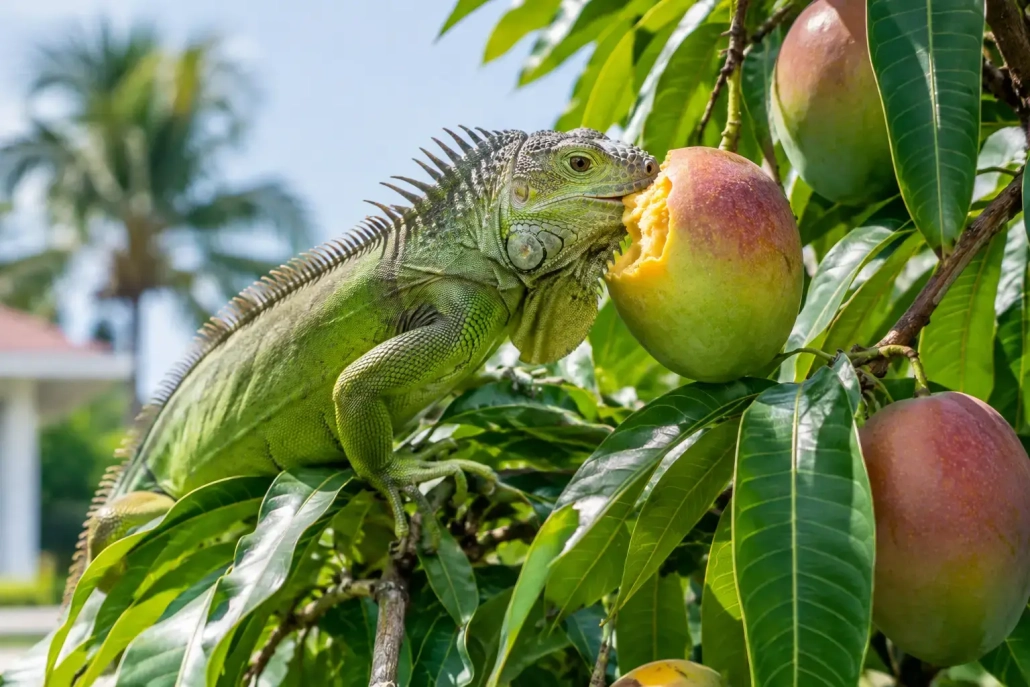
How to Stop Iguanas Eating Fruit Trees in South Florida
A fruit tree can look fine one morning and stripped by the next. In South Florida, green iguanas do not just take a few bites from low-hanging fruit. They climb, feed on tender leaves and blossoms, knock down immature fruit, and return to the same reliable food source. If you need to stop iguanas eating fruit trees, the answer is not one spray or a plastic owl. It takes physical protection, cleaner conditions around the tree, and removal when the animals have made your property part of their routine.
For homeowners, a damaged mango, papaya, avocado, or citrus tree is frustrating enough. For property managers, golf courses, marinas, and commercial sites, an established iguana population can also mean droppings around walkways, burrows near hardscape, and repeat damage across landscaped areas. Protecting the tree matters, but stopping the infestation is what prevents the cycle from continuing.
Why Iguanas Keep Coming Back to Fruit Trees
Iguanas are invasive reptiles in Florida, and a productive fruit tree gives them exactly what they are looking for: easy food, cover from predators, and often nearby warmth and water. They are strong climbers. A fence around the yard does little if a branch, trellis, roofline, or neighboring tree gives them a route into the canopy.
Fruit is only part of the attraction. Iguanas also eat leaves, shoots, flowers, and fallen produce. A tree with a messy drip line can become a dependable feeding station, especially when overripe fruit is left on the ground. Once an iguana learns where food is available, it may return daily. Other iguanas can follow the same pattern.
The damage can be more than cosmetic. Repeated feeding on new growth can slow a young tree’s development. Heavy animals climbing through branches can break limbs, and waste left below the tree creates a sanitation issue for families, pets, guests, and maintenance crews. Iguana droppings can carry bacteria, including salmonella, so they should be handled carefully and cleaned up promptly.
How to Stop Iguanas Eating Fruit Trees
The most effective approach is layered. Start by making the tree harder to access and less rewarding to visit, then deal with the iguanas already using the property.
Protect the trunk and lower access points
A smooth metal trunk guard can make climbing more difficult on single-trunk trees with a clear, straight lower section. The guard needs to be installed securely and sized correctly so an iguana cannot simply climb around it or use low branches as a ladder. This works best on younger trees or trees that can be pruned to maintain clearance.
Keep lower limbs trimmed well above the ground where appropriate for the health of the tree. Remove branches that touch fences, sheds, roofs, utility structures, or nearby vegetation. Iguanas do not need a direct climb up the trunk if they can jump from a fence rail or walk across a connected canopy.
Do not wrap trunks tightly with materials that hold moisture, rub bark, or interfere with the tree’s growth. Fruit trees need air circulation and room to expand. If you are unsure whether a barrier could harm a valuable tree, ask a qualified arborist about the tree side of the work and a wildlife professional about the iguana side.
Harvest early and clean up every day
Waiting for fruit to become fully soft on the tree gives iguanas extra time to find it. Harvest edible fruit as soon as it is mature enough to ripen off the tree, particularly during periods of heavy iguana activity. Pick up fallen fruit daily, including damaged pieces that may seem too small to matter.
This is one of the simplest steps, but it only works when it is consistent. A single weekend of fallen mangoes, papayas, or figs can reinforce the idea that your yard is an easy meal. Compost piles should be covered or managed so discarded produce does not create another feeding spot nearby.
Use fruit protection where it makes sense
Individual fruit bags or protective mesh can help save a limited crop on smaller trees. They are useful when you have a few prized mangoes, avocados, or citrus fruits within reach. The material must allow airflow and be checked regularly so it does not trap moisture, insects, or developing fruit.
Netting over an entire tree can be more complicated. Loose netting can catch birds, lizards, and other wildlife, while poorly secured netting often gives iguanas a surface to climb. If you choose netting, use a wildlife-safe product, install it tautly, and inspect it often. On a large mature fruit tree, this may be more work than it is worth unless the iguana population is removed first.
Reduce nearby shelter and attractants
Iguanas rest in dense vegetation, under decks, near rock piles, and around water features. They also burrow in sunny banks and along seawalls, walkways, patios, and foundations. A fruit tree near these areas is especially likely to be visited.
Keep landscape beds maintained and clear out heavy piles of yard debris. Repair gaps under sheds, decks, and equipment pads where practical. Do not leave pet food outside, and keep trash containers closed. These steps will not remove iguanas on their own, but they reduce the number of reasons for them to stay.
Skip gimmicks that do not solve the problem
Motion sprinklers, decoys, reflective tape, and homemade repellents may cause a brief disturbance, but iguanas adapt quickly when food remains available. Strong-smelling products can also create problems around edible crops, pets, pools, and outdoor living spaces.
Repellents are especially disappointing when the real issue is an established population with protected hiding places and access routes. If iguanas are already feeding daily, burrowing nearby, or gathering in multiple trees, spending weeks rotating scare tactics usually means more lost fruit and more property damage.
Signs You Need More Than Tree Protection
A barrier may protect one tree, but it cannot resolve a property-wide iguana issue. Pay closer attention if you see repeated activity such as:
- Fresh droppings beneath trees, along pool decks, patios, docks, or walkways
- Burrows near seawalls, foundations, driveways, landscape edges, or retaining areas
- Multiple iguanas sunning on roofs, docks, seawalls, or HVAC equipment
- Chewed leaves and broken branches across more than one landscaped area
- Iguanas returning shortly after you clean up fallen fruit or block a climbing route
These signs mean the animals are not passing through. They are using your property for food, shelter, and travel. That is when removal becomes the practical next step.
Professional Removal Protects More Than the Harvest
A professional iguana-control plan begins with the areas that make the property attractive: fruit trees, shoreline edges, roofs, dense landscaping, burrows, docks, and mechanical equipment. The goal is to remove the active nuisance animals safely and lawfully, then help prevent new ones from settling into the same pattern.
This matters on waterfront homes and commercial properties where burrows can undermine soil near seawalls and paved surfaces. It matters around pools and patios where droppings create an unpleasant sanitation issue. It also matters near outdoor HVAC units, where large reptiles can create operational problems and expensive service calls.
Florida Iguana Ops provides local, licensed, and insured removal for South Florida properties dealing with active iguana problems. There are no gimmicks and no runaround. A proper service visit looks at where the iguanas are feeding, where they are hiding, and what conditions will keep drawing them back after removal.
Do not try to handle a large infestation by grabbing, relocating, or poisoning iguanas yourself. Iguanas can bite, scratch, whip with their tails, and carry bacteria. Wildlife rules and disposal requirements also apply, and the wrong approach can put people, pets, and other animals at risk.
Keep Your Fruit Tree From Becoming a Feeding Station
The best time to act is before the next fruiting cycle turns one iguana into a regular group of visitors. Harvest early, remove fallen fruit, cut off climbing routes, and address shelter around the yard. If you are seeing burrows, daily feeding, or repeat damage despite those steps, treat it as a property-protection problem, not a gardening nuisance. Taking care of the iguanas now gives your trees a real chance to produce for you instead of feeding an invasive population.



Leave a Reply
Want to join the discussion?Feel free to contribute!