
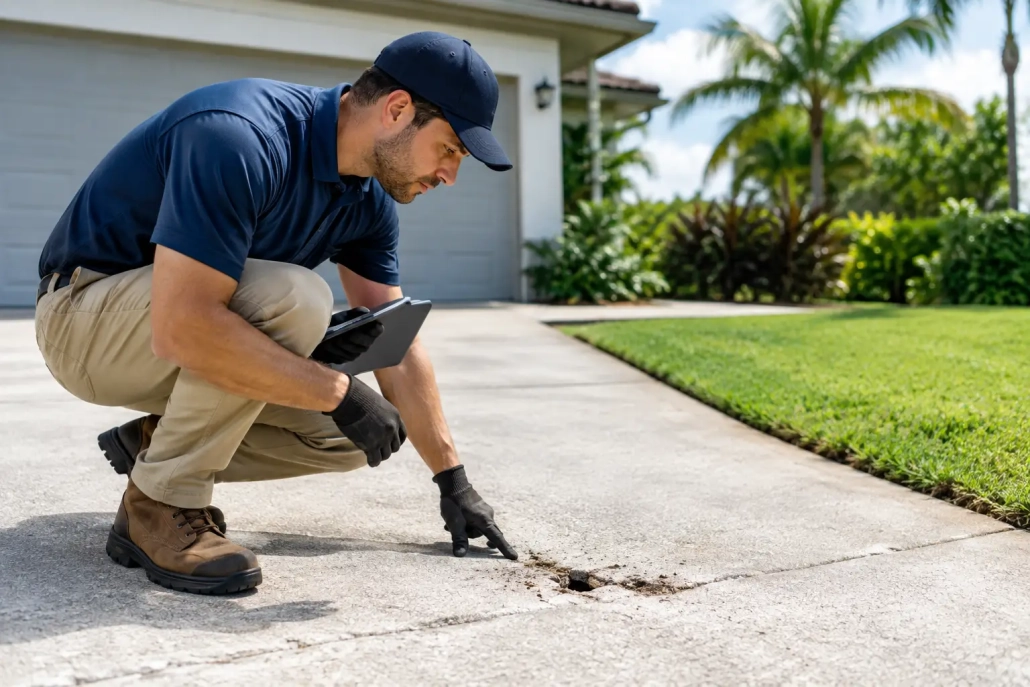
Driveway Burrow Inspection Guide for South Florida
A small hole at the edge of a driveway can look harmless until the soil beneath the slab starts washing out. In South Florida, this driveway burrow inspection guide is built around a common problem: invasive iguanas digging under concrete, pavers, walkways, pool decks, and nearby foundations. The visible opening is only part of the concern. What matters is where the tunnel goes, whether the ground is losing support, and whether active animals are still using it.
A driveway is not the place to guess. Burrows can create hidden voids below areas that carry the weight of cars, delivery trucks, golf carts, and foot traffic. Catching activity early gives you more options. Waiting until concrete cracks, settles, or breaks apart can turn a wildlife issue into a costly repair.
Start Your Driveway Burrow Inspection Safely
Do not stick your hand, foot, hose, or tools into a suspected burrow. Iguanas can bite and whip with their tails when cornered, and a hole may also hold other wildlife. More importantly, probing an opening can collapse loose soil into the tunnel and make it harder to tell how extensive the damage is.
Inspect in daylight and work from the stable side of the driveway. Walk the perimeter slowly, especially where concrete meets landscaping, mulch beds, retaining walls, seawalls, utility equipment, or drainage areas. Iguanas often use soft, protected soil beside hardscape because it is easier to dig and stays warmer and drier than exposed ground.
If the driveway edge feels soft, sinks under light pressure, or has a crack that is widening, keep vehicles away from that section until it can be assessed. A burrow beside a driveway is more urgent when it is near a support area, a slope, a seawall, or a drainage route that can carry soil away during heavy rain.
What an Active Iguana Burrow Usually Looks Like
An iguana burrow often has an oval or rounded entrance in loose soil. Openings can vary in size, but they are commonly large enough to be obvious once you look along the driveway edge. Freshly disturbed dirt, loose sand pushed outward, claw marks, and nearby droppings are stronger signs than the hole alone.
Look for a worn path between the opening and a nearby hiding place, water source, sunning area, or food source. That may be a hedge, canal bank, pool deck, dock, rock border, fruiting tree, or thick landscape bed. Green iguanas are strong climbers and swimmers, so their travel routes are not always limited to ground-level paths.
Fresh droppings can help confirm activity, but avoid touching them. Iguana waste can carry salmonella, and rain can spread it across patios, driveways, pool areas, and walkways. Keep children and pets away from the area until it has been cleaned and the animal problem is handled.
Signs the Burrow Is Affecting the Driveway
The entrance may be several feet from the actual weak spot. Iguanas can tunnel beneath the surface, and Florida’s sandy soils can shift quickly when water gets into an existing void. Pay attention to changes in the concrete and the ground around it, not just the opening itself.
Watch for these four warning signs:
- Cracks running from the driveway edge toward the center of the slab, particularly new cracks or ones that are getting wider.
- Low spots, hollow-sounding areas, or a section of concrete that no longer sits level with an adjoining slab.
- Soil washing out after rain, including small gaps along the driveway edge or sand collecting in nearby drains.
- Pavers that rock, separate, or drop lower than the surrounding surface.
A single hairline crack does not automatically mean a burrow caused structural damage. Concrete moves for many reasons, including age, tree roots, poor drainage, and normal settlement. But an active burrow beside a new crack or soft edge deserves quick attention. The risk rises when the area carries vehicle traffic or sits close to a home, garage, pool deck, or seawall.
Check Drainage Before the Next Storm
Water is what turns a manageable hole into a larger problem. During a dry inspection, look for downspouts, sprinkler heads, leaking hose connections, broken irrigation lines, or grading that directs water toward the burrow. After rainfall, check whether soil has washed from the entrance or whether puddling forms near the driveway edge.
Do not flood the hole to chase an iguana out. That can undermine soil, push the animal deeper into the property, and send dirty water toward a driveway, pool, or storm drain. It also does not solve the reason the animal selected the area in the first place.
For commercial properties, drainage checks matter even more. A burrow near a parking area, service lane, golf-cart route, marina walkway, or mechanical pad can create a liability issue before a visible collapse occurs. Mark the spot, limit access where needed, and document changes with dated photos for maintenance records.
Do Not Seal an Active Burrow Yourself
Filling or covering a hole before confirming it is inactive can trap an iguana underground or simply encourage it to dig another exit beside the driveway. That new exit may be closer to the slab, a foundation, irrigation line, or retaining structure.
There is also a practical issue: a quick patch of dirt or concrete does not restore soil that has already been displaced. If a void is present under the driveway edge, the surface may still settle after the visible entrance is closed. Removal, exclusion, and repair are separate parts of the job, and the order matters.
A professional inspection can identify active iguana use, assess obvious burrowing patterns, and help determine whether a concrete, drainage, seawall, or landscape contractor should evaluate the affected structure. For properties with repeat burrows, the goal should not be just closing the latest hole. It should be stopping the animals responsible and reducing the conditions that keep drawing them back.
When to Call for Professional Iguana Removal
Call promptly if you see iguanas entering or leaving the burrow, notice fresh excavation near a driveway crack, find repeated droppings, or discover a hole close to a foundation, pool deck, seawall, or utility equipment. The same goes for any driveway section that feels unstable or shows sudden settlement.
Florida Iguana Ops handles invasive iguana removal with the property-protection side of the problem in mind. For homeowners, that may mean keeping digging away from a driveway and pool area. For property managers, marinas, and commercial sites, it may mean addressing recurring activity before it affects guest areas, access routes, or expensive infrastructure.
Take clear photos from a safe distance, note when you first saw the opening, and keep vehicles off any questionable edge. That simple record helps show whether the problem is active and whether the ground is changing over time.
A burrow does not need to become a collapsed driveway to deserve attention. Treat the first fresh hole, loose soil, or unexplained settling as a reason to act while the repair is still smaller, safer, and easier to control.



Leave a Reply
Want to join the discussion?Feel free to contribute!