
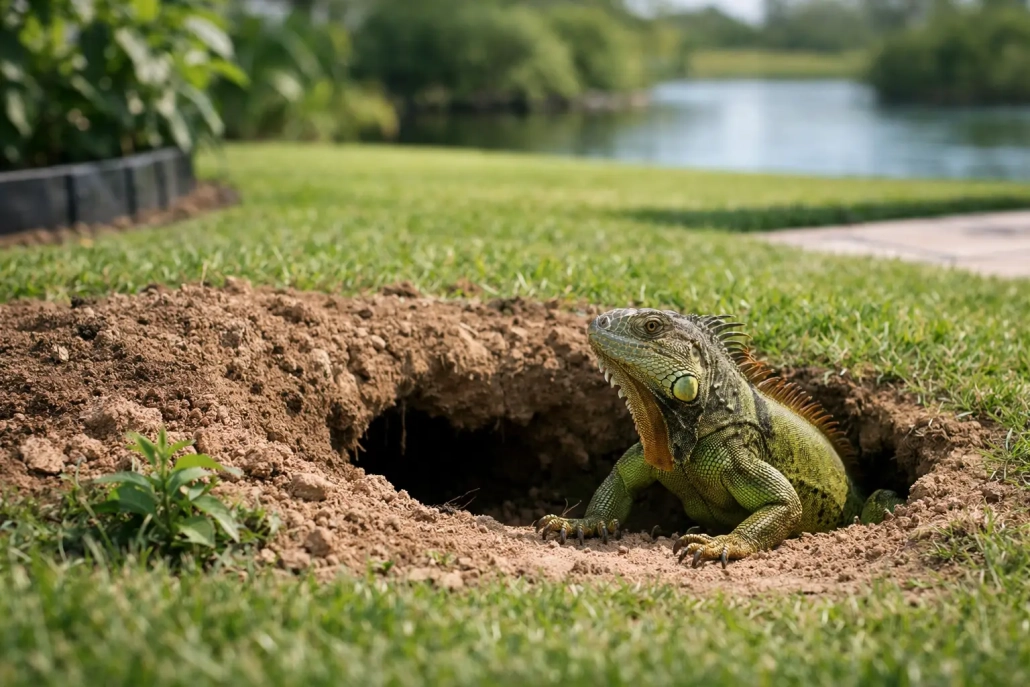
How to Prevent Iguana Burrows on Your Property
A fresh hole beside a pool deck, seawall, driveway, or air-conditioning pad is not just a landscaping problem. Iguanas can keep digging, widen existing voids, and turn a small soft spot into an expensive repair. When people ask how prevent iguana burrows, the honest answer is that filling the hole alone will not solve it. You have to remove the iguanas using the area, correct the conditions attracting them, and repair the burrow at the right time.
In South Florida, burrowing iguanas are especially hard on properties with loose soil, rock edges, dense plant beds, canals, retaining walls, and warm sheltered spaces around equipment. The goal is not to make your yard look fortified. It is to make the property less useful to iguanas without creating a bigger issue for your foundation, seawall, pool deck, or drainage.
Why Iguana Burrows Need Fast Attention
Iguanas dig for shelter, nesting, temperature protection, and access beneath structures. A burrow may start as a hole under a shrub or along a wall, then extend farther than it appears from the surface. That is why a spot that looks minor can lead to settling pavers, eroded soil, cracked edging, damaged irrigation, or a weakened area beside concrete.
Seawalls and canal-side properties deserve extra caution. Burrowing near a seawall can allow soil to wash away or loosen the ground behind the wall. On commercial sites, iguanas may tunnel around landscape beds, mechanical pads, storage areas, walkways, and drainage features. The damage is not always obvious until a slab shifts or a washout appears.
Burrows also give iguanas a dependable home base. If food, water, cover, and easy access remain, new iguanas can move into the same area even after you patch a hole. Their droppings add another problem around patios, docks, pools, guest areas, and outdoor workspaces. Iguanas and their waste can carry bacteria such as salmonella, so cleanup should be handled carefully.
How to Prevent Iguana Burrows Without Making Damage Worse
The first rule is simple: do not permanently seal an active burrow while an iguana may still be inside. Blocking an occupied tunnel can trap the animal, force it to dig another escape route, or leave an odor and sanitation issue in a place you cannot reach. Around a seawall, foundation, pool structure, or utility line, digging blindly into the hole can also cause more damage.
Start by identifying whether the burrow is active. Fresh loose soil, tracks, droppings, newly disturbed mulch, or regular iguana activity around the opening are all warning signs. A hole that looks abandoned may still be in use, particularly if it disappears under thick plants, decking, riprap, or a structure.
Professional removal comes before exclusion and repair. A trained wildlife-control team can assess activity, remove invasive iguanas legally and safely, and identify the places they are entering or sheltering. This matters because one visible iguana is often not the whole problem. Eggs, juveniles, and other adults may be using the same landscape corridor.
After active iguanas are removed, the burrow should be evaluated based on where it sits. A shallow hole in an open planting bed may be filled and compacted with appropriate material. A void near a seawall, slab, driveway, pool deck, retaining wall, or foundation is different. That area may need a qualified contractor, engineer, or seawall professional to inspect the extent of soil loss before repair work begins.
Remove What Makes the Area Attractive
Iguanas do not choose every yard equally. They return to places that offer cover, easy meals, warm surfaces, and low disturbance. Habitat changes will not replace removal when there is an active infestation, but they can reduce repeat activity afterward.
Keep fallen fruit, vegetable scraps, pet food, and birdseed off the ground. Do not feed iguanas, even occasionally. Feeding teaches them that your patio, dock, or landscape is a reliable stop, and reliable food draws more reptiles into the area.
Trim dense vegetation near structures and along fences, walls, seawalls, and pool equipment. Iguanas use thick ground cover, ornamental plantings, brush piles, and stacked materials as cover while they travel between feeding and burrowing sites. You do not need to strip a property bare. The practical move is to create visibility and access for inspections, especially around high-value infrastructure.
Pay attention to irrigation leaks and standing water as well. Damp, loose soil is easier to dig, and water sources support the kind of landscape iguanas favor. Repair leaking heads, broken lines, and drainage problems rather than letting the same patch of ground stay soft all season.
Use Barriers Where They Actually Work
Exclusion can help, but only when it is designed for the specific location. A loose piece of mesh placed over a hole is not a long-term answer. Iguanas can dig around weak barriers, and poorly installed materials can create hazards for people, pets, landscaping crews, and other wildlife.
For vulnerable planting beds, equipment areas, and crawl-type access points, heavy-duty buried barriers may help discourage digging after removal and repair. The barrier needs to extend below the surface and be secured so an iguana cannot simply push under the edge. The right depth and material depend on the soil, drainage, slope, and whether utilities are nearby.
Hardscape edges should be maintained as well. Reset loose pavers, address washed-out joints, and repair gaps beneath deck edges or around utility pads before they become an easy entry point. If the area is next to a pool, foundation, seawall, or underground service, do not guess about where to dig or install material. A cheap patch is not a bargain if it damages a line or hides a growing void.
Do Not Rely on Repellents Alone
Home remedies, odor repellents, and visual scare devices are often disappointing with established iguanas. A product may make an area unpleasant for a short time, but it will not remove the shelter, food source, or existing burrow network. It also will not fix the structural risk beneath a slab or along a seawall.
Some homeowners try flooding burrows, using harsh chemicals, or placing debris into openings. These approaches can send the iguana deeper into the tunnel, contaminate nearby soil or water, and make the eventual repair harder. They can also create legal and safety concerns. The same goes for attempting to trap or handle large iguanas without the right experience.
The practical approach is targeted removal, followed by repair and exclusion. It takes more effort than tossing something in a hole, but it addresses the reason the hole keeps coming back.
Check the Places Iguanas Reuse
Once an infestation has been handled, make burrow checks part of regular property maintenance. This is particularly useful after heavy rain, landscaping work, irrigation repairs, or a period of warm weather when iguana activity increases.
Walk the property line and look closely at the base of walls, fences, sheds, pool decks, docks, canal edges, landscape berms, and HVAC equipment. Watch for fresh soil, sagging mulch, cracks that were not there before, settling pavers, or spots that feel soft underfoot. At commercial properties, add service yards, loading areas, golf-course infrastructure, marina edges, and guest walkways to the inspection routine.
If you find a new opening, take a photo and avoid collapsing it until you know whether it is active and whether important infrastructure is nearby. Early action is usually far less costly than waiting for a deck edge, driveway, or seawall area to show visible failure.
When to Call a Professional
Call for professional help when burrows are active, recurring, near structures, or connected to a larger iguana problem. That includes holes near pools, foundations, seawalls, retaining walls, walkways, utility equipment, and areas used by children, pets, customers, or employees.
Florida Iguana Ops provides local, licensed, and insured iguana removal for residential and commercial properties. The job is not finished when an iguana is out of sight. A proper plan looks at where the reptiles are sheltering, what is drawing them back, and what needs to be repaired or protected next.
A burrow is your property telling you to look below the surface. Deal with the animal first, repair the ground safely, and make the area less inviting before the next iguana decides it is home.



Leave a Reply
Want to join the discussion?Feel free to contribute!