
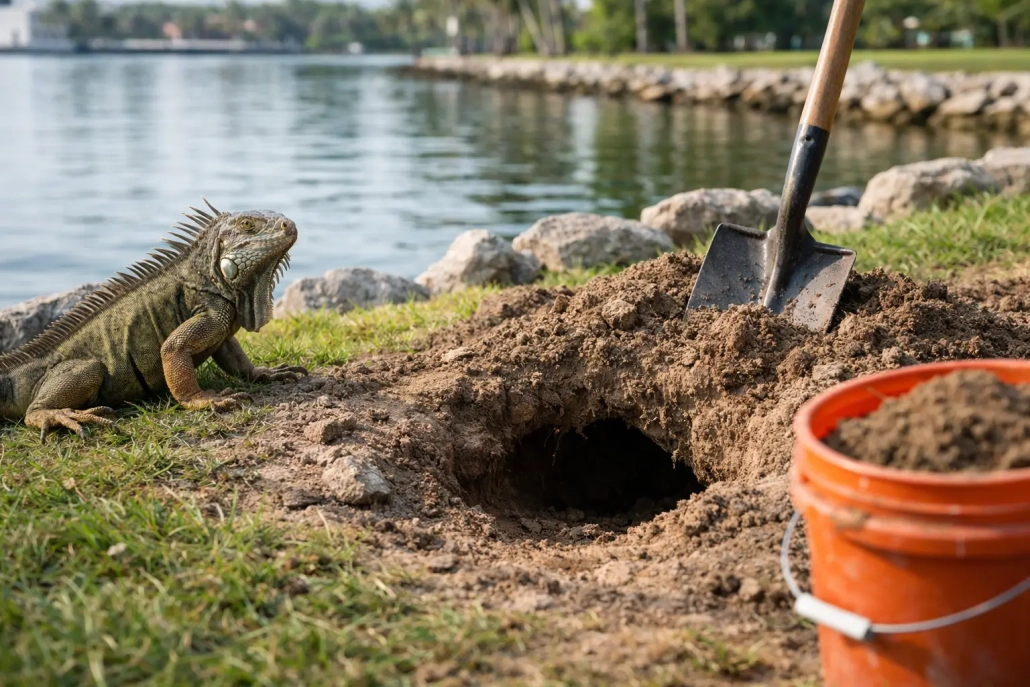
Iguana Nest Removal Before Burrows Cost You
A fresh hole near a pool deck, seawall, driveway, or air-conditioning pad is not just a landscaping issue. In South Florida, it can be the first clear sign that an invasive iguana has started digging a nest or using an existing burrow on your property. Iguana nest removal addresses the problem before loose soil, erosion, droppings, and repeat activity turn one hole into a costly repair.
The trouble is not always what you can see from the surface. Iguanas dig tunnels that may extend beneath pavers, patios, walkways, retaining areas, and shoreline structures. Once a burrow weakens the soil below a hard surface, the repair can involve more than filling a hole. That is why property owners and managers should treat active nesting areas as a property-protection concern, not a wait-and-see situation.
Why Iguana Nests Cause Real Property Damage
Green iguanas are invasive in Florida, and they are strong diggers. Females excavate burrows to lay eggs, often choosing dry, sunny ground with loose soil. Those conditions are common around landscaped beds, canal banks, seawalls, pool areas, golf-course features, and building foundations.
A nest entrance may look small at first. Underneath, however, the tunnel can remove soil that supports a slab, paver system, curb, or embankment. Water makes the situation worse. Rain can wash loosened soil farther into the tunnel, while irrigation and runoff can enlarge the weak area around it.
On a residential property, that may mean cracked pavers, settling walkways, damaged plant beds, or a soft spot next to the pool. At a commercial site, the exposure can be higher. Burrows near marina infrastructure, golf-course paths, mechanical equipment, parking areas, or shoreline improvements can create safety issues and expensive maintenance work.
Seawalls deserve special attention. Iguana tunneling near a seawall can contribute to soil loss behind the wall, especially when water movement and rainfall are already working on the area. Not every burrow means a wall has failed, but ignoring repeated excavation near a shoreline structure is a gamble few property owners need to take.
Nesting Season Makes Timing Matter
Iguanas can reproduce throughout much of the year in South Florida, with nesting activity often becoming more noticeable during the warmer months. A female may return to favorable ground, and other iguanas may use or expand nearby holes. What starts as one nesting site can become a recurring problem if the animals remain on the property.
This is why simply covering a hole is rarely a lasting fix. If an iguana is still active nearby, it may dig around the repair, reopen the burrow, or choose another spot a few feet away. If eggs are present, the timing and condition of the site also matter. A proper response looks at the active animal, the burrow, and the conditions attracting iguanas to the area.
Professional service can help determine whether a hole is an active nest, an old burrow, or damage caused by another animal or drainage issue. That distinction matters before anyone starts digging, filling, or making structural repairs.
Signs You May Have an Active Iguana Nest
You may see a clean, freshly disturbed opening in a sunny bed or along the edge of a slab. Loose dirt pushed outside the entrance, tracks, tail drag marks, and regular sightings of a large female iguana near the same location are also common clues.
Look closely around vulnerable areas rather than focusing only on the hole itself. New settling in pavers, washed-out mulch, cracked edging, chewed vegetation, and droppings on decks or around equipment can show that the issue is broader than a single burrow.
Iguana droppings also create a sanitation concern. They can contaminate surfaces around pools, patios, docks, and outdoor gathering spaces. Like other reptile waste, they may carry salmonella. Families, employees, guests, and pets should not be asked to work around that risk while an active infestation continues.
What Professional Iguana Nest Removal Should Include
A good service is not just about removing one visible iguana. It should begin with an on-site assessment of activity, burrow locations, property risks, and likely access routes. The goal is to remove invasive iguanas safely and in accordance with applicable Florida requirements, then help stop the same area from becoming an easy nesting site again.
The work may include removal of active iguanas, inspection of suspected nesting areas, and attention to burrows that threaten infrastructure. Once the site is clear and conditions allow, damaged holes can be addressed so they are less likely to remain an open invitation for future activity. If a burrow is near a seawall, foundation, deck, or utility equipment, the property owner may also need a qualified contractor to evaluate any structural concern.
That last point is worth being candid about: wildlife removal and structural repair are not the same job. An experienced wildlife-control team can identify the animal problem and help prevent it from continuing. If soil loss or cracking is already significant, do not assume a surface patch has solved the underlying issue.
Florida Iguana Ops approaches the work as local property protection. That means showing up, assessing what is actually happening, removing the invasive animals professionally, and giving you a straightforward explanation of what needs attention next. No gimmicks, no runaround.
Why DIY Nest Removal Can Backfire
It is tempting to grab a shovel, fill the opening, and move on. Sometimes that only sends the iguana to a new location. More concerning, digging around a burrow near a slab, wall, or bank can destabilize already loose soil or hide the extent of erosion.
Handling an iguana also has its own risks. Large animals can bite, scratch, whip with their tails, and carry bacteria. Trying to catch one around a pool, dock, roofline, or electrical equipment can create a bigger problem than the original burrow.
Home remedies meant to scare iguanas away often have mixed results. Repellents, noise devices, and casual barriers may shift activity temporarily, but they do not address an established population, a favorable nesting area, or the property damage already in progress. The right approach depends on where the iguanas are nesting and what they can damage if they continue.
Preventing Repeat Burrowing After Removal
Removal is the first step. Prevention works best when it reduces food, shelter, and access around the places iguanas prefer to use. This does not mean turning your property into a fortress. It means correcting the obvious conditions that make a repeat infestation easy.
Keep fallen fruit and birdseed cleaned up, and avoid leaving pet food outdoors. Manage dense vegetation near vulnerable walls or equipment so iguanas have fewer protected hiding areas. Inspect landscaped borders, canal edges, and the spaces beside patios or pool decks after heavy rain, when fresh digging and soil movement are easier to spot.
For commercial properties, routine inspections are especially valuable around HVAC units, dock areas, golf-course cart paths, landscaped entrances, and guest-use spaces. A facilities manager who catches new burrows early can often avoid emergency repairs and interruptions later.
Physical exclusion may help in certain locations, but it needs to be suited to the site. A solution that works around a planting bed may be wrong for a seawall or a high-traffic marina. The priority is to protect the structure without trapping animals in a way that creates more damage.
Act Before the Hole Gets Bigger
If you are seeing repeated iguanas, new burrows, or soil loss near a pool, seawall, driveway, or foundation, do not wait for the next rainstorm to test the damage. Take photos from a safe distance, keep people and pets away from unstable ground, and have the area inspected.
Fast action is usually less expensive than repairing a failed deck section, eroded bank, damaged landscaping, or compromised equipment pad. A professional removal plan gives you a cleaner property, less sanitation exposure, and a real chance to stop the burrowing cycle before it spreads.



Leave a Reply
Want to join the discussion?Feel free to contribute!