
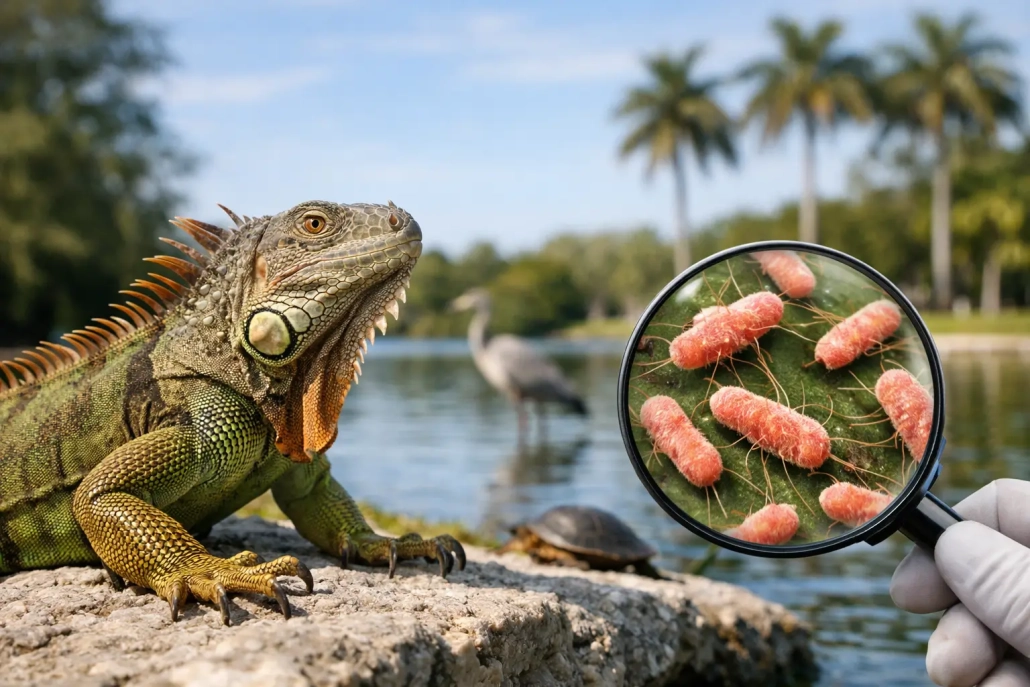
Do Iguanas Carry Salmonella? South Florida Facts
An iguana on a seawall or pool deck can look like a property nuisance. The droppings left behind make it a sanitation issue, too. Do iguanas carry salmonella? Yes, they can. That risk is one reason an active iguana problem should be handled before waste builds up around patios, walkways, docks, landscaping, and outdoor gathering areas.
For South Florida property owners, the practical question is not whether every iguana is visibly sick. Most reptiles carrying Salmonella appear perfectly healthy. The question is whether droppings, contaminated surfaces, pets, children, guests, or maintenance workers are being exposed on your property.
Do Iguanas Carry Salmonella? Yes, They Can
Iguanas, like many reptiles, can carry Salmonella bacteria in their digestive tract. They may shed the bacteria through feces without showing any signs of illness. That means a healthy-looking green iguana near your pool or marina can still leave contaminated waste behind.
People usually get sick when bacteria from reptile droppings gets onto their hands and is then transferred to the mouth, food, drinks, cigarettes, or frequently touched surfaces. The risk is not limited to touching an iguana directly. It can come from cleaning droppings off a deck, moving a planter near a burrow, handling contaminated garden tools, or letting a dog track through waste and then come indoors.
A single dropping does not guarantee someone will get sick. Exposure depends on the amount of bacteria present, how the area is cleaned, and whether proper handwashing happens afterward. Still, repeated iguana activity raises the odds of repeated contamination, especially in areas people use every day.
Why Iguana Droppings Create a Bigger Problem Than a Mess
Large iguanas leave large droppings. On an active property, those piles can collect quickly near pool equipment, docks, patios, boat ramps, garden beds, golf-cart paths, and HVAC units. Rain can spread waste across hard surfaces or carry it toward drains and water-adjacent areas.
The sanitation concern often overlaps with property damage. Iguanas burrow near seawalls, foundations, walkways, pool decks, and landscaped slopes. A property manager may first notice a hole, cracked paver, or eroded edge, then find droppings nearby. Both issues point to the same problem: the animals are established and using the site regularly.
For commercial properties, the stakes can be higher. A contaminated guest area, an unsanitary walkway near a restaurant patio, or recurring droppings around marina facilities creates a maintenance burden that staff should not have to manage indefinitely. If the infestation continues, cleanup becomes a recurring cost instead of a one-time response.
Who Faces the Highest Salmonella Risk?
Anyone can become ill from Salmonella, but some people are more likely to have severe symptoms or complications. Extra caution is needed around young children, adults age 65 and older, pregnant people, and anyone with a weakened immune system.
Pets also deserve attention. Dogs are curious, and they may sniff, lick, or eat iguana droppings. Even if a dog does not become sick, it can bring contamination inside on its paws or fur. Keep pets away from known iguana activity areas until the waste is cleaned and the animals are removed.
Common symptoms of a Salmonella infection can include diarrhea, fever, stomach cramps, nausea, or vomiting. Symptoms can range from mild to serious. Anyone who feels ill after possible exposure should contact a healthcare provider, particularly if symptoms are severe, persistent, or affecting a high-risk person.
How to Clean Iguana Droppings Safely
If you find a small amount of droppings and need to address it right away, treat the area as contaminated. Do not sweep dry waste with a broom or blast it around with a leaf blower. That can spread material across a larger area and onto nearby surfaces.
Use disposable gloves, keep children and pets back, and carefully pick up the waste with disposable towels or a scoop reserved for that purpose. Bag it securely before placing it in the trash. Then clean the hard surface with soap and water first if needed, followed by a household disinfectant used according to its label directions.
Afterward, wash your hands thoroughly with soap and running water. Clean or disinfect any tools used during the job, and avoid bringing contaminated gloves, footwear, or equipment into your home, vehicle, office, or maintenance storage area.
For larger accumulations or droppings around unstable ground, seawalls, electrical equipment, HVAC systems, docks, or difficult-to-reach spaces, do not turn it into a risky DIY project. The waste is only part of the issue. There may be active burrows and more iguanas returning to the same location.
What Not to Do When Iguanas Are Active
Property owners sometimes focus on cleanup while leaving the source untouched. That is how a weekly nuisance turns into a long-running infestation. Avoid these common mistakes:
- Do not feed iguanas, intentionally or by leaving pet food, produce scraps, or open trash accessible outdoors.
- Do not let pets investigate droppings, burrows, or areas where iguanas gather.
- Do not handle an iguana, alive or dead, without proper protection and knowledge of safe procedures.
- Do not assume one removed iguana means the problem is over if you still see fresh droppings, tracks, or new burrows.
It also helps to look at the conditions drawing iguanas in. Dense vegetation, accessible food sources, water access, sunny basking spots, and unmanaged burrow areas can make a property more attractive. Changes to landscaping and site maintenance may reduce activity, but they are not always enough when iguanas are already established.
Removal Protects More Than Your Landscaping
Iguana removal is not just about getting rid of an animal that is eating ornamental plants. It is about reducing repeated contamination and protecting the structures around the areas iguanas favor.
On South Florida properties, that can mean protecting seawalls from burrowing pressure, pool decks from undermined soil, walkways from settlement, and expensive landscaping from ongoing damage. At marinas and waterfront sites, a small burrow can become a bigger repair concern when erosion and water exposure enter the picture.
Professional removal also gives property owners a more controlled response. Instead of repeatedly chasing iguanas away, cleaning waste, and waiting for them to return, a trained team can assess activity, target the animals, and identify where recurring use is happening. That is especially helpful for communities, commercial sites, golf courses, and large residential properties where one person cannot watch every corner of the grounds.
Florida Iguana Ops provides professional iguana removal for property owners who need a straightforward answer to active iguana activity, burrows, droppings, and damage. The goal is simple: show up, handle the problem safely, and help protect the property from the next round of mess and repairs.
When It Is Time to Call for Iguana Removal
Fresh droppings every few days are a clear sign that iguanas are using your property as part of their routine. Visible burrows near a seawall, deck, foundation, driveway, or retaining area make the situation more urgent. So do iguanas congregating near pools, outdoor kitchens, guest spaces, pet areas, or mechanical equipment.
You do not need to wait for a major structural failure or a health scare to act. Early removal is usually easier than dealing with an established population that has learned where to feed, hide, bask, and burrow.
If iguanas are leaving droppings where your family, guests, customers, or workers spend time, treat it like the property issue it is. Clean the immediate mess carefully, keep people and pets clear of active areas, and stop the repeat visits before the damage and sanitation burden grow.



Leave a Reply
Want to join the discussion?Feel free to contribute!