
Pool Iguana Safety: Protect Your Deck and Water
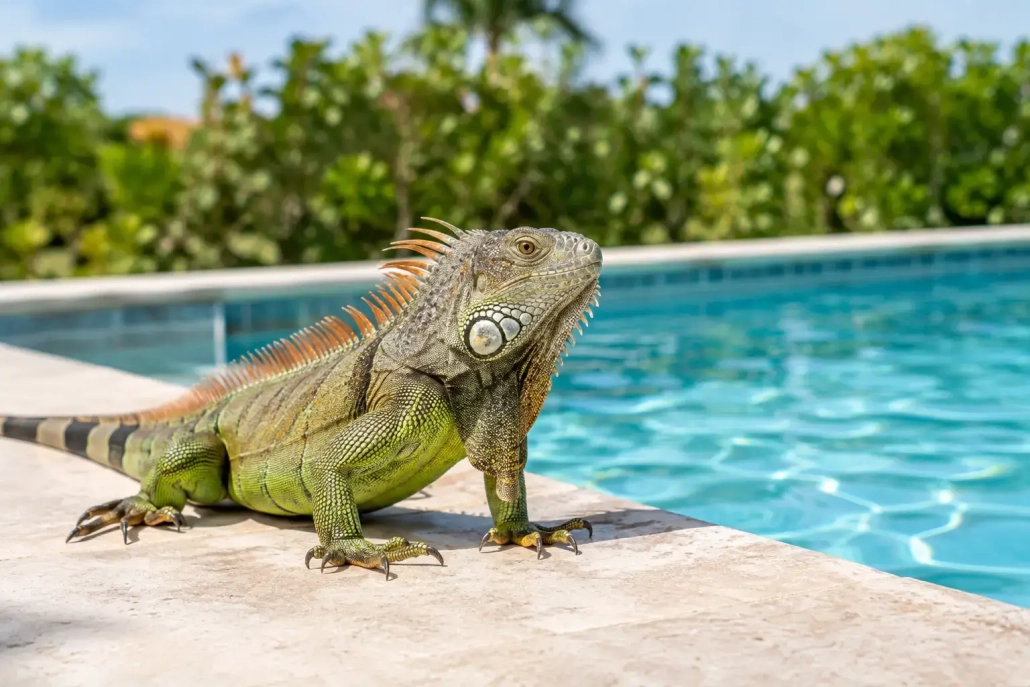
An iguana stretched out beside the pool may look like a nuisance you can deal with later. Around South Florida pools, later can mean droppings on the deck, fresh burrows under pavers, damaged landscaping, and an animal that has learned your property is a reliable place to eat, warm up, and hide. Pool iguana safety means protecting people, pets, and the structure around the water before a small sighting becomes a recurring property problem.
Iguanas are invasive in Florida, and they are drawn to pool areas for the same reasons homeowners enjoy them: sun, water, cover, and landscaped food sources. A clean-looking deck can hide a bigger issue underneath. If iguanas are burrowing along a pool edge, retaining wall, or patio, the risk is not just an unpleasant encounter with wildlife. It is damage that can become expensive to repair.
Why Iguanas Create Pool Safety Problems
Iguanas are not usually looking for a fight, but they can bite, scratch, whip with their tails, and react defensively when cornered. That matters when children, guests, pets, or maintenance crews are moving through a confined pool area. Never try to grab an iguana, chase it into a corner, or use a pool net to remove it. A startled animal can injure someone or end up trapped in the water.
The more common concern is sanitation. Iguana droppings can carry salmonella and other bacteria. On a pool deck, patio furniture, outdoor kitchen counter, or walkway, that waste is more than an eyesore. It creates a contamination concern where people are barefoot, children play, and food may be served.
Droppings can also create a slip hazard when they are wet or stepped on. Treat any area with fresh waste carefully. Keep children and pets away, wear gloves, clean the surface thoroughly, and wash your hands afterward. Do not pressure wash droppings directly into the pool or toward drains without first removing the solid waste safely.
The Damage You Cannot Always See
A pool deck is not just concrete or pavers on top. Beneath it may be compacted fill, plumbing, electrical lines, drainage components, and structural support that keeps the surface level. Iguanas dig burrows for shelter and nesting, and those burrows can undermine soil around decks, walkways, planters, and nearby foundations.
Early warning signs include a hole near the deck edge, loose pavers, sinking spots, cracks that seem to be growing, or soil washing out after rain. You may also see claw marks, tracks, fresh dirt pushed out of a hole, or repeated iguana activity around the same hedge line or retaining wall.
One burrow does not automatically mean your pool deck is failing. The risk depends on its location, depth, soil conditions, drainage, and how much traffic the area gets. But it is not something to ignore. A soft spot beside a pool can turn into a tripping hazard, and repair costs rise quickly once pavers shift or concrete settles.
Iguanas also use equipment areas for shelter. Check around pool pumps, heaters, filters, electrical conduits, and landscape beds near the equipment pad. Their presence can leave waste around service areas and create difficult access for technicians. If you notice animals repeatedly entering an equipment enclosure, do not seal it up while they may still be inside.
Pool Iguana Safety Starts With Smart Habits
The first job is to make the pool area less attractive without creating a risky confrontation. Remove fallen fruit, keep pet food indoors, and avoid leaving food scraps in outdoor trash cans. If iguanas are feeding on ornamental plants near the pool, consider whether those plants need protection or replacement after the active problem is handled.
Keep gates closed and inspect the lower edges of fencing around the pool and yard. Iguanas are capable climbers, so fencing alone will not solve every problem. Still, closing easy access points and reducing hiding cover around the deck can make the property less convenient for them.
Pay attention to the water itself. Iguanas can end up in pools and may struggle to get out, especially in pools with steep walls. A pool escape ramp designed for small wildlife can reduce the chance of an animal drowning in the water. It is a preventive measure, not a removal plan. If an iguana is actively using your pool area, the underlying attraction and access points still need to be addressed.
For daily safety, teach children not to approach iguanas, feed them, or throw objects at them. Keep dogs on a leash when an iguana is nearby. Dogs often trigger a defensive response, and a fast-moving chase around wet decking is a bad situation for everyone.
What to Do When an Iguana Is Near the Pool
Give the animal space and move people and pets away from the immediate area. If the iguana has a clear route out of the yard, do not block it. Keep an eye on where it goes, particularly if it disappears under a deck, into a hedge, behind pool equipment, or into a visible burrow.
If the animal is in the pool, do not jump in after it or try to capture it by hand. Keep swimmers out of the water. A professional can assess the situation and remove the animal without turning a wildlife problem into an injury or sanitation issue.
Afterward, inspect the surrounding area. Look for droppings, disturbed soil, holes along the deck, and signs of additional iguanas. Seeing one large iguana may mean there are others using the same food source, basking area, or burrow system. Repeated sightings deserve more than a quick cleanup.
Avoid DIY methods that can injure animals, damage your property, or put you on the wrong side of local and state rules. Glue traps, poison, improvised snares, and sealing active burrows are not responsible answers. Wildlife control needs to be handled with the right equipment, experience, and legal compliance.
When Professional Removal Makes Sense
Professional removal is the clear next step when iguanas are repeatedly appearing around the pool, leaving droppings, nesting or burrowing near hardscapes, getting into equipment areas, or creating concerns for guests and pets. This is especially true for community pools, hotels, golf properties, marinas, and rental properties, where one unsafe area can create a larger liability issue.
A proper service call should focus on the active animals and the conditions that are keeping them there. That means identifying travel routes, burrows, food sources, and shelter areas, then removing the iguanas safely and advising you on practical next steps for the property. Fast removal matters, but so does doing the job thoroughly enough that you are not dealing with the same animals week after week.
Florida Iguana Ops provides licensed and insured iguana removal for South Florida homes and commercial properties. We show up on time, explain what we find, and focus on protecting the parts of your property that cost the most to repair – decks, walkways, landscaping, equipment areas, seawalls, and foundations. No gimmicks, no runaround.
Clean Up and Repair After Removal
Once the active iguana issue is addressed, clean and inspect the pool area before returning it to normal use. Remove droppings with gloves and a dedicated disposable tool or bag, then disinfect hard surfaces according to the product label. Keep cleanup materials away from pool water and food-preparation areas.
If a burrow is near the deck, do not simply pack it with loose soil and assume the problem is solved. The area may need evaluation for voids, erosion, or shifting material, particularly if you see cracking, settling, or water drainage toward the hole. A pool contractor, paver professional, or qualified structural professional can advise on repairs when damage is visible.
The goal is not to make your backyard feel like a fortress. It is to keep a relaxing pool area from becoming an animal-control, sanitation, and repair problem. When iguanas start treating your deck like home, act early. The safest pool is the one where swimmers, pets, and expensive hardscape are not sharing space with an invasive reptile.



Leave a Reply
Want to join the discussion?Feel free to contribute!