
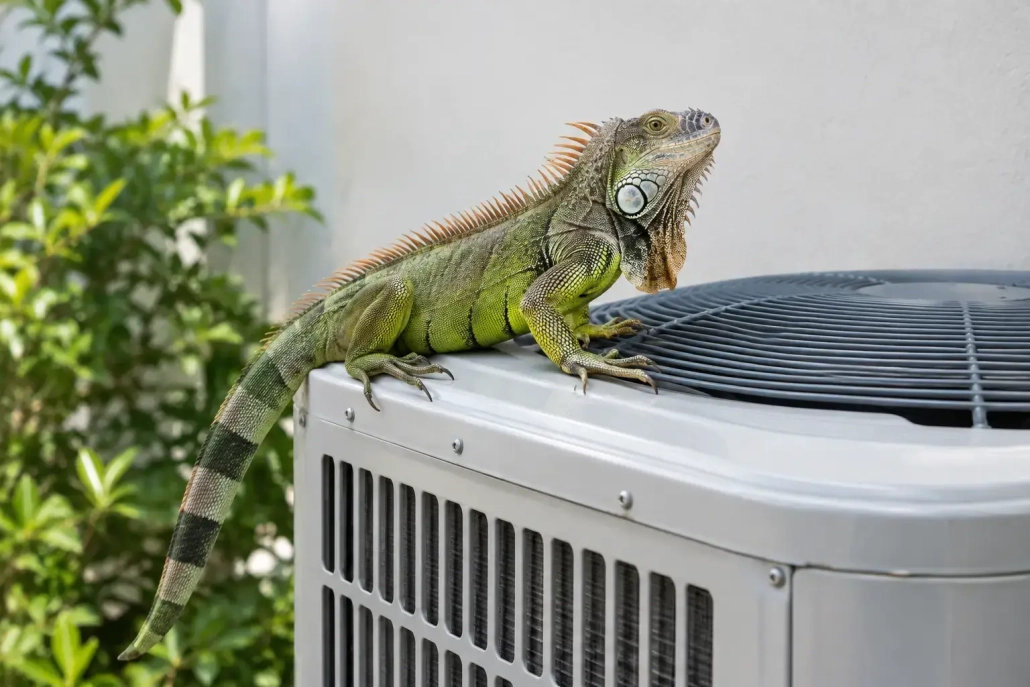
Can Iguanas Damage Air Conditioners? Yes.
A warm outdoor condenser can become a regular iguana hangout fast. It offers a raised perch, heat from the equipment, nearby landscaping, and shelter around the pad or line set. So, can iguanas damage air conditioners? Yes. The damage is not always a dramatic broken unit on day one, but repeated iguana activity can create repair bills, poor system performance, unsanitary conditions, and a bigger property-control problem.
For South Florida homeowners, property managers, and business owners, the right move is to treat iguanas around HVAC equipment as more than a nuisance. Protect the unit, address the animals safely, and do not wait until a small issue becomes an emergency service call during the hottest part of the year.
How Iguanas Damage Air Conditioners
Iguanas do not have to chew through a wire to cause trouble. Their weight, claws, tails, droppings, digging behavior, and repeated use of the area can all affect an outdoor AC unit and the ground supporting it.
A large adult iguana climbing on a condenser can bend or loosen a fan guard, damage light panels, and leave scratches on housing components. If an animal gets inside a damaged or open cabinet, it can interfere with the fan or electrical components. That is a safety concern as much as an equipment concern.
Droppings are another problem. Iguana waste can build up on top of the unit, around the fan guard, and near the pad. Rain can carry that waste into surrounding areas, while dried debris and nesting material can restrict airflow. A condenser needs open space and steady airflow to shed heat. When airflow is reduced, the system has to work harder, which can raise energy use and place added strain on the compressor.
The ground around the unit matters too. Iguanas are known for burrowing. When they dig under or beside a concrete pad, pavers, or a landscaped equipment area, they can undermine the soil that keeps the condenser level. A tilted or settling pad may stress refrigerant lines, drainage connections, and electrical conduit. It can also make future HVAC service more difficult.
The Risk Is Often Indirect, but Still Expensive
Not every iguana near an air conditioner will cause immediate damage. A single animal passing through the yard is different from several iguanas using the same unit as a daily sunning spot or shelter. The concern rises when there are visible droppings, repeated climbing, fresh burrows, or signs that the unit has become part of an established route through the property.
The most expensive issues are often indirect. A loose panel can let more debris into the cabinet. A shifted pad can put tension on a line. A fan that cannot move air properly can contribute to overheating. None of those problems should be written off as normal wear when there is active iguana traffic around the equipment.
Commercial properties have more at stake. One damaged or poorly performing condenser can affect tenants, guests, restaurant operations, office comfort, equipment rooms, or customer areas. At a marina, golf course, condominium, or retail site, recurring iguana activity around mechanical equipment can also create a sanitation and appearance issue. Waiting for a full breakdown is usually the costly choice.
Signs Iguanas Are Affecting Your AC Unit
Look around the entire unit, not just on top of it. Fresh droppings, claw marks, scattered mulch, disturbed soil, and burrow openings near the pad all point to repeat activity. You may also notice bent fan guards, debris caught around the housing, or a new lean in the concrete pad.
Pay attention to changes in how the system runs. Rattling, banging, reduced cooling, frequent cycling, or an outdoor fan that sounds strained should be checked by a qualified HVAC technician. Those symptoms do not prove iguana damage, but they are not something to ignore when reptiles have been active around the condenser.
If you see an iguana inside the equipment area or hear an animal moving in the cabinet, keep clear. Do not reach through a fan guard, remove electrical panels, or spray the animal with water. Outdoor AC equipment carries electrical hazards, and a cornered iguana can bite or whip with its tail.
What to Do When Iguanas Are Around Your Condenser
Start by giving the unit a safe visual inspection from a distance. Check for fresh waste, burrows, settling soil, damaged guards, and overgrown vegetation. Take photos if you manage a commercial property or need to document recurring conditions for maintenance records.
If the unit is making unusual noise, has visible damage, or is not cooling properly, contact an HVAC professional. They can inspect the fan, electrical components, refrigerant lines, mounting pad, and airflow clearance. Wildlife removal and HVAC repair are different jobs, and treating only one side of the problem can leave you right back where you started.
For active iguana activity, professional removal is the practical next step. Trying to chase iguanas away may work for an afternoon, but it does not solve the reason they keep returning. A trained wildlife-control team can remove the animals safely and help identify the travel paths, burrows, and habitat conditions that are putting your equipment at risk.
Florida Iguana Ops handles invasive iguana removal with property protection in mind. That means looking beyond the animal on the condenser and addressing the activity around the pad, landscaping, walls, walkways, and other vulnerable areas. No gimmicks, no runaround – just local professionals who show up and do the job right.
Preventing Iguanas From Returning to HVAC Equipment
Once the animals are removed and the unit has been inspected, make the area less inviting. Keep shrubs and groundcover trimmed back so iguanas do not have easy cover right beside the condenser. Clear leaf litter, loose piles of branches, and stored items that create hiding places. Repair broken fencing or gaps that give iguanas an easy route into a courtyard, equipment yard, or pool area.
Physical barriers can help, but they need to be installed carefully. Any enclosure around an AC unit must preserve manufacturer-required airflow and technician access. A barrier placed too close to the condenser can create the same airflow problem you are trying to avoid. Before adding screens, fencing, or covers, confirm the clearances with an HVAC professional.
Burrows near the pad should not simply be filled while an iguana may still be using them. That can force the animal to dig elsewhere, potentially closer to a foundation, driveway, seawall, or another mechanical unit. Removal first, then proper burrow management and site cleanup, is the safer sequence.
It also helps to think beyond the condenser itself. A property with ripe fruit, dense waterfront vegetation, open access under decks, and warm paved surfaces gives iguanas plenty of reasons to stay. You may not eliminate every attractant, but reducing shelter and addressing the active population can make a real difference.
Do Not Let a Perch Become a Repair Bill
An iguana sitting on an air conditioner may look like a minor backyard annoyance. Repeated activity is different. Droppings, debris, digging, and physical contact can turn a reliable cooling system into a maintenance headache, especially when South Florida heat makes AC failure hard to tolerate.
If you are seeing iguanas on or around your condenser, act before the unit starts showing symptoms. Get the equipment checked when needed, remove the animals safely, and protect the ground and access points around the system. A little attention now can keep your air conditioner from becoming the next expensive part of an iguana problem.



Leave a Reply
Want to join the discussion?Feel free to contribute!