
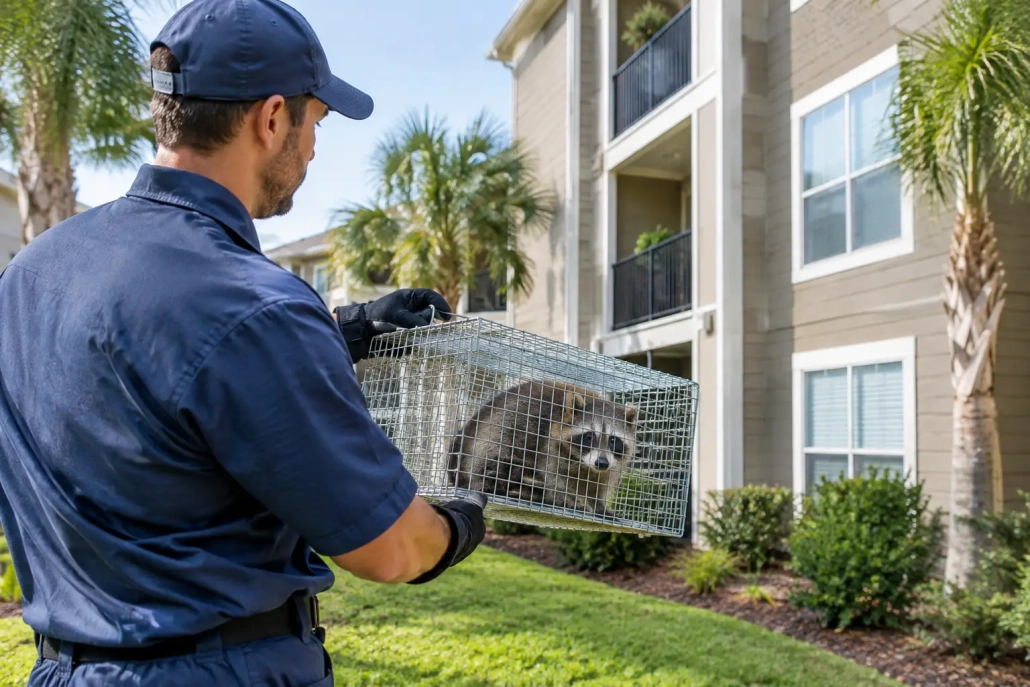
Apartment Complex Wildlife Removal Example in Florida
A real apartment complex wildlife removal example often starts with what looks like a landscaping complaint: iguanas near a retention pond, droppings on a pool deck, or a new hole beside a sidewalk. Then maintenance finds that the hole leads under a walkway, irrigation lines are exposed, and residents are reporting reptiles near first-floor patios. At that point, it is no longer a minor nuisance. It is a property-protection issue that needs a fast, organized response.
For South Florida apartment managers, invasive iguanas create a difficult mix of tenant concerns, sanitation problems, landscaping loss, and expensive infrastructure risk. The right wildlife removal plan does more than pick up a few visible animals. It identifies where iguanas are living, removes them legally and professionally, and helps the property stop feeding the same problem week after week.
Apartment Complex Wildlife Removal Example: From Complaint to Control
Consider a mid-sized apartment community with several low-rise buildings, a pool area, lake frontage, and decorative plant beds along the sidewalks. Residents begin seeing green iguanas on patios and around the pool furniture. The maintenance team notices droppings near the mail center and chewed vegetation around the water’s edge.
At first, the issue seems manageable. Staff members chase iguanas away when they see them, and landscaping crews refill a few shallow holes. But iguanas are territorial, and a property with water, sun, dense plants, and easy food sources gives them exactly what they need. Chasing one away does not remove it from the site, and filling a burrow without addressing the animal can lead to new digging nearby.
Within a few weeks, the situation grows. A larger burrow appears along a pond bank near a pedestrian path. Another is found close to a ground-level HVAC pad. The property manager now has three immediate concerns: keeping residents away from unstable areas, preventing more damage, and getting control of the infestation before the next inspection or resident complaint.
A professional assessment starts by walking the grounds and looking beyond the iguanas in plain sight. Experienced removal teams check pond edges, canal banks, rock piles, dense shrubs, pool equipment areas, drainage structures, rooflines, and the quiet gaps behind buildings. These are common places for iguanas to hide, bask, nest, and travel through a property without being noticed.
The assessment should also document active burrows, droppings, damaged plants, and any signs of soil movement near concrete, walls, decks, or utility equipment. This gives the manager a clear record of the issue and helps prioritize the areas where damage could become costly.
Why Iguanas Are a Bigger Risk at Multifamily Properties
An apartment complex has more moving parts than a single-family home. There are residents, visitors, vendors, maintenance staff, pool guests, pet areas, parking lots, and shared outdoor spaces. One iguana problem can affect all of them.
Burrowing is often the largest concern. Iguanas dig into soft ground along lakes, canals, seawalls, sidewalks, patios, and foundations. Not every burrow causes structural failure, but repeated digging can remove soil from where it needs to stay. That can contribute to cracked concrete, uneven walkways, compromised landscaping, erosion along a shoreline, and damage around pool decks or equipment pads.
The sanitation side matters too. Iguana droppings are unpleasant around entrances, patios, pool areas, and playground-adjacent spaces. They can carry salmonella, creating a concern for residents, children, pets, and employees who may come into contact with contaminated surfaces. Droppings also attract insects and can make an otherwise well-kept community look neglected.
There is a business cost as well. A property manager may spend money repeatedly replacing plants, repairing irrigation, cleaning common areas, and sending maintenance staff to respond to wildlife complaints. Those small expenses add up. If a burrow contributes to drainage damage, a damaged seawall, or a safety issue near a walkway, the repair bill can rise quickly.
What Professional Removal Looks Like
The removal plan for an apartment community should fit the property, the infestation level, and the areas at risk. A one-time visit may be enough for a small, isolated issue. A large lakefront complex with established iguana activity may need scheduled service to bring numbers down and keep them from rebuilding.
A professional team works in a way that respects residents and keeps the site operating. That means coordinating access with management, avoiding disruption near occupied units, and handling removal according to applicable Florida rules. Staff should not be left to improvise with traps, poisons, or risky attempts to catch large reptiles around residents and pets.
For the example property, removal efforts focus first on the active pond bank, pool perimeter, and HVAC area. The goal is to reduce the animals creating immediate risk, then address the travel routes and hiding areas that allow more iguanas to settle in. The property manager receives clear communication about what was found, what was removed, and where the remaining risks are located.
Florida Iguana Ops approaches this work as a property-protection job, not a gimmick. Licensed and insured local service matters when wildlife activity is happening around tenant spaces, valuable equipment, and infrastructure that cannot be left exposed.
Fix the Conditions That Keep Bringing Iguanas Back
Removal is the necessary first step, but a complex also needs practical prevention. No property can be turned into a zero-wildlife zone, especially near water. The goal is to make the grounds less attractive and catch new activity before it becomes a larger problem.
Start with food sources. Residents should not feed iguanas or leave pet food outside. Fallen fruit should be cleared from common areas when possible, and open trash should be managed. Even unintentional feeding teaches iguanas that a community is an easy place to return to.
Landscaping deserves attention as well. Dense vegetation along water and buildings can give iguanas protected cover. A landscaper does not need to strip the property bare, but trimming back excessive hiding spots and protecting high-value plantings can reduce damage. Maintenance staff should also know to report fresh digging instead of simply covering it over.
For active burrows near structural features, the sequence matters. First, confirm that removal has been handled. Then have qualified professionals assess and repair the affected area as needed. Closing a burrow while an animal is still using it can create another problem, and ignoring unstable soil near concrete or a seawall is not a cost-saving move.
Give Residents a Clear Way to Report Activity
Property managers do not need residents taking wildlife control into their own hands. They do need residents to report what they see. A short notice can direct tenants to contact the office when they notice burrows, repeated iguana activity near a unit, droppings in common areas, or damage to plants and outdoor equipment.
It helps to explain that sightings are useful, but location and timing are even more useful. “Large iguana behind Building 4 near the east stairwell at 8 a.m.” gives maintenance and removal crews something they can act on. A vague report after the animal is gone may not reveal where it is nesting or traveling.
Managers should also set a firm expectation: do not feed, corner, touch, or attempt to capture iguanas. Large adults can bite, scratch, whip with their tails, and create a scene in a shared living area. Keeping residents informed protects them and gives the removal process a better chance of working.
When an Apartment Complex Should Call for Help
A single iguana sighting does not always call for an emergency response. Repeated sightings, active burrows, droppings near amenity areas, damaged landscaping, or activity around a seawall, deck, sidewalk, or HVAC equipment are different. Those are signs that the property has an established issue, not a passing visitor.
The best time to act is before maintenance costs and tenant complaints start stacking up. Document the locations, keep people clear of questionable ground, and bring in a qualified removal team that can assess the full property instead of reacting to one reptile at a time. A clean, safe community is easier to maintain when invasive wildlife is handled early and handled right.



Leave a Reply
Want to join the discussion?Feel free to contribute!