
Five Iguana Attractants Around Your Home
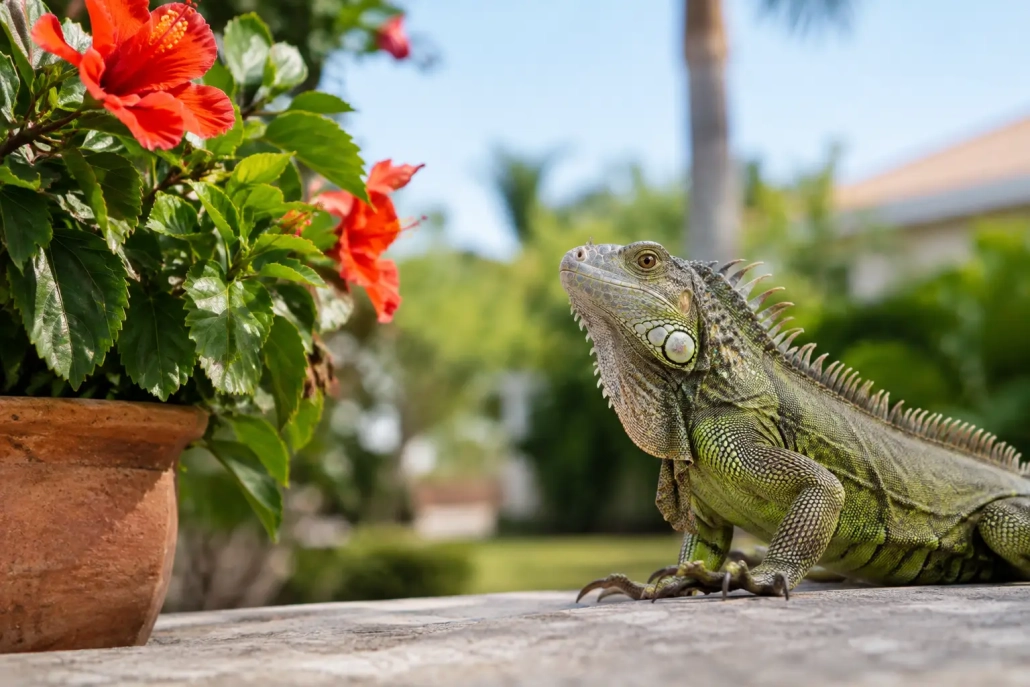
A big green iguana stretched across a pool deck is not just a surprise visitor. On a South Florida property, one sighting can be a sign that your yard offers food, shelter, water, or an easy place to dig. These five iguana attractants around homes explain why reptiles keep coming back and why waiting can turn a manageable nuisance into damaged landscaping, contaminated outdoor areas, or a compromised seawall.
Green iguanas are invasive in Florida. They are strong climbers, capable swimmers, and determined burrowers. Once they identify a reliable spot, they may return daily, and nearby iguanas can follow. Removing what attracts them helps reduce future activity, but it does not solve an established infestation on its own. Active burrows and repeated sightings call for professional removal before damage spreads.
1. Fruit Trees, Vegetables, and Flowering Plants
Iguanas are primarily plant eaters, and a well-kept South Florida yard can look like an open buffet. They feed on tender leaves, flowers, vegetables, and ripe fruit. Hibiscus, bougainvillea, orchids, leafy greens, squash, melons, berries, mangoes, bananas, and citrus can all draw attention depending on what is growing and ripening.
The trouble is not limited to a few missing leaves. Iguanas can strip landscaping, destroy garden beds, knock over container plants, and leave droppings where people, pets, and guests spend time. For a restaurant patio, community common area, or golf course landscape, that creates a sanitation issue as well as an appearance problem.
Pick up fallen fruit promptly and harvest produce as it ripens. Covering vegetable beds and protecting especially vulnerable plants may help, but plant changes alone can be a trade-off. Removing every attractive plant is rarely realistic, especially on established properties. If iguanas are already feeding there regularly, removal should come first. Otherwise, the same animals may simply move to the next food source on the property.
2. Pet Food, Bird Feeders, and Open Trash
Iguanas do not need a formal feeding station to benefit from one. Pet food left outside, spilled seed beneath bird feeders, food scraps near an outdoor kitchen, and unsecured trash create easy feeding opportunities. Even if iguanas are not interested in every item, food waste can support insects and rodents that make a property feel active and sheltered.
Outdoor feeding habits can also teach iguanas where to return. A dish of dog food on the patio each morning becomes a predictable stop. So does a bird feeder that drops seed into a mulched bed below. The fix is straightforward: feed pets indoors when possible, clean up spills, use secure trash containers, and avoid leaving food outside overnight.
Do not intentionally feed iguanas, even if they seem calm or familiar. Feeding makes them less wary around people and encourages repeated visits. It can also bring more animals into a space not built to handle them.
3. Water Sources Near the House
Pools, ponds, canal edges, fountains, birdbaths, leaky irrigation heads, and dripping hose connections can all help keep iguanas comfortable. Iguanas are closely tied to water in South Florida, particularly where a property provides both a drink and sunny areas to warm up nearby.
A pool deck is a common problem area. Iguanas may bask on warm pavers, climb into the pool area, leave waste near furniture, and hide in dense plantings around the enclosure. Their droppings are more than unpleasant. Reptile waste can carry salmonella, creating a concern around pools, outdoor kitchens, walkways, and children’s play areas.
You do not need to remove a pool or drain a pond to make your property less inviting. Start by repairing irrigation leaks, emptying standing water where practical, and keeping pond edges and nearby landscaping maintained. Pool cages, gates, and lower screening should also be checked for access points. A small opening can be enough for an iguana to get through or establish a regular route.
4. Dense Landscaping, Rock Piles, and Clutter
Iguanas need cover from people, pets, and bad weather. Thick hedges, overgrown ground cover, stacked lumber, decorative rock piles, brush, and clutter beneath decks can give them places to hide between feeding and basking. Dense vegetation near a foundation, seawall, or pool can also conceal early burrowing activity until the damage is obvious.
This is where routine property maintenance matters. Trim shrubs so there is visible space beneath them, remove yard debris, and keep storage areas orderly. On commercial properties, inspect behind mechanical equipment, near dumpster enclosures, and along fence lines. These areas are often quiet, warm, and rarely disturbed.
Still, clearing vegetation is not a complete answer if iguanas have already excavated tunnels. Burrows can run beneath walkways, driveways, patios, pool decks, foundations, and seawalls. Filling a hole without addressing the animal may lead to a new opening nearby. On waterfront property, that can be a costly mistake. Burrowing can weaken soil support and contribute to erosion around seawalls and canal banks.
5. Warm Surfaces and Easy Access Routes
Iguanas are cold-blooded, so they seek sunny surfaces that hold heat. Pool decks, concrete walkways, roofs, docks, seawalls, retaining walls, and rocks along a water feature can all become regular basking spots. A warm surface by itself may not create an infestation, but paired with food, cover, and water, it becomes part of a very attractive setup.
Access matters just as much. Overhanging branches, untrimmed palms, gaps in fences, damaged screens, open gates, and low rooflines can create easy paths onto a property. Iguanas climb well, so a standard fence is not always enough to keep them out. They can also travel along canals, drainage areas, and connected yards, which is why activity often affects several neighboring properties.
Walk the exterior with an eye for routes, not just holes. Look up at branches touching the roof, inspect gates and screens, and pay attention to where iguanas appear at the same time each day. That pattern can reveal a preferred basking area, feeding site, or travel corridor.
When Attractants Become a Property-Damage Problem
Reducing attractants is good prevention, but it is not a substitute for removal when you see active iguanas, fresh droppings, damaged plants, or burrow openings. The longer an iguana colony has access to food and cover, the more likely it is that burrowing and repeat visits will continue.
Be especially careful around seawalls, docks, pool decks, foundations, and HVAC equipment. Iguanas can damage insulation, wiring, and components around outdoor mechanical systems. They can also create hazards on walkways and contaminate areas used by residents, customers, and employees.
Do not try to corner or grab an iguana yourself. They can bite, scratch, and whip with their tails when threatened. Handling also involves legal and safety considerations that homeowners and property managers should not have to sort out on the fly. A licensed, insured removal professional can assess the activity, remove the animals safely, and identify the conditions that are keeping them on site.
Florida Iguana Ops works with homeowners and commercial property decision-makers across South Florida to deal with the immediate problem and protect the property behind it. No gimmicks and no runaround – just practical removal and clear guidance on what needs attention next.
A cleaner yard, repaired access points, and tighter food and water habits can make a real difference. But if iguanas are already digging, feeding, or leaving droppings around your property, act before a small attraction becomes an expensive repair.



Leave a Reply
Want to join the discussion?Feel free to contribute!