
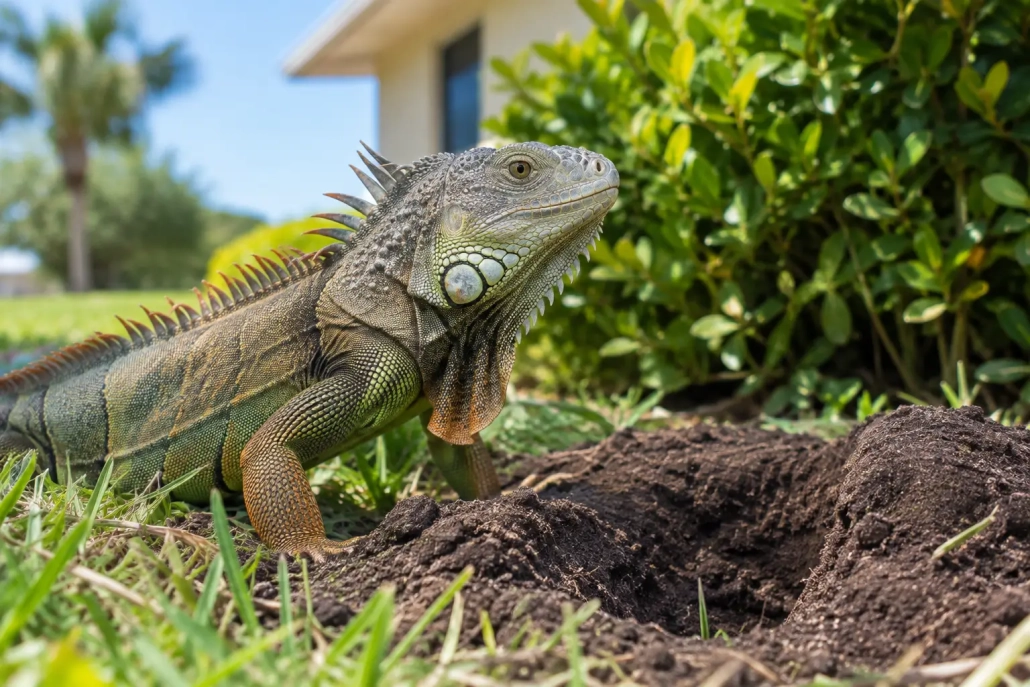
Why Iguanas Dig Holes Around South Florida Homes
A fresh hole beside a pool deck, seawall, driveway, or air-conditioning pad is not just a landscaping issue. Understanding why iguanas dig holes helps explain why one or two reptiles can turn into an expensive property problem. In South Florida, invasive green iguanas use burrows for shelter, nesting, temperature control, and escape. Once they find a protected spot with soft soil and easy access to food, they often return to the same area.
The hole you see may only be the visible part of the problem. Burrows can run beneath walkways, patios, pavers, retaining walls, and shoreline structures. Soil can shift, slabs can lose support, and repairs can become much more costly if the activity continues.
Why Iguanas Dig Holes in the First Place
Iguanas are strong diggers with a practical reason for it: a burrow gives them a safer place to live. South Florida’s warm climate, irrigated landscaping, canal banks, and sandy soil make many residential and commercial properties easy territory for them.
Shelter From Weather and Predators
A burrow provides cover from predators, heavy rain, heat, and sudden cold snaps. Iguanas cannot regulate their body temperature internally like mammals do, so they seek out spaces that help them manage heat and stay protected.
A hole under dense shrubs, a deck, a shed, or a piece of outdoor equipment offers shade and concealment. Burrows along canal banks and seawalls can be especially attractive because the ground is often soft and the nearby water provides a reliable route in and out of the area.
Nesting Sites for Female Iguanas
Nesting is one of the biggest reasons iguanas dig. Female iguanas create underground nesting chambers where they lay eggs, usually choosing loose, well-drained soil that receives warmth. Mulched beds, planter areas, sandy slopes, and ground near foundations can all become targets.
A nesting burrow may look like a simple opening at first, but it can extend farther than expected. Even after the eggs hatch or fail to hatch, the tunnel and disturbed soil can remain. Other iguanas may then use the area as shelter, especially if it has already been established as a safe location.
A Reliable Escape Route
Iguanas are wary animals. When they feel threatened, they need a fast place to disappear. A burrow near a wall, fence line, dock, pool enclosure, or landscaping border gives them exactly that.
This is why homeowners sometimes see an iguana one day and a new hole the next. It may not be random activity. The animal may be setting up a dependable escape route close to a food source, warm pavement, sunning area, or water access.
Where Burrowing Causes the Most Damage
Not every hole creates the same risk. A shallow opening in an unused corner of a large yard is different from an active burrow beside a structural feature. The concern is not just the size of the animal. It is the location of the digging, the amount of soil displaced, and whether more iguanas are using the site.
Seawalls, Canal Banks, and Shorelines
Burrowing near a seawall or canal bank deserves quick attention. Iguanas can loosen soil behind and around shoreline structures, contributing to erosion and washout. Water movement and heavy rain can make the problem worse by carrying away disturbed soil.
A seawall is not something to gamble with. If burrows appear nearby, the right move is to address the animals before filling holes and making repairs. Otherwise, you may pay to restore soil only to have the digging start again.
Pool Decks, Patios, and Walkways
Pavers and concrete depend on stable soil underneath. When iguanas tunnel beside or beneath a deck, patio, or walkway, they can leave voids that allow surfaces to settle, shift, or crack over time.
The risk depends on the depth and placement of the burrow. Still, a growing gap at a slab edge, loose pavers, sinking spots, or cracks that seem to spread should not be ignored. These issues can create trip hazards as well as repair bills.
Foundations, Driveways, and Retaining Walls
Iguanas generally are not trying to enter a home through a foundation. They are looking for protected soil. But a burrow close to a foundation, driveway edge, retaining wall, or utility area can affect the ground around those features.
Repeated excavation and rainwater moving through an open tunnel can undermine compacted soil. On commercial properties, that can create liability concerns around guest paths, parking areas, entrances, and landscaped common areas. On residential properties, it can damage the parts of the yard that are hardest and most expensive to restore.
Landscaping and Mechanical Equipment
Freshly planted beds are easy digging ground. Iguanas can uproot plants, disturb irrigation, and leave droppings around outdoor living areas. Burrows near HVAC equipment also matter because shifting soil can affect pads, drainage, and access for service technicians.
The sanitation issue is separate but real. Iguana droppings around pools, patios, docks, and outdoor dining areas are unpleasant and can carry bacteria, including salmonella. A property can look clean at a glance while still having an ongoing contamination problem around the edges.
Signs an Iguana Burrow Is Active
A single hole is worth watching, but several signs point to active use. Fresh loose soil at the entrance, smooth tracks leading in and out, droppings nearby, and regular iguana sightings are common indicators. You may also notice damaged plants, disturbed mulch, or a hole that has been reopened after you filled it.
Do not assume a burrow is inactive because you do not see an iguana standing near it. Iguanas spend much of the day moving between sunning areas, feeding spots, water, and shelter. They may use the hole when the property is quiet or when they sense people nearby.
Why Filling the Hole Is Usually Not Enough
Filling an active burrow without removing the iguana can be a short-term patch at best. The animal may dig back through the same location, start another tunnel nearby, or become trapped if the opening is sealed while it is inside. That can create an odor issue and still does nothing about other iguanas using the property.
The better order is to identify the activity, remove the nuisance iguanas safely and legally, then address the burrow and any damage. Depending on the site, that may mean backfilling and compacting soil, repairing irrigation, restoring landscaping, or having a qualified contractor inspect structural areas such as seawalls and decks.
It also helps to remove what is attracting repeat activity. Fallen fruit, accessible pet food, open compost, dense hiding cover, and easy shoreline access can all make a property more appealing. Habitat changes can reduce pressure, but they are not a substitute for removal when iguanas are already established.
When to Call for Professional Iguana Removal
Call for help when burrows are appearing near valuable structures, when you see repeated iguana activity, or when the property includes a pool, seawall, marina, golf course, restaurant patio, or shared outdoor area. These are not situations where trial and error makes sense.
Professional removal is particularly useful when the animals are difficult to reach, when several iguanas are involved, or when the property needs a consistent plan rather than a one-time response. Florida Iguana Ops handles invasive iguana problems with the goal that matters most to property owners: stop the active damage before a manageable hole becomes a repair project.
If you spot fresh digging near a deck, seawall, foundation, or walkway, take a photo, keep people and pets away from unstable ground, and get the activity checked promptly. Acting early is usually the least expensive way to protect the property you worked hard to maintain.



Leave a Reply
Want to join the discussion?Feel free to contribute!