
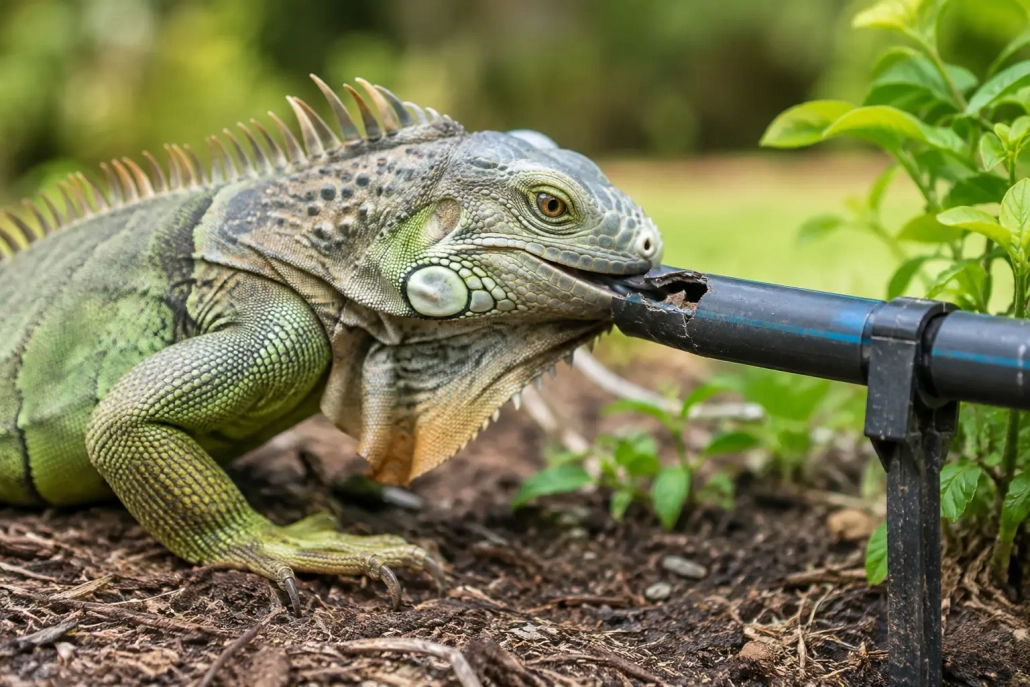
Can Iguanas Damage Irrigation Pipes? Yes.
A wet patch beside a walkway, a sprinkler zone that suddenly loses pressure, and fresh iguana droppings near the landscaping are not separate problems. They can all point to the same costly issue. Can iguanas damage irrigation pipes? Yes. While they are not typically chewing through PVC lines, their burrowing, digging, and repeated traffic can crack fittings, expose shallow pipe, shift sprinkler heads, and create leaks that get worse below the surface.
Can Iguanas Damage Irrigation Pipes?
Iguanas cause irrigation damage mainly by disturbing the soil that supports the system. Green iguanas are strong diggers. They excavate burrows for shelter and nesting, often in sunny, well-drained areas near landscape beds, retaining walls, pool decks, seawalls, walkways, and canal edges. Unfortunately, those are also common places to find irrigation lines, valves, and sprinkler heads.
A burrow can remove soil from beneath a pipe or fitting. Once that support is gone, the line may flex under water pressure, foot traffic, lawn equipment, or settling ground. PVC and poly tubing can crack, joints can separate, and sprinkler risers can lean or snap. One small leak then saturates the surrounding soil, making the ground softer and more likely to collapse.
The damage is often gradual. A property owner may first notice one weak sprinkler head or an unusually green patch of grass. By the time water is pooling, a valve box is sinking, or a section of landscaping is washing out, the problem may involve more than a simple broken head.
Why Burrows Create Bigger Problems Below Ground
An irrigation pipe is only as stable as the soil around it. When iguanas tunnel beneath sod, mulch beds, pavers, or shrubs, they leave open voids that change how water moves through the property. Rainwater and irrigation runoff can enter those spaces, carry soil away, and enlarge the void.
That is why an iguana problem near an irrigation line should not be treated as just a landscaping annoyance. A leak can drive up water bills, starve nearby plants of water, and damage turf. On properties with slopes, drainage swales, seawalls, or hardscape nearby, saturated soil can contribute to erosion and settling.
The risk depends on where the infestation is happening. A shallow burrow in an open planting bed may only affect a sprinkler line. Repeated burrowing near a pool deck, driveway edge, retaining wall, or seawall is more serious because the same loss of soil can affect expensive infrastructure.
Signs Iguanas May Be Affecting Your Irrigation System
Do not wait for a broken pipe to become obvious. Walk the property after a scheduled irrigation cycle and look for changes around areas where iguanas are active. Common warning signs include:
- Soft, sunken, or muddy spots in turf and landscape beds
- Water bubbling up from soil or pooling around a sprinkler head
- Sprinkler heads that lean, spray in the wrong direction, or fail to pop up
- Fresh burrow openings near valve boxes, pipes, pavers, and planting beds
- A sudden jump in water usage or a zone with noticeably low pressure
Not every irrigation leak is caused by iguanas. Tree roots, aging fittings, mower damage, poor installation, and normal settling can all be responsible. But if you have active burrows, visible iguanas, scattered droppings, or dug-up mulch in the same area, it makes sense to treat the wildlife activity as part of the repair plan.
What to Do When You Find Burrows Near Irrigation Lines
Start by documenting what you see. Take photos of the burrow opening, wet areas, damaged heads, and the surrounding hardscape before you disturb anything. If a zone is clearly leaking or flooding, turn off that irrigation zone or shut off the controller until an irrigation professional can inspect it. Continuing to run water through a damaged line can wash away more soil and make the repair larger.
Avoid collapsing or filling an active burrow without checking the area carefully. A burrow may extend farther than expected, and simply packing dirt into the opening does not address the iguana that created it. The animal may reopen the tunnel nearby, sometimes closer to a pipe, deck, wall, or foundation edge.
If the irrigation system needs repair, have the affected pipe, fittings, and sprinkler heads inspected after the iguana activity has been addressed. Repairing a line while leaving an active infestation in place can lead to the same damage all over again. The practical order is to stop the leak, remove the nuisance iguanas safely, repair the system, then restore and monitor the disturbed area.
Protecting Irrigation Lines From Repeat Damage
There is no single fix for every property. A large waterfront property, a golf course, a marina, and a home with a small backyard all have different exposure points. Still, reducing the things that make an area attractive to iguanas can limit repeat digging.
Keep landscape beds maintained and remove fallen fruit or other easy food sources. Repair gaps beneath decks, sheds, and equipment pads where iguanas may hide. Where irrigation lines are regularly exposed by erosion or digging, an irrigation contractor may be able to adjust depth, improve protection around vulnerable components, or relocate surface-level heads and lines away from known burrow zones.
It also helps to inspect after heavy rain. South Florida rain can turn a small hidden void into a visible washout quickly, especially where irrigation and stormwater runoff meet. Fresh soil piles, new holes, and tilted pavers deserve attention before the next watering cycle adds more water to the problem.
When Professional Iguana Removal Makes Sense
One iguana passing through the yard is different from a repeat infestation with burrows, droppings, damaged landscaping, and irrigation issues. If iguanas are returning to the same beds or digging near water lines, pool equipment, seawalls, or building edges, removal is the responsible next step.
Professional removal helps protect the property without leaving you to handle a large reptile, manage traps, or guess at local requirements. Florida Iguana Ops provides licensed and insured, local removal for residential and commercial properties where invasive iguanas are creating real property risk. The goal is straightforward: address the animals causing the damage so repairs are not wasted on a problem that is still active.
For commercial properties, quick action can be especially valuable. A leaking irrigation zone can create muddy guest areas, dead landscaping, trip hazards, and water waste. At a marina, golf course, apartment community, or managed property, recurring burrows can turn a minor maintenance call into an ongoing operational problem.
A broken sprinkler head is easy to replace. The soil loss and repeat burrowing behind it are what can make the repair expensive. If iguanas are active around your irrigation system, handle the leak promptly, address the animals causing the disturbance, and keep an eye on the area after every watering cycle. That is how you protect the lawn, the pipes, and the property underneath both.



Leave a Reply
Want to join the discussion?Feel free to contribute!