
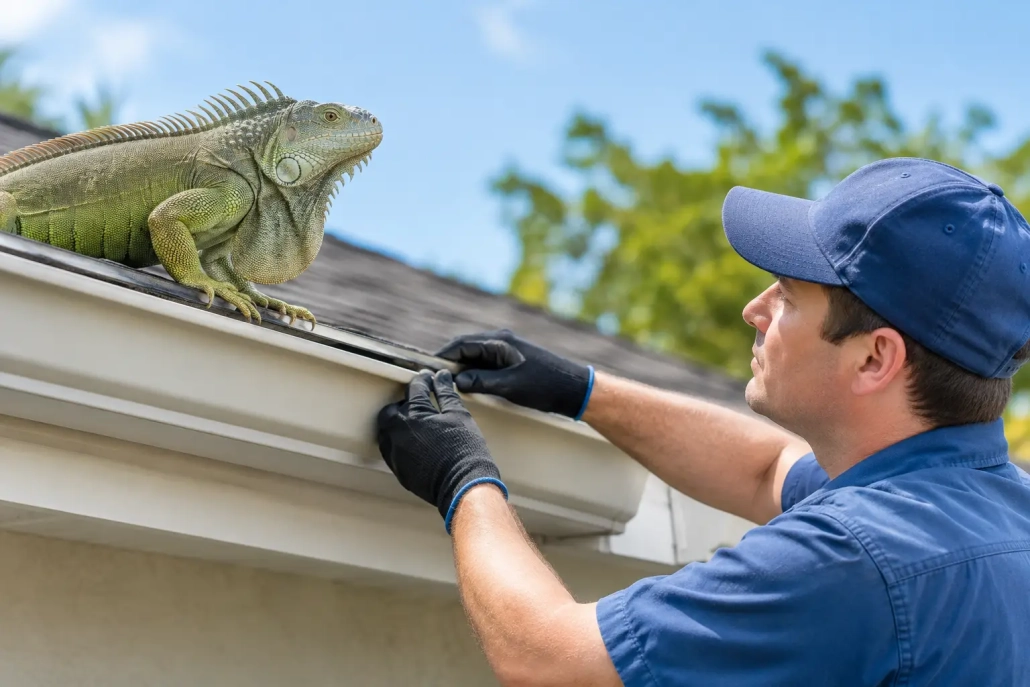
Iguana Entry Repairs That Protect Your Property
An iguana burrow beside a pool deck or seawall is not a cosmetic problem. It is an open route into the ground beneath expensive hardscape, and it can get worse quickly after rain. Proper iguana entry repairs are about more than covering a hole. They start with removing the active iguana, confirming the area is clear, and repairing the damage in a way that protects the property instead of hiding the problem for a week.
In South Florida, green iguanas use warm, dry, protected spaces around homes and commercial sites. They dig beneath walkways, patios, sheds, landscape borders, docks, and retaining areas. Once a burrow gives them shelter, other iguanas may use it too. The result can be loose pavers, sinking soil, broken irrigation, stained pool areas, and, in serious cases, damage near seawalls or foundations.
What Iguana Entry Repairs Actually Mean
The word “entry” can mean two things on an iguana-damaged property. First, it can mean a burrow entrance where an iguana is getting beneath a deck, slab, walkway, or shoreline structure. Second, it can mean an opening that gives iguanas access to a protected area, such as a gap beneath a fence, loose skirting, an open utility chase, or damaged screening around equipment.
The repair needed depends on the location and the condition of the structure. A shallow landscape burrow may need excavation, proper backfill, compaction, and restoration of the planting bed. A void under pavers may require lifting and resetting affected sections after the soil base is rebuilt. A hole near a seawall, retaining wall, foundation, or pool structure deserves a more careful evaluation. Filling it from the surface without checking what is underneath can leave a hidden void in place.
That is why removal and repair should be treated as connected jobs. If the animal is still using the opening, a repair will not hold. If the damage is ignored after removal, the property remains vulnerable to settling, water intrusion, and a new iguana finding the same protected spot.
Do Not Seal an Active Burrow
The fastest-looking fix is often the wrong one. Pushing soil, concrete, rocks, or debris into an active burrow can trap an animal underground, cause it to dig a new exit, or leave an unseen tunnel under the repaired surface. It can also make it harder to tell whether the problem has actually been solved.
A professional approach starts by identifying activity. Fresh loose soil, claw marks, droppings, tracks, and a clean opening are common signs. A hole that has been reopened after rain or after a homeowner filled it is another strong indicator. Iguanas are most active during warmer daylight hours, but their shelter locations may not be obvious from a quick look around the yard.
Once removal is handled in accordance with applicable rules, the site can be assessed for repair. Florida Iguana Ops focuses on safe, professional removal so owners are not left guessing whether a burrow is still occupied before the repair work begins.
Where Burrows Cause the Most Trouble
Not every hole creates the same level of risk. A burrow in an open landscape bed still needs attention, but a burrow near structural or mechanical assets needs faster action.
Pool decks, patios, and walkways
Iguanas often use edges where soil meets concrete, pavers, or coping. Water can move through the tunnel after heavy rain, washing out supporting soil. Early warning signs include pavers that rock underfoot, cracked grout or coping, widening gaps, and spots that feel soft or hollow.
After the burrow is cleared, the damaged area may need to be opened enough to remove loose soil and rebuild the base properly. Simply topping off the entrance with sand can allow the same section to settle again.
Seawalls, canals, and retaining areas
Burrowing near water is a serious concern because moving water and saturated soil can enlarge voids. An iguana hole at the top of a seawall or along a canal bank should not be treated like a routine garden hole. Owners should document the location and have a qualified seawall, marine, or structural repair professional determine whether the area has been undermined.
The trade-off is simple: a more thorough inspection costs more than a bag of fill, but it can prevent a small opening from turning into an expensive stabilization project.
Foundations and building edges
Iguanas do not need to enter a living room to create a building problem. A burrow against a slab edge, under an exterior stair, or beside a utility pad can displace soil and create a route for water and other pests. Gaps around pipes, damaged vent covers, and openings beneath raised structures should be repaired with durable materials that fit the location.
Avoid using expanding foam as the only answer for exterior wildlife access. It may look sealed at first, but it can degrade in sun and weather, and it does nothing to repair an undermined base.
HVAC and equipment pads
Commercial properties and larger residences often have equipment yards, condensers, pumps, and utility pads surrounded by cover and warm surfaces. Iguanas can dig near these areas, foul equipment with droppings, and create access through loose fencing or damaged screening. If a pad is shifting or lines are exposed, bring in the appropriate HVAC or site-repair professional after removal.
A Repair Plan That Holds Up
Good iguana entry repairs follow a sensible order. First, remove the active animal and monitor the area for signs of continued use. Next, inspect the opening and surrounding ground for undermining, cracking, erosion, or loose materials. Then repair the void with the right fill and compaction method for that part of the property.
The final step is exclusion. This may involve securing gaps below gates, repairing fence bottoms, restoring landscape edging, replacing damaged skirting, or using a properly designed barrier where burrowing pressure is ongoing. The goal is not to turn a property into a fortress. It is to remove easy shelter and access without creating drainage problems or making routine maintenance difficult.
For recurring trouble areas, the repair should also account for what attracts iguanas there. Dense ground cover, fallen fruit, accessible pet food, standing water, and open routes from a canal or neighboring lot can all make a repaired area appealing again. Changing every part of a landscape is rarely necessary, but leaving the exact same cover and access route can invite repeat activity.
When to Call a Structural Repair Professional
Wildlife removal professionals can identify active iguana activity and help stop the immediate intrusion. A licensed contractor, seawall specialist, engineer, or other qualified trade should evaluate repairs when there is visible settling, cracked concrete, a large or deep void, exposed reinforcement, drainage changes, or damage near a seawall, foundation, dock, or pool shell.
Do not wait for a walkway to drop or a wall to show obvious movement. The soil loss beneath a surface is often larger than the opening you can see. Taking photos before any work begins can also help you track changes and explain the issue clearly to the repair professional.
Protect the Repair After the Work Is Done
A repaired area needs follow-up, especially through the rainy season. Check for fresh soil, new openings, droppings, or movement around the original site. Look after heavy rain, irrigation adjustments, landscaping work, or nearby construction, since each can expose weak points or change how water drains through the property.
For property managers, this is worth adding to regular grounds inspections. Staff may notice a new hole near a clubhouse walkway, marina edge, or equipment enclosure long before it becomes a major repair. On residential properties, a quick check around pool decks, fences, canal edges, and outdoor equipment can save a great deal of frustration later.
A properly repaired entry point is one less place for iguanas to hide, dig, and cause damage. Handle the active infestation first, fix the ground or structure based on the real condition underneath, and keep an eye on the area afterward. That is how a small burrow stays a small problem.



Leave a Reply
Want to join the discussion?Feel free to contribute!