
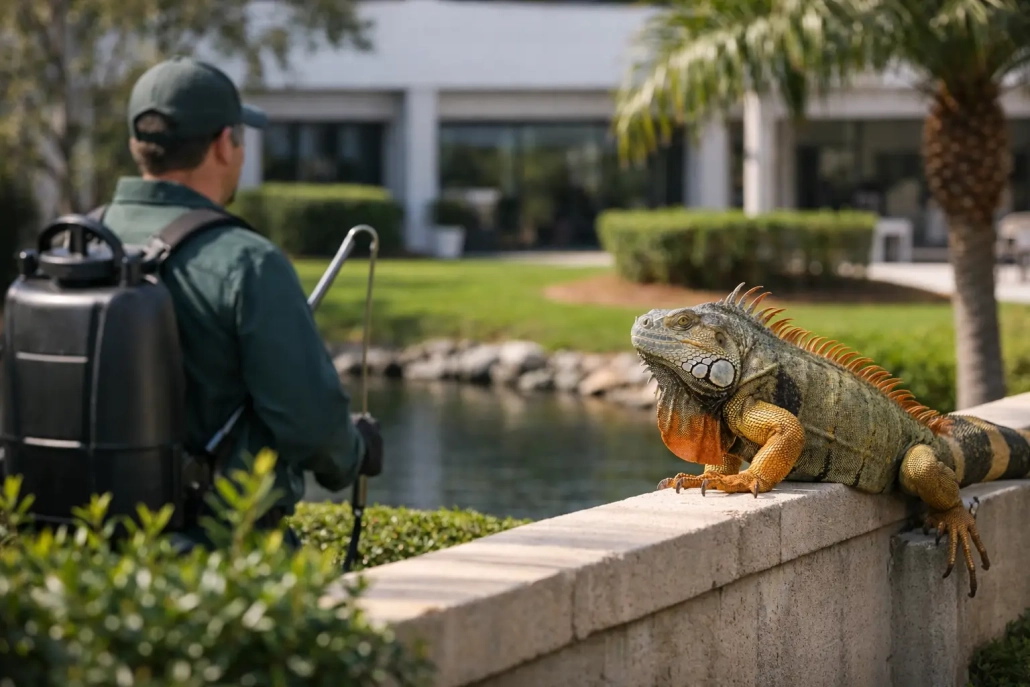
Commercial Iguana Control That Protects Property
A few iguanas around a commercial property can turn into a costly maintenance problem faster than most managers expect. Commercial iguana control is not about reacting to one lizard on a wall. It is about protecting the ground, structures, equipment, customers, and staff before burrows, droppings, and repeat activity create a larger issue.
Across South Florida, green iguanas are invasive, active year-round, and comfortable around developed properties. They settle where there is warmth, water, shelter, and easy access to vegetation. That makes marinas, golf courses, apartment communities, restaurants, warehouses, office parks, hotels, and retail centers especially attractive.
When the problem is visible, it has usually been building for a while. A professional response gives property decision-makers a clear picture of where iguanas are active, what assets are exposed, and what needs to happen next.
Why Iguanas Become a Commercial Property Problem
Iguanas do not stay neatly contained in landscaped beds. They climb roofs and trees, gather near water features, travel along seawalls, hide around HVAC equipment, and dig into soft or compromised ground. On a commercial site, those habits can affect far more than curb appeal.
Burrowing is often the biggest concern. Iguanas dig dens in banks, under walkways, near foundations, around pool decks, and along seawalls. Those holes can weaken soil and create voids beneath hard surfaces. A small opening near a paved area may look minor, but repeated digging and rain can wash material into the burrow and worsen the damage.
At waterfront properties, the stakes are higher. Iguana burrows along seawalls, canal banks, and slopes can contribute to erosion and instability. Marina operators, community associations, and waterfront facilities cannot afford to ignore activity near retaining structures. Waiting until there is a visible collapse can turn a manageable wildlife issue into an emergency repair.
Droppings are another practical concern. Iguanas leave waste on decks, docks, pool areas, sidewalks, outdoor dining spaces, loading areas, and mechanical equipment. Their feces can carry salmonella, which is a sanitation risk for guests, tenants, employees, maintenance crews, and pets. It also creates a poor impression at properties that depend on clean, well-kept outdoor spaces.
Then there is the damage that is harder to see from a distance. Iguanas may chew or disturb landscaping, leave droppings near air-conditioning units, and create repeated cleanup work for maintenance teams. On large properties, staff can spend hours dealing with the same locations while the population continues to grow.
Signs You Need Commercial Iguana Control
A single sighting does not always mean a full infestation. But recurring activity around the same areas should be taken seriously, particularly when the property includes water, retaining walls, ornamental landscaping, or exposed utility equipment.
Watch for fresh burrows in soil, rock beds, canal banks, or beneath slabs. Look for piles of droppings on docks, pool decks, walkways, roofs, and around HVAC units. Property teams may also notice damaged plants, claw marks, disturbed mulch, or iguanas repeatedly entering the same crawlspace, landscape edge, or seawall opening.
The time of day can be telling. Iguanas often come out to warm themselves in sunny areas, so early morning activity on pavement, docks, rooftops, and retaining walls is common. If staff see them in the same places week after week, the site is providing a reliable food source, shelter, or nesting location.
For commercial managers, the real question is not simply, “How many iguanas are there?” It is, “Where are they causing exposure?” One active burrow near a seawall, foundation, or high-traffic walkway can matter more than several iguanas seen in an open field.
What Professional Commercial Iguana Control Should Include
Commercial iguana control needs to fit the property, its operating hours, and the specific damage risks involved. A golf course has different concerns than a marina. A hotel pool deck requires a different plan than an industrial yard. Good service starts with a site assessment, not a one-size-fits-all answer.
The first step is identifying active areas. That includes burrows, common basking locations, travel routes, nesting zones, water access, and areas where iguanas are getting close to customers or critical infrastructure. A trained local crew can also spot conditions that keep drawing iguanas back, such as dense plant cover, unsecured access points, or neglected ground around seawalls and equipment.
Removal should be handled by professionals who understand Florida regulations and safe field practices. Commercial properties should not rely on employees to catch, corner, or remove iguanas themselves. That can put staff at risk, create liability issues, and lead to poor results when animals escape or return to the same area.
After removal, the work should shift to prevention. Depending on the property, that may mean addressing vulnerable burrow areas, changing access around equipment, improving cleanup routines, or adjusting landscape conditions that provide easy cover. Prevention is not a promise that no iguana will ever appear again. South Florida has a large invasive iguana population. It is a practical effort to reduce repeat activity and catch new problems before they become expensive.
Documentation also matters for commercial clients. Property managers and facilities teams often need a clear record of what was found, where activity occurred, and what follow-up is recommended. That helps with budgeting, vendor coordination, board communication, and maintenance planning.
High-Risk Areas on Commercial Sites
Some locations deserve faster attention because failure there can affect safety, operations, or major assets. Seawalls and canal banks belong at the top of the list. Burrows near these structures should not be treated as a landscaping nuisance. The soil behind a seawall helps support it, and erosion can develop below the surface before the damage is obvious.
Pools, patios, walkways, and outdoor guest areas are also high priority. Droppings create a sanitation issue, while burrows near paved surfaces can lead to settling, cracks, and trip hazards. For restaurants, resorts, clubs, and multifamily communities, visible iguana activity can quickly become a complaint issue as well.
HVAC areas deserve a close look. Iguanas are drawn to warm equipment and protected spaces. Droppings, nesting material, and animal activity around condensers can complicate routine maintenance and create avoidable service calls. A commercial HVAC repair is expensive enough without wildlife adding to the problem.
Golf courses and landscaped communities face a broader challenge. Iguanas can move through water features, ornamental beds, cart paths, retaining edges, and maintenance zones. Treating only the spot where an iguana was last seen rarely solves the problem. The property needs an approach that follows the activity across the site.
Why Timing Matters
The longer an infestation is allowed to continue, the more established it can become. Iguanas reproduce, use familiar shelter, and return to places that provide food and warmth. A property that delays action may end up dealing with more burrows, more waste, more landscape damage, and a bigger removal job later.
Fast action does not mean rushed work. It means inspecting the affected areas, removing the active problem safely, and addressing the conditions that are making the site attractive. That is especially important before heavy rain, major events, seasonal occupancy increases, or planned maintenance projects.
For a marina, a burrow found before a busy weekend is easier to address than one discovered after erosion has affected a dockside area. For a property manager, it is easier to schedule professional service than to explain why residents are stepping around droppings near the pool. For a facilities manager, it is better to handle iguana activity before it becomes an emergency call tied to a damaged surface or equipment issue.
Choose a Local Team That Does the Job Right
Commercial wildlife work should be straightforward. You need a provider that shows up on time, understands South Florida property conditions, works safely around tenants and guests, and communicates clearly about what is happening on site. Licensing and insurance matter. So does experience with the specific risks iguanas create around seawalls, decks, landscapes, and mechanical equipment.
Florida Iguana Ops provides professional removal for commercial properties that need a direct, practical answer to invasive iguana activity. No gimmicks, no runaround – just local service focused on protecting the parts of your property that are expensive to repair.
If your staff is seeing recurring iguanas, fresh burrows, or droppings near active areas, do not wait for the damage to announce itself. A prompt inspection can protect the property, reduce repeat cleanup, and give your team a workable plan before a small wildlife problem becomes a major maintenance bill.



Leave a Reply
Want to join the discussion?Feel free to contribute!