
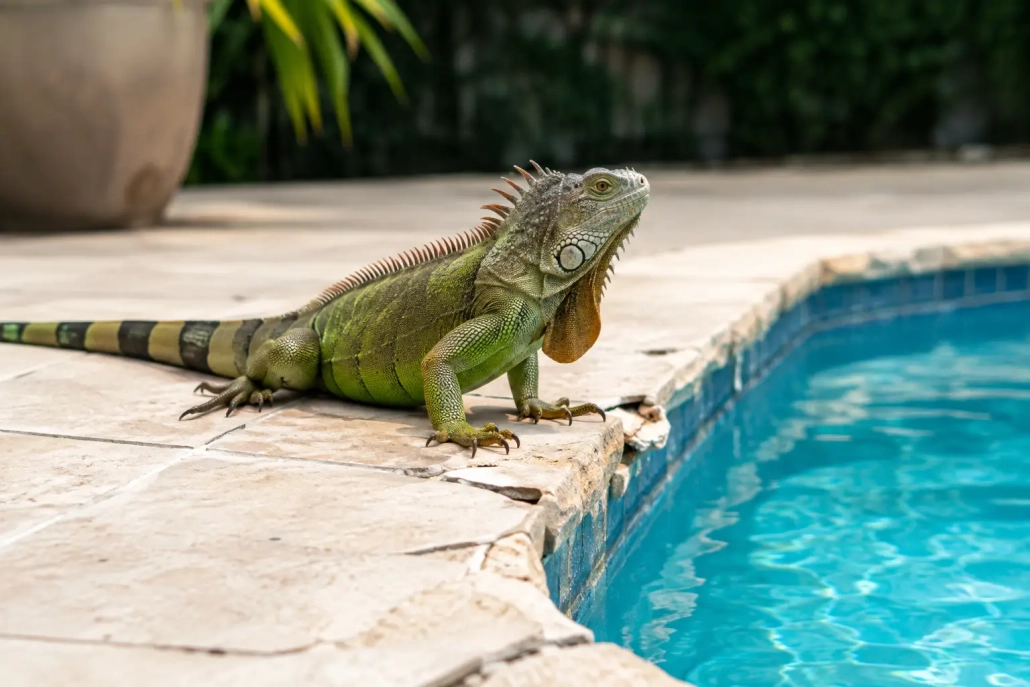
How Iguanas Damage Pool Decks and What to Do
A cracked paver beside the pool can look like a small maintenance issue. Then the ground starts sinking near the edge, a burrow opens beneath the deck, and the repair becomes a bigger job than it should have been. Iguanas damaging pool decks are a real property risk across South Florida, especially where warm sun, irrigated landscaping, and easy access to water give them everything they need.
The problem is not that an iguana walks across the deck. The real damage happens below the surface. These invasive reptiles dig burrows in soil around pool structures, planter beds, retaining walls, and patio edges. Once soil is displaced or water begins moving through those openings, pavers can shift, concrete can lose support, and small defects can turn into costly repairs.
Why Iguanas Are Drawn to Pool Areas
Pool decks offer the kind of environment iguanas seek out. They are warm, open, and often bordered by landscaping with loose soil for digging. Nearby shrubs provide cover, pool equipment areas offer shelter, and water is always close.
A single iguana may be a nuisance. A breeding population is a property-protection problem. Female iguanas can use the same general area for nesting, while other iguanas may move into established burrows or create additional ones nearby. If you keep seeing iguanas around the same deck, seawall, or planter, assume there is a reason they are staying.
Pool areas also tend to be maintained with irrigation. Wet soil around deck footings, paver borders, and landscaped edges is easier to excavate. That combination of loose ground and repeated burrowing is where instability starts.
How Iguanas Damage Pool Decks
An iguana burrow is not just a shallow hole in a flower bed. Burrows can extend several feet into the ground, removing soil from places that need stable support. Near a pool deck, that missing soil can create voids beneath pavers, concrete slabs, coping, or surrounding walkways.
Paver decks are often the first place property owners notice the trouble. Individual pavers may rock underfoot, separate at the joints, dip near landscaping, or develop uneven edges. Those changes can create a trip hazard before the underlying issue is obvious.
Concrete decks can be affected differently. A slab may crack when supporting soil settles unevenly. Not every crack is caused by iguanas – normal settling, tree roots, drainage failures, and age can all play a role. But when cracks appear alongside fresh holes, disturbed mulch, or regular iguana activity, burrowing needs to be part of the investigation.
The risk increases near the pool shell, plumbing lines, skimmers, equipment pads, and retaining features. Burrowing does not automatically mean a pool is structurally compromised, but it is not something to ignore. Water entering a burrow can wash away more soil, particularly after heavy rain or irrigation cycles. What began as a manageable excavation issue can spread beneath a larger section of deck.
Damage rarely stays in one spot
Burrows can also compromise nearby landscaping and hardscape features. Planter walls may lean, decorative rock can sink, and edging can pull apart as soil shifts. If the pool deck sits near a seawall, canal bank, or retaining wall, the stakes are higher. Those structures depend on stable ground and should be checked promptly when burrows are present.
There is also a sanitation issue. Iguana droppings around a pool deck, lounge area, outdoor kitchen, or walkway are unpleasant and can carry bacteria such as Salmonella. On commercial properties, that means a poor guest experience and a potential safety concern. On residential properties, it means children, pets, and bare feet may be near contaminated surfaces.
Warning Signs Around Your Pool Deck
You do not need to see an iguana digging to recognize a developing issue. Walk the pool area after rainfall, irrigation, or a busy day of iguana activity. Look for these signs:
- Fresh holes at the deck perimeter, in mulch beds, beneath shrubs, or beside equipment pads.
- Pavers that rock, separate, sink, or sit lower than the surrounding surface.
- New concrete cracks, widening gaps at coping, or soil washing out near deck edges.
- Repeated iguana sightings, droppings, shed skin, or disturbed landscaping in the same area.
A burrow opening may be partly hidden by mulch or plants. Do not assume the visible opening shows the full extent of the tunnel. Filling a hole without addressing the iguanas often leads to the same area being reopened or a new burrow appearing nearby.
What to Do When You Find Burrows
Start by keeping people and pets away from any soft, sunken, or unstable section of deck. If pavers are moving underfoot, mark the area and avoid placing furniture, grills, or heavy equipment on it. Do not let a loose paver or fresh hole become a preventable fall.
Next, document what you see. A few clear photos showing the opening, nearby cracks, shifted pavers, and droppings can help a removal professional and, if needed, a pool contractor or hardscape repair company understand the scope of the problem. This is especially useful for property managers tracking recurring damage across a community, marina, hotel, or clubhouse.
Avoid trying to trap, handle, or relocate iguanas on your own. Wildlife rules, safety concerns, and the practical challenge of removing an established population all matter. A rushed do-it-yourself response may remove one visible animal while leaving the nesting activity and burrowing pressure in place.
Professional removal focuses on the active animals first, then helps identify the areas drawing them back. That can include known burrow zones, sunny deck edges, dense landscaping, food sources, and access points around the property. Once removal is handled, damaged burrows should be properly assessed and repaired so the deck has stable support again.
Prevention Works Best After Removal
Property owners often ask whether fencing, repellents, or a few landscaping changes will solve the problem. The honest answer is that it depends on the property and the size of the infestation. A clean, well-maintained pool area can still attract iguanas if there is easy shelter and a population nearby.
After active removal, prevention should focus on reducing the reasons iguanas remain. Keep fallen fruit and pet food off the ground, manage dense cover around common burrowing zones, and address openings near utility areas where practical. Repair compromised paver borders and fill voids correctly rather than covering them with loose soil.
Do not use poison or improvised deterrents around a pool. They can create risks for pets, children, non-target wildlife, and the people using the property. They also do nothing to fix unstable ground beneath the deck.
For commercial properties, a regular inspection schedule makes sense. Pool attendants, maintenance teams, and grounds crews should know that holes near hardscape are not just landscaping issues. Reporting fresh burrows early can prevent a small repair from becoming an emergency deck, wall, or drainage project.
When It Is Time to Call a Professional
Call for help when you see repeated iguana activity, fresh burrows, deck movement, or droppings in areas people use. Fast action is particularly important if the problem is near a pool shell, seawall, retaining wall, foundation, sidewalk, or HVAC equipment.
Florida Iguana Ops provides licensed and insured removal for South Florida property owners who need the issue handled without gimmicks or runaround. The goal is straightforward: remove the nuisance iguanas, help stop the repeat damage, and give you a clearer path to protecting the deck and the property around it.
A pool deck should be a place for family, guests, and customers to walk without watching every step. If burrows or shifting pavers are showing up around yours, deal with the iguanas before the ground underneath has a chance to get worse.



Leave a Reply
Want to join the discussion?Feel free to contribute!