
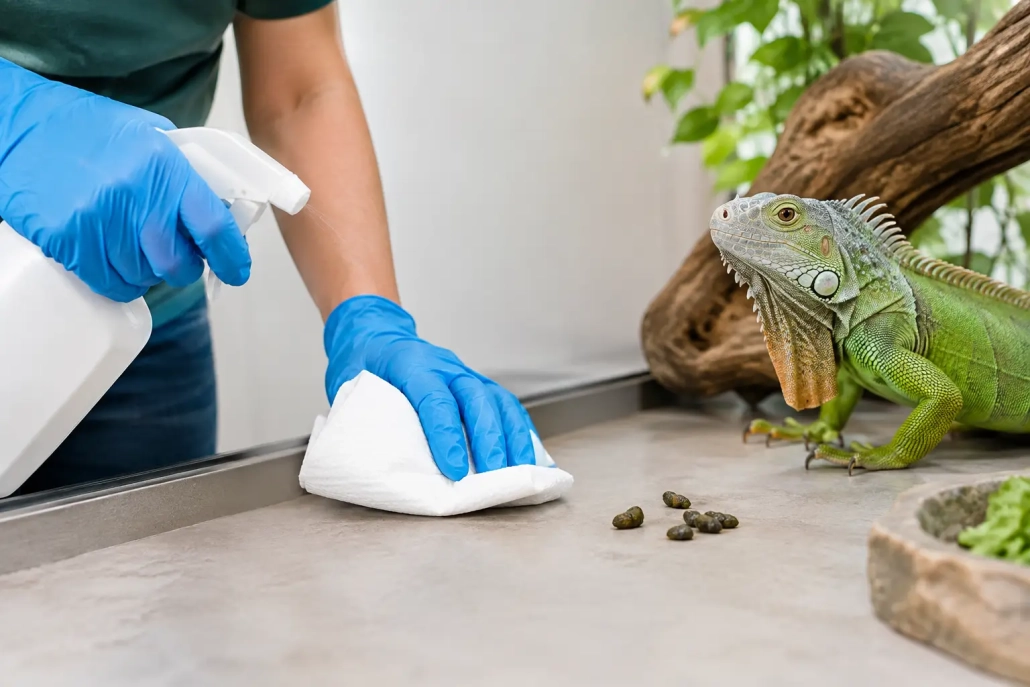
How to Clean Iguana Droppings Without Spreading Germs
A pile of iguana droppings beside the pool, on a patio chair, or near an outdoor kitchen is more than an ugly cleanup job. Knowing how to clean iguana droppings the right way helps limit salmonella exposure and keeps contaminated waste from being tracked into your home or business.
The bigger issue is usually not the one pile. Repeated droppings often mean iguanas are feeding, resting, or nesting on the property. In South Florida, that can lead to damaged landscaping, burrows near decks and seawalls, and ongoing sanitation trouble in places people use every day.
Why Iguana Droppings Need Careful Cleanup
Iguana droppings are typically dark brown or greenish, tubular, and often have a chalky white urate cap at one end. They can look similar to large rodent or small dog waste, but their location usually tells the story. You may find them along pool decks, dock walkways, patios, roofs, ledges, pavers, planters, and under shrubs where iguanas shelter.
Like many reptiles, iguanas can carry Salmonella bacteria in their droppings. A healthy-looking iguana can still leave behind contaminated waste. The risk is not limited to direct contact with the droppings. It can spread when someone steps in it, brushes against a soiled surface, handles contaminated tools, or uses a hose that splashes particles onto nearby furniture and walkways.
This matters most around areas where people eat, swim, sit barefoot, or children play. It also matters at commercial properties. A dirty entrance, marina walkway, golf-course cart path, restaurant patio, or pool area can quickly become a guest complaint and a liability concern.
How to Clean Iguana Droppings Safely
Do not rush outside with a leaf blower or a dry broom. Blowing, sweeping, or vacuuming dry droppings can break up material and spread contaminated dust. Start by keeping people and pets away from the immediate area until the surface is cleaned.
Put on disposable gloves. If the droppings are dry, old, or in a tight area with little airflow, wear a mask as well. Closed-toe shoes are a smart call, especially when cleaning around landscaping, docks, equipment pads, or uneven pavers.
First, lightly wet the droppings with a household disinfectant that is labeled for use on hard surfaces, or use a bleach solution made with 1 tablespoon of regular unscented household bleach per gallon of water. Let the solution sit for several minutes so it can disinfect the material before you pick it up. Never mix bleach with other cleaners, especially ammonia-based products.
Use paper towels, a disposable scoop, or a dedicated plastic scraper to lift the waste. Place everything, including the used towels and gloves, into a plastic bag. Seal the bag and put it in the trash. Do not compost iguana waste or leave it in an open landscape bin where pets and pests can get into it.
Once the visible waste is gone, disinfect the affected hard surface again. Let it remain wet for the contact time stated on the disinfectant label, then rinse if the product instructions require it. For a pool deck, outdoor kitchen counter, patio table, or other touch surface, a final rinse with clean water is usually sensible after disinfection.
Wash your hands thoroughly with soap and warm water when you finish. Hand sanitizer can be useful when you are away from a sink, but it should not replace proper handwashing after handling animal waste.
Cleaning Different Surfaces
On concrete, pavers, tile, composite decking, and other nonporous surfaces, the process is straightforward: wet, remove, disinfect, and rinse as needed. Check the label on your cleaner before using it on colored pavers, natural stone, painted surfaces, or decorative coatings. Strong bleach solutions can discolor some finishes.
For outdoor furniture, remove the waste first, then clean the area with soap and water before applying a surface-safe disinfectant. Pay attention to seams, cushion edges, chair arms, and table undersides. If droppings landed on fabric cushions, remove and wash the covers according to their care labels. A heavily soiled cushion insert may be difficult to disinfect fully and may need replacement.
Grass and planting beds are different. Pick up the solid waste with gloves and a scoop, bag it, and rinse the immediate area lightly if practical. Do not saturate delicate plants with bleach. If the droppings are in a vegetable garden or near herbs, avoid harvesting from the affected area until the produce can be thoroughly washed. Keep pets and children out of that section of the yard until cleanup is complete.
If droppings are on a roof, in a gutter, near electrical equipment, on an elevated ledge, or beside an HVAC unit, do not create a fall or equipment hazard trying to clean it yourself. The waste may be the visible sign of a larger iguana problem in a hard-to-reach location.
What Not to Do When Cleaning Iguana Waste
A few common shortcuts create more trouble than they solve. Do not pressure wash droppings before removing the solid material. High-pressure water can spread contamination across walls, screens, windows, furniture, pool equipment, and nearby walkways.
Do not hose the droppings into a storm drain, canal edge, or landscaping area. That simply moves the waste and can spread bacteria farther across the property. Avoid handling it with bare hands, even if you plan to wash up right afterward. And do not let dogs investigate or eat the droppings. Besides the bacteria concern, a pet that has access to the waste can carry contamination indoors on its paws or fur.
Keep cleanup tools separate from tools used for food, grills, or indoor cleaning. A dedicated outdoor scoop, brush, or scraper should be disinfected after use and stored away from children and pets.
When Droppings Mean You Have an Iguana Problem
One dropping may come from a passing iguana. A regular pattern is different. If you are cleaning the same areas every few days, seeing fresh waste each morning, or finding droppings near disturbed soil, you likely have iguanas using the property as a routine stop.
Look for tracks in loose dirt, chewed ornamental plants, flattened vegetation, damaged screens, and burrow openings. Burrows are especially serious near seawalls, foundations, sidewalks, pool decks, driveways, and utility equipment. Iguanas can undermine soil where you need it to stay stable. Waiting until a collapse or repair emergency is never the cost-effective option.
At commercial properties, recurring droppings can also point to an operational problem. Marinas may see waste around docks and shorelines. Golf courses can deal with damage around ponds, bunkers, and cart paths. Multifamily communities may face recurring complaints around pool areas, mail stations, sidewalks, and landscaping. Cleaning crews can remove the waste, but they cannot solve the source if the iguanas remain active on-site.
Reduce the Chances of More Droppings
Cleaning is necessary, but prevention starts with removing what attracts or shelters iguanas. Do not leave pet food outdoors. Pick up fallen fruit, secure trash, and avoid feeding wildlife. Trim dense ground cover near patios, walls, and equipment pads where iguanas can hide.
Inspect the property for access points and soft soil around structures. A small burrow near a seawall or pool deck should not be ignored just because the opening looks minor. Filling a burrow without addressing the animal activity can lead to reopening or new digging nearby.
Physical exclusion can help in some locations, but every property is different. What works around a small patio may not work around a marina, large yard, golf course, or waterfront community. The goal is not to make the property inconvenient for a day. It is to stop repeat activity before droppings, burrowing, and damage become part of the weekly maintenance routine.
Get Help Before the Cleanup Becomes Constant
If iguana droppings keep showing up, especially near a pool, outdoor kitchen, dock, seawall, HVAC equipment, or guest area, it is time to deal with the animals behind the mess. Professional removal helps protect the property while avoiding unsafe handling and guesswork about local wildlife rules.
Florida Iguana Ops provides licensed, insured iguana removal for residential and commercial properties across South Florida. We show up on time, assess the active areas, and focus on getting the problem handled without gimmicks or runaround.
A clean patio is good. A property that is no longer being used as an iguana bathroom, feeding ground, and burrowing site is the real fix.



Leave a Reply
Want to join the discussion?Feel free to contribute!