
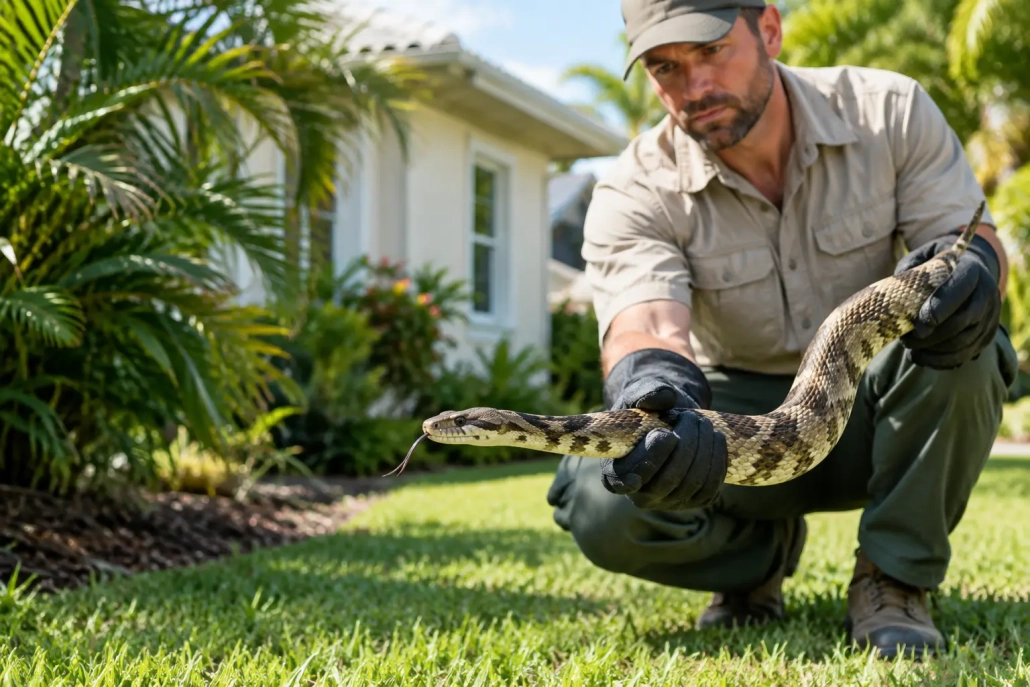
Snake Removal: What South Florida Owners Should Do
A snake beside the pool equipment, under a patio chair, or along a garage wall can stop a normal day fast. The right response is not panic or a shovel. Safe snake removal starts with keeping people and pets back, giving the animal a clear path away from activity, and calling a trained wildlife professional when the snake is in a risky location or cannot be identified.
South Florida properties give snakes plenty of cover, water, and food. Most snakes want nothing to do with people, and many are useful predators of rodents. But a snake in a child’s play area, near a front door, inside a building, or around a busy commercial site still needs to be handled carefully. One bad decision can turn a manageable wildlife issue into an injury, a bite risk, or damage to the property.
When Snake Removal Is the Right Call
A snake outdoors and moving away from people may not require intervention. If it is in a quiet part of a large yard and you can watch from a safe distance, leaving it alone is often the safest option for both the property owner and the animal.
The situation changes when the snake is trapped, has entered a structure, is repeatedly using the same area, or is close to people and pets. Professional snake removal is the practical choice when there is no safe way to let the animal move on by itself.
Call for help if a snake is in or near any of these areas:
- Inside a home, garage, office, storage building, boat, or vehicle
- Near a pool deck, playground, pet run, walkway, or heavily used entry
- Around HVAC equipment, landscaping crews, maintenance areas, or loading zones
- In a location where children, guests, employees, or pets could surprise it
- A snake you cannot identify with confidence, especially one showing a defensive posture
Do not try to pick up, pin down, trap, poison, or kill a snake. Even nonvenomous snakes can bite when cornered. More importantly, a close look is not a safe way to identify a snake. Color patterns vary, young snakes can look different from adults, and a quick phone photo is not worth putting a hand or face near the animal.
What to Do Before Help Arrives
Give the snake room. Bring pets inside, keep children away, and tell anyone on the property where it was last seen. If possible, watch from a distance so you can point out the location to the wildlife technician. Do not block its path, throw objects at it, or attempt to herd it toward a corner.
If the snake is indoors, close the door to that room if you can do so without approaching it. Place a towel along the bottom of the door only if the snake is well away from the doorway. Then keep the area quiet. Snakes often seek dark, protected spaces, and chasing one through a home can make it harder to locate.
For commercial properties, notify staff and keep guests away from the immediate area. A simple temporary detour around a landscape bed, dock access point, maintenance yard, or equipment pad is far better than having several people gather around to investigate. The goal is safety, not a show.
Why South Florida Properties Attract Snakes
A snake sighting is sometimes a one-time event. Other times, it points to conditions that are attracting prey and providing cover. Snakes commonly follow rodents, frogs, lizards, insects, and other small animals. If those food sources are active around the property, snakes may return.
Overgrown plant beds, woodpiles, stacked patio materials, dense ground cover, clogged drainage areas, and gaps beneath sheds all create hiding places. Bird feeders can contribute indirectly by attracting seed-eating rodents. Pet food left outdoors and unsecured trash can do the same.
Water is another factor. Pools, ponds, canals, irrigation leaks, and shaded wet areas can support the prey animals snakes feed on. Waterfront homes, marinas, golf courses, and landscaped communities often have more potential habitat than a typical open lot. That does not mean every sighting is an infestation. It means the surrounding conditions should be checked before the problem becomes recurring.
Snake Identification Is Not a DIY Job
Florida has many snake species, most of them nonvenomous. That is good news, but it should not lead to careless handling. Venomous species are also present in the state, and identifying a snake based on one feature or a blurry photo is unreliable.
People often focus on head shape, color, or whether a snake is near water. Those shortcuts are not enough. A frightened nonvenomous snake may flatten its head and look triangular. Markings can fade, change with age, or be hidden in shadows and leaves. Location alone does not prove what species it is.
A professional approaches the situation differently: assess the animal from a safe distance, use the proper equipment, remove it without unnecessary contact, and address the access points or habitat issues that brought it close to people. That is the difference between getting a snake out of sight for an hour and reducing the chance of another surprise next week.
Removal Is Only Part of the Job
Getting one snake off the property is immediate relief. Preventing repeat encounters takes a little more work. The best follow-up depends on the property, but it usually includes reducing cover, controlling rodent activity, and closing easy entry points.
Start at ground level. Check for gaps under gates, sheds, utility enclosures, and exterior doors. Repair damaged screens and door sweeps. Keep landscape material from piling tightly against the house, and clear clutter that lets rodents and snakes hide without being seen.
Commercial sites need the same attention, often on a larger scale. An equipment yard with stored materials, a marina with dock-side storage, or a property with dense perimeter landscaping can create protected travel routes. Facility managers should treat snake activity as part of overall grounds and pest management, not as an isolated event. A clean, maintained exterior protects employees and guests while making inspections easier.
There is a trade-off to consider. You do not need to strip every plant bed bare or turn a landscaped property into open concrete. The goal is sensible maintenance: reduce thick hiding spots near high-traffic areas, keep stored materials organized, and remove the food sources that draw rodents in the first place.
Protect Pets Without Creating More Risk
Dogs are especially likely to investigate a moving snake. Keep pets on a leash during walks around unfamiliar brush, canal edges, or maintenance areas. Before letting a dog into the yard in the morning or after a storm, take a quick look around patios, pools, stacked materials, and open garage doors.
If a pet is bitten or you suspect a bite, treat it as an emergency and contact a veterinarian immediately. Do not try to capture the snake for identification. A description from a safe distance may help, but prompt veterinary care matters more than proving the species.
A Straightforward Local Response
Snake problems are not always dramatic, but they deserve a calm and capable response. A technician should arrive prepared to assess the situation, remove the snake safely when removal is needed, and explain what may be drawing wildlife to the property. No gimmicks, no runaround, and no pressure to buy work that does not fit the problem.
Florida Iguana Ops brings that same property-protection approach to nuisance wildlife calls across South Florida. Whether the issue is a snake near a pool, a repeated sighting by a seawall, or an animal inside a commercial space, the priority is keeping people safe and helping property owners regain control of the area.
If you see a snake, create distance first. A quiet, cautious response gives the animal fewer reasons to defend itself and gives a trained professional the best chance to resolve the situation safely.



Leave a Reply
Want to join the discussion?Feel free to contribute!