
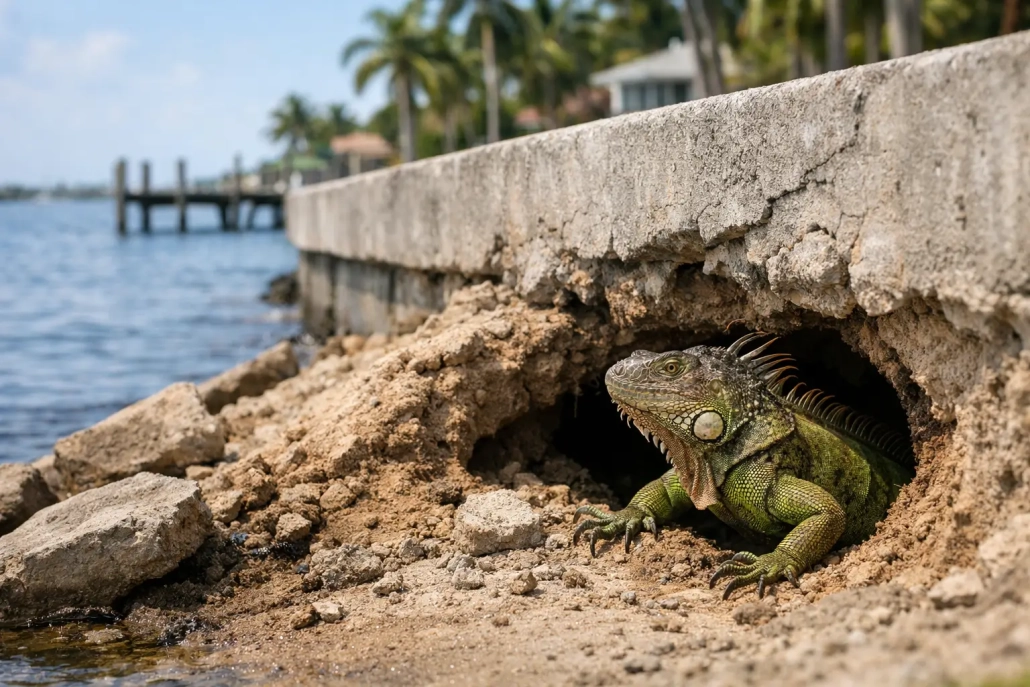
Iguana Burrowing Seawall Damage in Florida
A burrow near a seawall is not just an ugly hole in the landscaping. Iguana burrowing seawall damage can remove and loosen soil that helps support the ground behind a waterfront wall. What starts with one iguana slipping under a cap or through a crack can become recurring erosion, settling pavers, washouts after heavy rain, and a repair bill that belongs in the serious-property-expense category.
For South Florida homeowners, marina operators, and property managers, the right response is early removal and a close look at the affected area. Waiting for the burrow to get bigger is rarely the cheaper option.
Why Iguanas Burrow Along Seawalls
Green iguanas are invasive in South Florida, and waterfront properties give them what they need: sun, vegetation, water, cover, and loose or disturbed soil. The warm, protected ground behind a seawall can be especially attractive for nesting females. Retaining-wall edges, riprap gaps, dock approaches, canal banks, and planting beds all create easy entry points.
An iguana may use an existing void, but it can also dig and expand one. Burrows may run several feet into the ground and branch in ways that are not obvious from the surface. One opening beside a walkway does not tell you how much soil has been displaced underneath it.
The problem is often seasonal, but the property risk is not limited to one time of year. Once iguanas find a dependable nesting or sheltering spot, they tend to return. More iguanas can follow, especially where food sources and hiding places remain available.
How Iguana Burrowing Seawall Damage Gets Worse
A seawall relies on stable conditions behind and beneath it. When iguanas tunnel into that soil, they can create voids where water can travel and material can shift. Rain, irrigation, tidal movement, and wave action may then carry loose soil through weak points or gaps.
That does not mean every iguana burrow means a seawall is failing. The condition of the wall, its age, drainage setup, soil type, and proximity of the burrow all matter. But a repeated burrowing problem next to a seawall should be treated as a warning sign, not a minor landscaping issue.
Soil Loss Can Lead to Settlement
The first visible damage may show up away from the burrow itself. Pavers can dip. A pool deck may develop cracks. Fence posts may lean, and landscape edging can separate. You may notice a soft spot where the ground once felt firm or see soil washing out near a seawall joint after a storm.
These signs can point to a void below the surface. Filling the visible opening without addressing active iguanas may only give them an easier place to dig again.
Water Finds the Weakest Path
Waterfront structures deal with constant moisture and changing water levels. A burrow near a drainage path, wall seam, or utility penetration can give water another route into the soil behind the seawall. Over time, that can worsen erosion and put added stress on surrounding hardscape.
This is why an active burrow deserves attention before the next heavy rain. It is also why owners should avoid blindly pumping concrete, sand, or foam into a hole while an animal may still be inside. That can be inhumane, may not solve the actual tunnel path, and can complicate proper removal and repair.
Seawall Repairs Are Not a DIY Gamble
There is a line between minor landscape restoration and a potential structural issue. If the wall is leaning, cracking, bulging, separating at joints, or showing pronounced washout behind it, contact a qualified seawall or marine-construction professional promptly. Animal removal protects the site from continued excavation, but it does not replace an assessment of a compromised wall.
The best sequence is usually straightforward: stop the active burrowing, inspect the affected ground and seawall, then complete repairs that match the condition of the property. Skipping the first step can lead to repairing the same area twice.
Signs You May Have an Active Iguana Burrow
Iguana activity is not always obvious during the day. They may be basking in trees, on docks, or along the canal bank when you look for them. The ground often tells the clearer story.
Look for fresh soil piled around a hole, tracks in sandy ground, claw marks, droppings near walls or patios, and openings around seawall caps, landscaping, sheds, and dock supports. A burrow entrance may be partly hidden under mulch or plants. It may also appear as a shallow depression instead of a clean, round hole where the tunnel has begun to collapse.
Pay attention after rain. Water can expose new sink areas, enlarge openings, and reveal soil loss that was not visible in dry weather. On commercial properties, routine inspections should include seawall edges, parking or cart paths near water, utility pads, marina walkways, and landscaped areas where guests or staff could step into a void.
What Property Owners Should Do First
Keep people, pets, and equipment off soft ground near the burrow. A collapsing void beside a seawall or walkway is not a safe place to investigate with a shovel. Do not reach into a hole. Iguanas can bite, scratch, and whip with their tails when cornered.
Take clear photos of the opening, nearby cracks, settled pavers, and any visible washout. Note when you first saw the problem and whether it changes after rain or high water. That documentation can help a removal professional and, if needed, a seawall contractor understand what has been happening.
Then arrange professional iguana removal. In Florida, green iguanas are invasive, but that does not make careless handling a good idea. A licensed, insured wildlife-control team can remove the animals safely and lawfully, identify likely activity zones, and help stop the repeat cycle before restoration work begins.
Why Trapping One Iguana May Not Solve the Property Problem
A single iguana seen on a seawall may be the one that gets your attention, not the only one using the property. Waterfront sites often support several iguanas of different sizes, including nesting females and young animals using the same cover.
Effective control starts with the whole site. That means checking nearby burrows, dense vegetation, sunny dock areas, fence lines, rooflines, pool equipment zones, and food sources. Fallen fruit, accessible pet food, open compost, and unprotected ornamental plants can keep iguanas coming back even after removal.
Exclusion and habitat adjustments can help after removal, but they need to fit the property. Blocking an opening before confirming it is inactive can trap an animal inside. Aggressive clearing may also create erosion issues of its own along a waterfront edge. This is a situation where a practical site-specific plan beats a one-size-fits-all fix.
Protecting a Seawall After Iguana Removal
Once active iguanas are removed, the burrow area can be evaluated for safe restoration. Small, shallow landscape holes may need properly compacted fill and surface repair. Larger voids, areas near the wall footing, or locations with signs of washout may require a seawall professional to determine the right repair method.
Keep the repaired area under observation, especially through heavy-rain periods. New depressions, loose soil, widening cracks, or fresh openings should be addressed quickly. The goal is not just to make the hole disappear. The goal is to prevent more animals from excavating the soil that supports your waterfront property.
For properties in Palm Beach County, Florida Iguana Ops handles invasive iguana removal with the same standard we bring to every job: show up on time, do the job right, and give you a straight answer about what we find. If burrows are appearing near your seawall, deck, dock, or canal edge, act before the next storm turns a manageable wildlife issue into a costly repair.



Leave a Reply
Want to join the discussion?Feel free to contribute!