
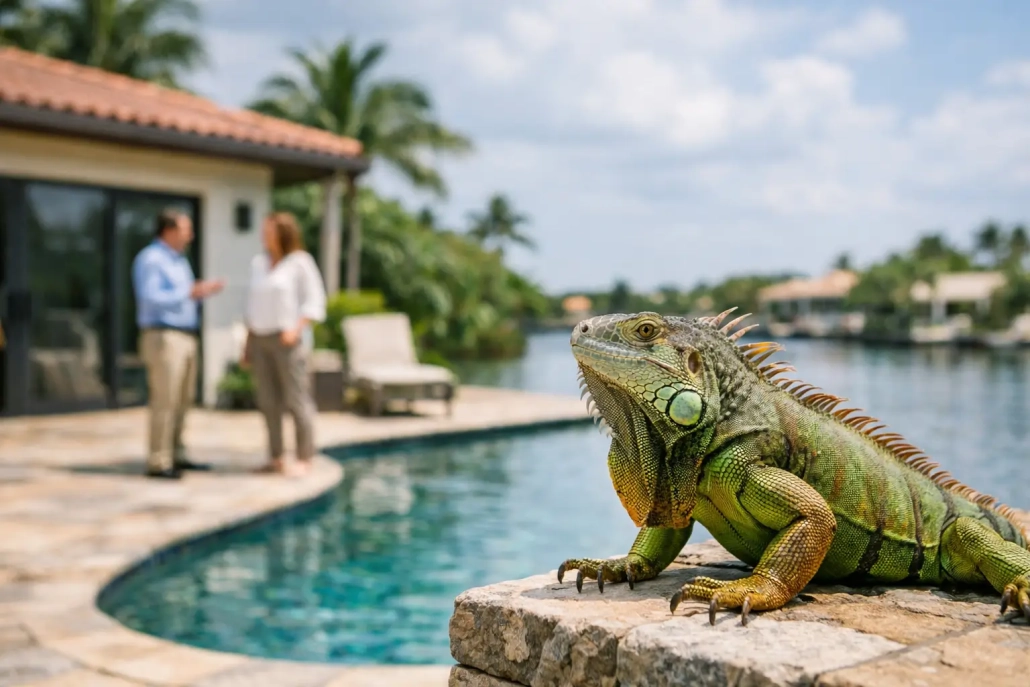
Florida Iguana Laws: What Property Owners Can Do
A green iguana on the pool deck is not just an ugly nuisance. One that has been digging beside a seawall, driveway, foundation, or canal bank can turn into a costly property problem fast. Florida iguana laws give property owners meaningful options to address invasive green iguanas, but those options come with rules on humane treatment, live transport, release, and where removal can happen.
For homeowners, managers, marina operators, and golf-course teams, the practical point is simple: you do not have to let iguanas damage your property, but you should not improvise a removal method that creates a legal or safety problem.
Florida Iguana Laws and Green Iguanas
Green iguanas are a nonnative invasive species in Florida. They are not protected as native wildlife, and Florida does not have a closed season or bag limit for removing them from private property with the owner’s permission. A homeowner can address iguanas on their own property, and a property manager or contractor can arrange removal with the proper authorization.
That does not mean anything goes. Florida requires invasive reptiles to be handled humanely. People should not use poisons, glue traps, cruel methods, or any approach that creates unnecessary suffering. They also cannot simply capture an iguana and drop it off somewhere else.
Since 2021, green iguanas have been regulated as prohibited species in Florida. In plain language, private individuals generally cannot acquire, buy, sell, breed, import, or keep new green iguanas as pets without the applicable state authorization. Limited exceptions and permit requirements may apply to approved facilities, research, education, or specific pre-existing animals covered under state rules. Those narrow exceptions are not a workaround for moving a nuisance iguana off a property.
What You Can Do on Private Property
If an iguana is on land you own, you may take action year-round. If it is on property you manage or work on, get the owner’s authorization before removing it. This matters on condominium grounds, commercial centers, marinas, golf courses, vacant lots, and waterfront communities where several parties may have responsibility for the land.
The legal right to remove an invasive iguana does not override other laws. A few common issues still apply:
- Local firearm-discharge rules and safety requirements still control. Never shoot near homes, roads, boats, public spaces, or occupied buildings.
- Traps must be used responsibly, checked regularly, and set in a way that avoids catching pets or protected wildlife.
- You cannot release a captured iguana onto another property, at a park, along a canal, in a preserve, or in the Everglades.
- Transporting a live iguana is restricted. Moving the problem to a different neighborhood is not a legal solution.
The safest approach depends on the site. A single iguana eating landscape plants may call for targeted trapping and exclusion. A colony burrowing into a canal bank or seawall calls for a more organized response, because removing one visible animal while leaving active burrows and egg-laying areas untouched rarely solves the underlying problem.
Humane Removal Means More Than Catching It
Humane removal is not a slogan. It means using methods suited to the animal and the property, then handling the animal in line with Florida rules. Live traps can be effective in the right setting, but they require experience. Iguanas are strong, wary, and capable of injuring themselves or escaping when poorly handled.
It also means protecting people. Iguanas can scratch, bite, whip with their tails, and carry bacteria in their droppings, including salmonella. Do not handle one bare-handed, and do not let children or pets investigate a trap or a cornered animal. Clean contaminated outdoor areas carefully, especially around pools, patios, outdoor kitchens, docks, and play areas.
Do Not Relocate an Iguana
Relocation is one of the biggest misunderstandings around Florida iguana laws. Capturing an iguana and releasing it by a canal, in a wooded area, or on a distant vacant lot may feel like a kind solution. It is not. It spreads an invasive species, shifts damage to somebody else’s property, and can violate state rules.
The same concern applies to live transport. An iguana in a box, truck bed, or vehicle is not automatically legal to move just because it was trapped on private property. State regulations limit possession and transport of prohibited species. A qualified wildlife-control professional can remove the animal using legal, humane procedures without leaving the property owner to guess what comes next.
This is particularly important in South Florida. Iguanas travel easily through canal systems, seawall corridors, vacant lots, and dense landscape cover. Relocation does not remove the pressure on the neighborhood. It helps the infestation expand.
Public Land Is a Different Situation
Rules can be different on public land, including parks, preserves, road rights-of-way, and water-management areas. You cannot assume that the same authority you have in your backyard applies at a public marina, community park, or canal bank.
Before taking action on public property, confirm who owns or manages the site and what authorization is required. A homeowners association, city, county, state agency, or water-control district may have separate access and safety rules. In some locations, the issue is not whether the iguana is invasive. It is whether you are authorized to enter the area, set equipment, or perform removal there.
For commercial sites, this should be handled before crews arrive. A clear scope of work, access approval, and removal plan keep a routine wildlife job from becoming an operations headache.
Why Waiting Can Cost More
An iguana problem is rarely limited to what you see sunning on a dock or roof. Mature iguanas dig burrows that can undermine soil around walkways, pool decks, retaining areas, and seawalls. On waterfront properties, repeated burrowing near a seawall can contribute to erosion and voids that demand expensive inspection and repair.
They also damage landscaping, irrigation zones, ornamental plants, and produce gardens. At commercial properties, droppings near entrances, outdoor seating, carts, docks, and mechanical equipment create a sanitation issue that staff must keep cleaning up. Iguanas may also shelter around HVAC equipment, where their activity can interfere with access and add to maintenance problems.
Eggs are another reason to act early. Green iguanas can reproduce quickly in favorable South Florida conditions. If you are seeing several adults, fresh burrows, regular tracks, and droppings in the same areas, the issue may be established rather than occasional.
Prevention Still Matters After Removal
Removal handles the animals currently using the property. Prevention makes the result last longer. Once activity is brought under control, inspect the areas that attracted iguanas in the first place.
Look for open access under decks, dense plant cover against structures, food sources, unmanaged fruit, and soft soil along water edges. Repair burrows after confirming they are inactive, and address soil loss or structural concerns promptly. On a marina, golf course, or large residential community, routine monitoring is usually more cost-effective than waiting until a burrow becomes an emergency repair.
There is no single fix for every site. A waterfront estate with a compromised seawall needs a different plan than a restaurant patio dealing with droppings or a warehouse with iguanas around exterior equipment. Good removal work starts by identifying the damage, the travel routes, and the areas that need follow-up.
When to Call a Professional
Call for professional help when iguanas are burrowing near structural features, gathering in numbers, entering enclosed spaces, or creating a safety concern around guests, pets, or employees. The same applies if you are unsure whether the animal is on private or public property, or you need live trapping and lawful disposition handled correctly.
Florida Iguana Ops works with property owners and commercial decision-makers who need the job handled without gimmicks or runaround. A trained, insured local team can assess the active areas, remove invasive iguanas humanely, and help you focus on the damage points that could become expensive if ignored.
If fresh burrows or droppings are showing up around a seawall, pool deck, landscaping, or building equipment, address them while the work is still straightforward. The right response protects the property and keeps an invasive-species problem from becoming your neighbor’s problem.



Leave a Reply
Want to join the discussion?Feel free to contribute!