
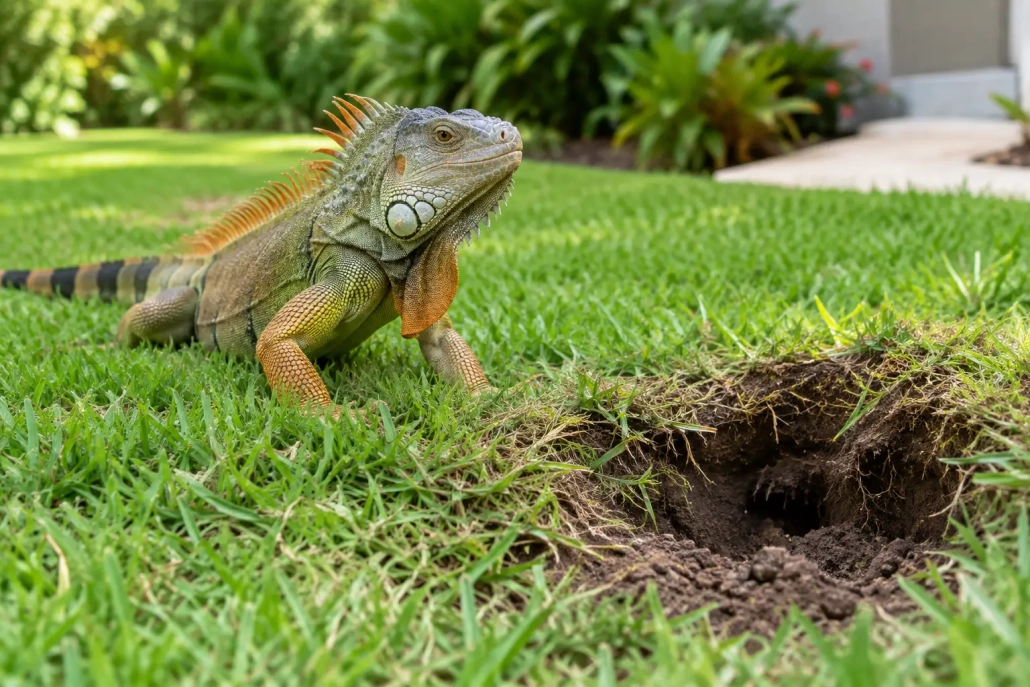
Iguana Lawn Damage: Stop Burrows Before Repairs
A patch of dying grass near a pool deck may look like a landscaping problem. A fresh hole along a walkway may seem small enough to fill. But iguana lawn damage rarely stays small when the animals are still on the property. In South Florida, invasive iguanas dig, nest, travel, and feed across lawns that sit next to expensive hardscapes, irrigation lines, seawalls, and foundations.
The grass is often the first thing you notice. The real concern is what may be happening below it. Active burrows can loosen soil, undermine edges, and create repeat damage when new iguanas move into the same area. Acting early is usually far less expensive than waiting for a soft spot, cracked paver, or failed section of landscaping to force the issue.
What Iguana Lawn Damage Looks Like
Iguanas do not damage every yard the same way. A single animal passing through may leave droppings and nibbled plants. A recurring population is different. You may see worn trails through ground cover, torn sod, shallow pits around plants, and holes dug into sunny or protected sections of the yard.
Burrows are the biggest red flag. They can be found along fence lines, beneath shrubs, near retaining walls, beside patios, around pool equipment, or on the slope leading toward a canal or seawall. An opening may look modest from the surface, but the tunnel behind it can extend much farther than expected.
Watch for these signs, especially when they appear together:
- Round or oval holes in soil, mulch, or turf, often near a structure or landscaped edge.
- Grass that feels spongy, settles underfoot, or dies in irregular patches.
- Displaced mulch, exposed roots, and soil pushed onto walkways or pool decks.
- Repeated droppings on lawns, patios, docks, or near outdoor seating areas.
- Iguanas sunning on roofs, seawalls, decks, trees, or near HVAC equipment.
A lawn can also be damaged by raccoons, armadillos, rodents, or water and drainage problems. That is why the location of the damage matters. Holes beside a seawall or under a deck deserve a different response than a shallow divot in an open lawn after heavy rain.
Why Burrows Become a Property Problem
An iguana burrow is not just a hole to cover with dirt. Digging removes and relocates soil, weakening the ground that supports whatever sits nearby. On a large open lot, the immediate risk may be limited to damaged turf and landscaping. Near hardscape or water, the stakes are higher.
Pool decks, paver walkways, driveways, retaining walls, and patio edges depend on stable ground. As soil shifts, surfaces can settle unevenly. That can lead to cracks, lifted pavers, trip hazards, and drainage issues. Filling the visible opening while an iguana remains active underground can mean the same damage returns within days.
For waterfront homes, marinas, and commercial properties, burrowing near a seawall or canal bank requires quick attention. Soil loss around these structures can contribute to erosion and instability. Seawall repairs are not a minor landscaping bill, and waiting until there is obvious movement can turn a manageable wildlife issue into an urgent construction problem.
Commercial sites have their own exposure. A golf course can see damaged turf, bunker edges, and guest-area sanitation problems. A marina can deal with droppings on docks and unstable shoreline areas. At offices, retail centers, and multifamily communities, iguanas may burrow near sidewalks, equipment pads, and landscaped common areas where a hole becomes a liability issue.
The Damage Is Not Limited to Grass
Iguanas are herbivores, and well-kept landscaping gives them plenty to eat. They commonly feed on flowers, leafy plants, fruit, and tender new growth. A property owner may replace the same ornamental plants repeatedly without realizing the problem is an active iguana population, not poor plant quality.
They also leave waste where people and pets use the property. Droppings around pools, patios, outdoor kitchens, docks, and walkways are unpleasant, but the concern is more than appearance. Reptile waste can carry bacteria, including salmonella. Children and pets should be kept away from droppings, and hands should be washed after any cleanup.
There is also a practical nuisance factor. Iguanas climb, hide, and seek warm protected spaces. They may show up on roofs, in trees, beneath decks, and around HVAC equipment. When they are comfortable enough to stay, the lawn damage is usually one part of a broader property-control problem.
What Not to Do When You Find an Active Burrow
Do not assume every hole should be packed with soil immediately. If an iguana is actively using the burrow, blocking the entrance can create a new problem elsewhere as the animal digs out or moves to another vulnerable location. It can also make it harder to determine where the main tunnel runs.
Avoid reaching into holes, lifting heavy pavers alone, or trying to corner an adult iguana. They can scratch, bite, whip with their tails, and move quickly when trapped. A large iguana near a seawall, elevated deck, roofline, or mechanical equipment is not a safe DIY situation.
It also pays to avoid quick fixes that only address the surface. Fresh sod and mulch may improve the appearance of the yard, but they do not remove the animals or correct unstable soil. Repair work should follow a proper assessment and removal plan, not replace it.
A Practical Response for Homeowners and Property Managers
Start by documenting what you see. Take clear photos of holes, settling areas, damaged plants, droppings, and the iguanas themselves if you can do so safely. Note where the activity occurs and whether it is close to a pool, foundation, seawall, sidewalk, utility line, or HVAC pad. This information helps show whether the issue is isolated or recurring.
Next, limit access to the immediate area. Keep children and pets away from burrows and droppings. If the ground feels unstable near a walkway, deck, or shoreline, treat it as a safety concern rather than a cosmetic one. Property managers should also alert maintenance staff so they do not mow over soft ground or conceal a hazard with mulch.
Then address the source. Iguanas are an invasive species in Florida, but removal still needs to be handled responsibly and in accordance with applicable rules. A professional wildlife-control company can identify active areas, remove nuisance iguanas safely, and help you determine what repairs should wait until the activity has stopped.
After removal, inspect the site before restoring the lawn. Depending on the location and severity, that may mean filling and compacting soil, repairing irrigation, replacing sod, reinforcing vulnerable landscape edges, or bringing in a qualified contractor for damage near structural features. If there is any concern about a seawall, foundation, pool deck, or major settling, do not treat it as a standard yard repair.
Prevention Works Best After Removal
There is no single trick that keeps every iguana away forever. South Florida’s warm climate, water access, dense landscaping, and sunny hardscapes are attractive to them. Still, a maintained property is less inviting when iguanas no longer have easy shelter, food, and repeated access to vulnerable areas.
Keep vegetation trimmed where it creates dense hiding cover near decks, walls, and equipment. Pick up fallen fruit, monitor ornamental plants that show repeated feeding, and repair gaps beneath gates or around low-access areas where practical. On waterfront properties, regular inspection of shoreline edges can catch new digging before it grows into a larger erosion concern.
The key is not to confuse prevention with removal. Barriers and landscaping changes can help after the active animals are gone. They are much less effective when a population has already established burrows across the property.
When It Is Time to Call for Help
Call for professional help when you see multiple burrows, repeated damage after repairs, iguanas around pools or guest areas, or activity near a seawall, foundation, driveway, deck, or commercial equipment. The same goes for properties where droppings are creating sanitation concerns or staff and residents are being asked to handle animals themselves.
Florida Iguana Ops provides local, licensed, and insured iguana removal for South Florida homes and commercial properties. The goal is straightforward: remove the nuisance animals safely, identify the areas at risk, and help protect the property before lawn damage becomes a much larger repair bill.
A torn patch of turf can be replaced. Soil that has shifted beneath a deck, walkway, or seawall is a different matter. Treat the first signs of iguana activity as a reason to inspect closely and act while the fix is still in your control.



Leave a Reply
Want to join the discussion?Feel free to contribute!