
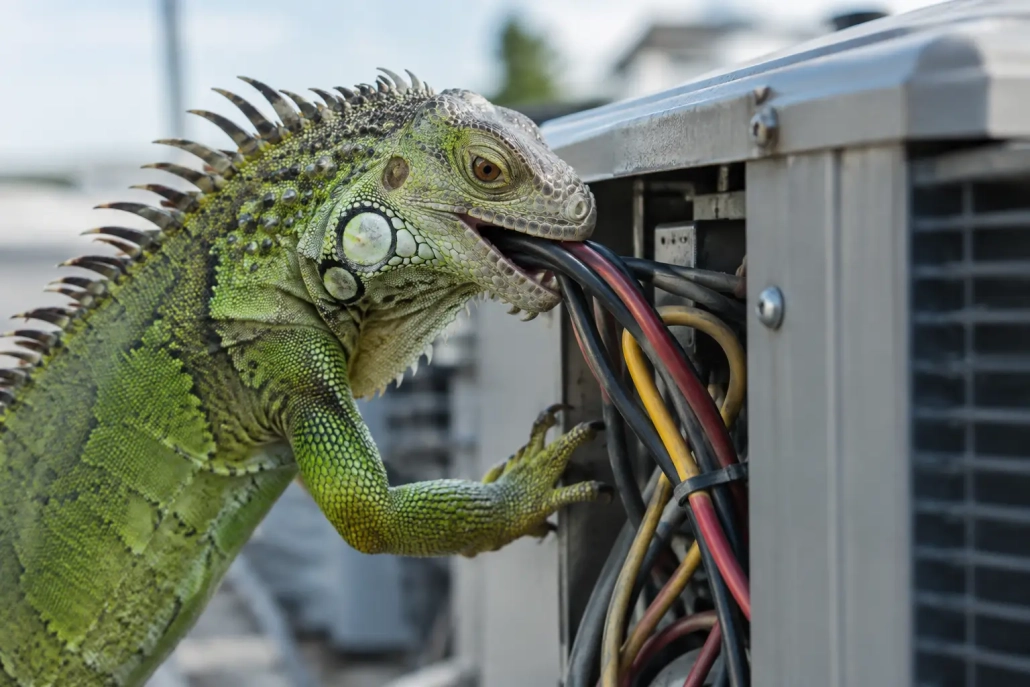
Iguanas Chewing HVAC Wires: A Real Risk?
A rooftop unit stops cooling during a South Florida heat wave. A condenser will not start. The service technician opens the electrical compartment and finds gnawed insulation, loose wire, droppings, and signs that something has been living around the equipment. Iguanas chewing HVAC wires are not the most common explanation for every air-conditioning failure, but on properties with active iguana traffic, it is a risk that deserves a serious look.
Large invasive iguanas are strong, persistent, and drawn to the same features that make HVAC systems vulnerable: warmth, shade, protected cavities, and elevated locations with few predators. They can climb onto ground units, enter fenced equipment areas, settle beneath raised condensers, and reach rooftop mechanical spaces through nearby trees, walls, or utility routes. Once a reptile has claimed the area, the damage can go beyond a mess.
Can Iguanas Really Damage HVAC Wiring?
Yes, but the details matter. Green iguanas are primarily plant-eaters, so they do not target electrical wire as food in the way rodents often do. Still, they can bite, scrape, tug, and damage exposed wire insulation while moving through a tight equipment area or investigating materials. They may also crush, dislodge, or foul vulnerable components as they climb and rest on units.
The bigger issue is that wire damage rarely happens alone. An iguana using an HVAC area can leave droppings and urates around disconnects, control panels, conduits, fan guards, and drain lines. Moisture, debris, and contamination can contribute to corrosion or electrical problems over time. A large animal pressing against lines or entering a poorly sealed compartment may loosen connections or damage insulation that was already weathered.
That is why a careful diagnosis matters. Blaming an iguana without checking the system is just guesswork. A qualified HVAC technician should identify and repair the electrical fault. A professional wildlife-control company should address the animal activity that keeps putting the equipment at risk. Fixing only the wire can leave you right back where you started.
Warning Signs of Iguanas Chewing HVAC Wires
A damaged wire is often hidden inside conduit, behind a panel, or under insulation. Property owners usually notice the clues around the equipment before they see the actual failure.
Look for repeated iguana sightings near the condenser, rooftop units, or mechanical yard. Fresh droppings on or around the unit are a clear sign that the animal is spending time there, not merely passing through. You may also find claw marks, disturbed mulch, burrows beneath nearby slabs, chewed foam insulation, torn low-voltage wiring, or a trail leading from landscaping to the unit.
Operational symptoms can include a unit that trips a breaker, will not start, short-cycles, loses cooling unexpectedly, or shows intermittent control errors. These symptoms have many possible causes, including age, storm damage, ordinary wear, or a failed component. Do not assume wildlife is the cause. But if you have visible iguana activity at the same time, it should be part of the inspection.
Commercial sites can have an even harder time spotting the early problem. Mechanical equipment may sit behind a building, on a roof, beside a marina structure, or in a service area that staff do not visit daily. By the time an outage occurs, the damage may affect tenants, guests, inventory, server rooms, kitchen operations, or staff comfort. A small opening around an electrical cabinet can become an expensive emergency call after hours.
Why HVAC Areas Attract Iguanas
Iguanas are opportunistic. They look for places that offer cover, warmth, access to vegetation, and a fast escape route. HVAC installations often provide several of those conditions at once.
Ground-level condensers may be surrounded by dense shrubs that hide an animal from view. The concrete pad can hold warmth after sunset. Piping and conduit create protected edges, while a loose equipment screen may offer a convenient perch. At larger facilities, rooftop units can provide sunny resting areas and sheltered spaces beneath or beside the equipment.
The landscape around the unit also plays a role. Overgrown vegetation, fruiting trees, dense groundcover, open drainage areas, and nearby seawalls can support regular iguana traffic. If the unit is near a burrow, do not treat the HVAC area as a separate problem. The animal has already established a route through the property.
What Not to Do When You Find Damage
Do not reach into an electrical compartment or try to chase an iguana out of a unit. Even a seemingly calm iguana can bite, scratch, whip its tail, or bolt into a tighter part of the equipment. A frightened animal near energized components creates a bad situation for everyone.
Do not seal off a suspected hiding place while the iguana may still be inside. Blocking an animal into or under mechanical equipment can lead to more damage and a harder removal job. Avoid using poison, glue traps, or improvised traps as well. These methods can create legal, safety, and sanitation problems, especially around homes, employees, pets, and customer areas.
If wires appear exposed, insulation is damaged, or you smell burning, keep people clear of the area and contact an HVAC professional promptly. If it is safe to do so, turn the system off at the appropriate disconnect or breaker only if you know how to do it without approaching damaged components. Do not spray the unit with water or attempt a quick repair with tape.
The Right Order of Protection and Repair
The most effective response is straightforward: make the area safe, remove the iguana pressure, repair the equipment, then reduce the chance of repeat access. The order matters.
First, document what you see. Take photos of droppings, visible damage, tracks, and the surrounding landscape from a safe distance. For commercial managers, note the unit number, date, and any operational issues. Good documentation helps both the HVAC technician and the removal professional determine whether wildlife activity is concentrated in one location or spread across the property.
Next, have the electrical and mechanical condition evaluated by a qualified HVAC technician. They can identify damaged conductors, inspect connections, test controls, and determine whether the unit can safely return to service. A wildlife removal provider should not substitute for a licensed HVAC repair professional, and an HVAC repair does not substitute for iguana control.
Then address the active infestation. Florida Iguana Ops provides targeted, professional removal for homes and commercial properties where invasive iguanas are creating property risks. The goal is not to make a lot of noise and leave. It is to remove the animals safely, identify where they are accessing the equipment area, and help the property owner stop the cycle of repeat damage.
After removal, practical exclusion and site cleanup can make a real difference. The right solution depends on the equipment layout. It may include securing a damaged screen, reducing vegetation that creates hidden approach routes, closing gaps that allow access beneath a raised unit, or coordinating with an HVAC contractor on protective measures that do not restrict airflow or violate equipment requirements.
Prevention Depends on the Property
There is no single fix for every HVAC system. A decorative enclosure may look good but trap heat if it is too close to the condenser. Heavy mesh may deter large reptiles in one area but complicate technician access in another. Rooftop equipment needs a different approach than a residential ground unit beside a pool deck.
The best prevention plan starts with what is actually happening on site. If iguanas are entering from a seawall and using trees as a bridge to the roof, a new wire cover alone will not solve it. If a ground unit sits next to a recurring burrow, the burrow activity and nearby shelter need attention. If droppings keep appearing around a commercial mechanical yard, the site may need regular monitoring rather than a one-time response.
South Florida property owners already have enough to manage between heat, storms, landscaping, and routine maintenance. An air-conditioning outage caused by animal activity is one more problem that can quickly become costly. Treat visible iguana activity around HVAC equipment as an early warning, not a minor nuisance. The sooner the animals and their access routes are handled, the better chance you have of protecting the system before a small bite, loose connection, or contaminated compartment turns into a no-cooling emergency.



Leave a Reply
Want to join the discussion?Feel free to contribute!