
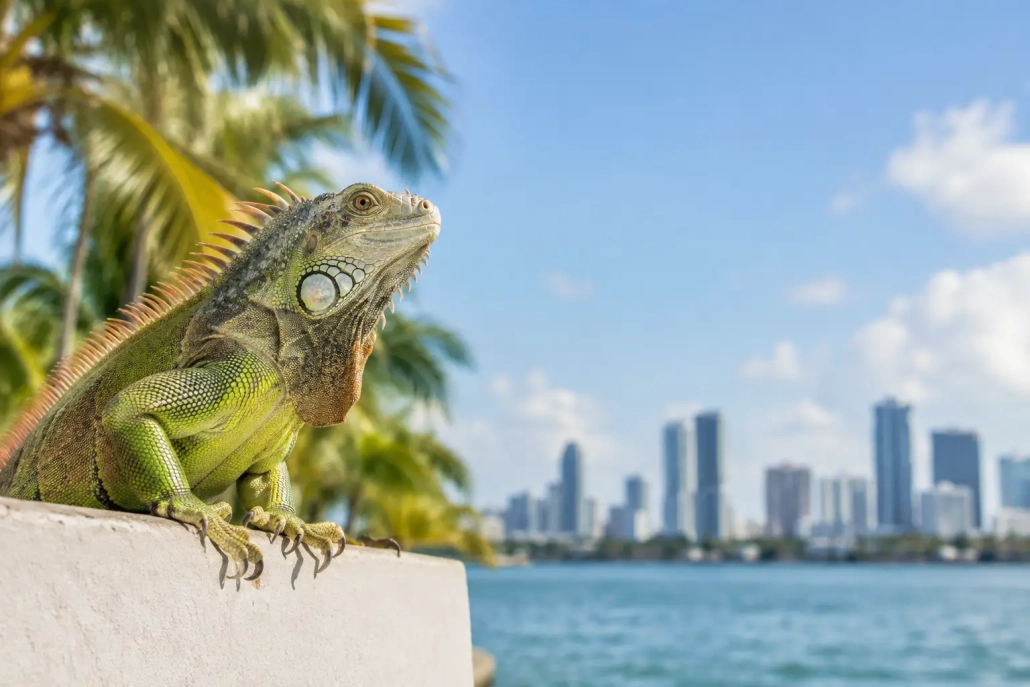
HOA Iguana Response Planning Guide for South Florida
A single iguana on a clubhouse wall may not look like an HOA problem. A growing group around a lake bank, pool deck, seawall, or HVAC pad is different. Once burrows, droppings, and repeat sightings show up in common areas, your association needs a clear response before a nuisance becomes an expensive repair.
This HOA iguana response planning guide gives boards and property managers a practical way to respond quickly, protect residents, and document decisions without creating confusion at the next meeting.
Start With the Risks That Affect Your Community
Green iguanas are invasive in South Florida, and they are not harmless landscape visitors. They dig burrows that can undermine walkways, pavers, slopes, canal banks, seawalls, and pool-deck edges. Their droppings create sanitation issues near outdoor kitchens, playgrounds, docks, mail stations, and shared pool areas. The waste can also attract insects and other nuisance animals.
The biggest cost is often hidden below the surface. A burrow near a seawall cap or drainage area may look minor until erosion spreads. On commercial-style HOA properties, iguanas can also get into mechanical areas and damage exposed wiring, insulation, or equipment around HVAC units. Waiting for visible failure is rarely the low-cost option.
Not every sighting calls for an emergency dispatch. One animal passing through a large community is not the same as repeated activity at a structural asset. The response should match the risk, but the board should not wait for a resident to report a collapsed paver or a damaged canal edge before taking it seriously.
Build an HOA Iguana Response Plan Before Complaints Pile Up
A workable plan assigns responsibility, sets reporting rules, and tells everyone when to call a professional. It should be short enough that a property manager can use it on a busy morning, yet specific enough that maintenance staff and board members are not making up the process as they go.
Assign one point of contact
Choose a property manager, maintenance supervisor, or designated board liaison to receive reports and authorize the first response. Residents should know where to send sightings, photos, and location details. Without one contact person, reports get buried in neighborhood social media posts, email chains, and separate maintenance requests.
The designated contact does not need to identify every reptile or inspect burrows personally. Their job is to collect useful information, flag higher-risk locations, and move the issue to the right provider when conditions call for it.
Use a simple reporting standard
Ask residents and staff to report the location, date, approximate number of iguanas, visible burrows, and any nearby asset at risk. A photo helps, especially when activity is near a seawall, retaining wall, pool area, utility equipment, or building foundation.
Keep a log. That record helps the association see whether the issue is isolated or recurring. It also gives the board a factual basis for approving removal rather than relying on scattered complaints. For communities with lakes, canals, marinas, or golf-course-style landscaping, location patterns matter because iguanas often return to familiar basking and burrowing areas.
Set clear escalation triggers
Your plan should state when a report moves from observation to action. Four triggers generally justify prompt professional evaluation:
- Active burrows near seawalls, canal banks, foundations, sidewalks, pool decks, or drainage infrastructure.
- Iguanas gathering repeatedly in common areas where residents, guests, or staff are exposed to droppings.
- Damage to landscaping, irrigation, screens, pavers, docks, or outdoor mechanical equipment.
- Activity near a playground, pool entrance, food-service area, clubhouse patio, or other high-traffic shared space.
A sick, injured, trapped, or aggressive animal requires a different level of care. Keep residents away, secure the immediate area if needed, and contact a qualified wildlife professional. Do not send maintenance staff into a tight space, canal edge, or equipment enclosure without the right training and equipment.
Keep Residents Safe Without Creating More Problems
An HOA notice should be calm and direct. Tell residents not to feed iguanas, approach them, handle them, or try to fill active burrows while animals may still be inside. Feeding is a common mistake. It encourages repeat activity near patios and common spaces, making the property more attractive to the very animals the association is trying to manage.
Remind residents to keep pets back from iguanas and to avoid contact with droppings. Children are especially likely to touch rails, pavers, and pool furniture before washing their hands. Maintenance crews should use appropriate protective practices when cleaning waste from shared areas and should report concentrations of droppings rather than treating the issue as routine cleanup forever.
Communication should also prevent resident-led removal attempts. Florida wildlife rules and local conditions matter, and a well-meaning homeowner can create a safety problem or legal issue by using the wrong method. The association should handle removal through a lawful, professional process rather than allowing ad hoc action around common property.
Protect the Property While Removal Is Being Arranged
Some damage-control steps make sense right away. Limit access around a compromised bank, loose pavers, active burrow cluster, or damaged seawall area. Mark the location for landscaping and maintenance vendors so equipment does not cross unstable ground. If burrows are near a walkway or pool deck, use temporary barriers until the area can be assessed.
Do not rush to plug every hole. Filling a burrow before confirming that it is inactive can create another problem. The right sequence depends on the site, the burrow location, and the removal method. A professional can help determine when exclusion, repair, and site cleanup should happen.
Property conditions also affect recurrence. Dense shoreline vegetation, open access beneath decks, easy food sources, and neglected irrigation leaks can make certain areas more inviting. You may not be able to eliminate every attractive condition in a South Florida community, but targeted maintenance can reduce repeat pressure after removal.
Choose a Provider Who Can Work With HOA Conditions
The lowest quote is not always the lowest total cost. An HOA needs a provider who understands common-area access, resident communication, insurance requirements, work authorization, and the damage risks around water, hardscape, and mechanical equipment. Ask how the provider documents activity, handles sensitive locations, and coordinates removal with any needed repairs.
For a larger community, it is also smart to discuss response timing and whether recurring service makes sense. A one-time removal may be appropriate after a short-lived issue. Communities with persistent shoreline activity, large landscaped grounds, marina access, or repeated burrowing may need monitoring and targeted follow-up. It depends on the size of the property, the number of active areas, and the assets at risk.
Florida Iguana Ops works with South Florida property owners and managers who need straightforward, professional help with invasive iguana problems. Licensed and insured service matters when work is happening around shared amenities, expensive infrastructure, and resident traffic.
Put the Plan Into Your Operating Calendar
Do not let the response plan sit in a board packet until the next infestation. Review it before the seasons when iguana activity becomes more visible, share the reporting contact with residents, and make sure maintenance vendors know who has authority to approve action. Include iguana checks in routine inspections of seawalls, pool decks, dock areas, landscaping beds, HVAC enclosures, and drainage features.
The board should also budget with reality in mind. Removal is one cost. Structural repair, emergency erosion control, sanitation cleanup, and resident complaints can cost far more if the problem is allowed to spread. A modest planned response is easier to manage than a last-minute emergency meeting after damage is already done.
A good HOA plan does not promise that no iguana will ever enter the community. It gives your association a way to spot the warning signs, act before damage grows, and protect the shared property residents count on every day.



Leave a Reply
Want to join the discussion?Feel free to contribute!