
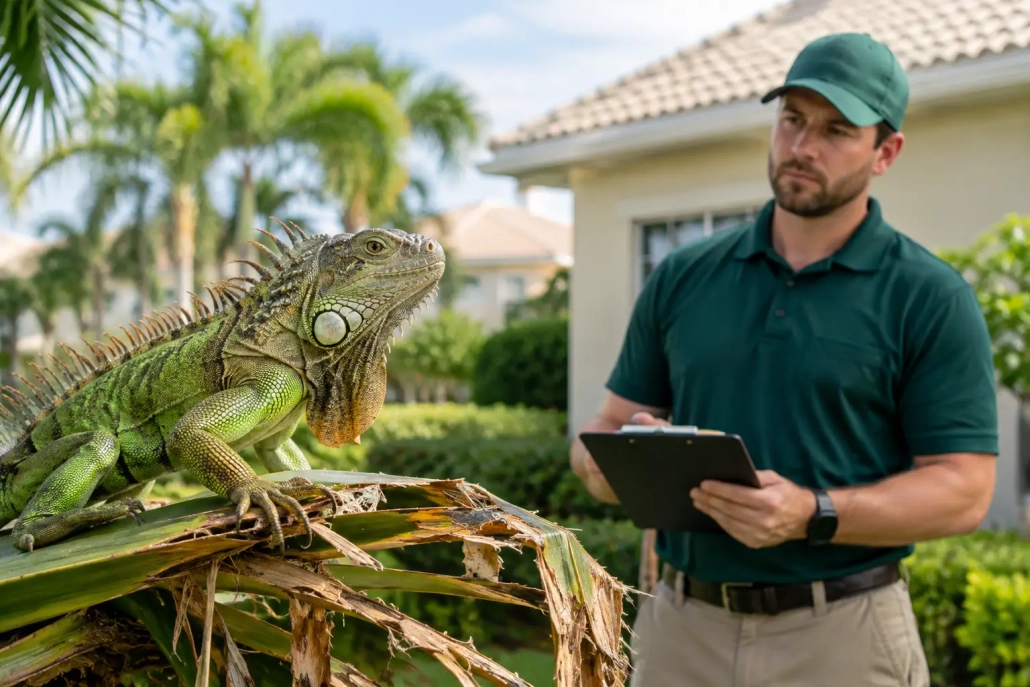
HOA Wildlife Response for Iguana Property Damage
A cracked pool deck, fresh dirt beside a seawall, or iguana droppings around a clubhouse is not just a landscaping complaint. For a community association, it can quickly become a property-protection issue with liability, sanitation, and repair costs attached.
A strong HOA wildlife response gives the board, manager, and maintenance team a clear way to act before an invasive iguana problem turns into damaged infrastructure or an emergency repair. The goal is not to create unnecessary panic. It is to identify the risk, protect residents and common areas, and bring in qualified help before the damage spreads.
Why Iguanas Create an HOA Property Problem
Green iguanas are invasive in South Florida, and they do more than sit in trees and sun themselves near the water. They dig. Their burrows can undermine soil near seawalls, retention pond banks, walkways, driveways, patios, foundations, and pool decks.
One burrow may look minor from the surface. The concern is what is happening below ground. Repeated digging can wash out soil, weaken edges, and create voids that are expensive to correct once concrete, pavers, or shoreline structures begin to shift.
Common areas make the problem more serious because they receive daily foot traffic. Residents, guests, vendors, and staff may walk near burrow openings without seeing them. At a marina, golf course, clubhouse, or waterfront community, an active iguana population can also affect the look and use of the property. Droppings near pool furniture, docks, walkways, and outdoor gathering spaces are unsanitary and can carry salmonella.
There is also a maintenance issue that associations should not ignore. Iguanas may shelter around mechanical equipment and damage landscaping, irrigation areas, and outdoor HVAC components. When they establish a dependable food source, hiding place, and digging area, they tend to return.
What an HOA Wildlife Response Should Cover
The best response is simple, documented, and fast enough to prevent a small wildlife sighting from becoming a structural concern. It should give residents a clear reporting path while keeping removal decisions with the appropriate board member, property manager, or facilities lead.
Start With Clear Reporting
Residents and maintenance personnel are often the first people to notice a problem. Tell them what is worth reporting: active burrows, repeated iguana activity around buildings or water, droppings in shared areas, damaged plantings, soil loss, or sightings near mechanical equipment.
A report should include the location, date, photos when safe to take, and whether the issue is near a seawall, pool, sidewalk, building, or other asset. This prevents vague complaints from bouncing around by email while the actual issue gets worse.
The association does not need to treat every iguana sighting as an emergency. A single animal moving through a landscaped area may not require immediate action. Several animals gathering in the same area, fresh burrows near infrastructure, or activity near a high-traffic amenity deserve a faster response.
Separate Routine Sightings From Urgent Damage
Not every wildlife call needs the same timeline. That is where a practical triage process helps. Routine sightings can be logged and monitored. An active burrow along a seawall, beside a pool deck, or near a foundation should be treated as a property maintenance concern and inspected promptly.
If there are signs of soil collapse, cracking, a sinking paver area, exposed voids, or compromised shoreline material, the association may need both wildlife removal and an evaluation from the appropriate repair professional. Removing iguanas addresses the ongoing cause. It does not automatically repair damage that has already occurred.
This distinction matters. Waiting until a bank fails or a walkway settles can turn a manageable removal job into a costly repair project.
Use Qualified, Lawful Removal
Board members and maintenance staff should not try to handle invasive iguanas themselves. Capturing wildlife can create safety issues, lead to improper handling, and put the association in a difficult position if the job is not completed lawfully.
Florida wildlife rules, local conditions, and humane handling requirements matter. A licensed and insured wildlife professional can assess the site, remove iguanas safely, and help the association understand where activity is concentrated. That is especially useful on larger properties with ponds, seawalls, dense landscaping, rooflines, docks, and multiple buildings.
Florida Iguana Ops handles targeted invasive iguana removal with a straightforward focus on protecting South Florida property. For an HOA, the value is not just getting one visible animal off-site. It is identifying recurring activity and responding before burrows and waste create a larger maintenance problem.
Build Prevention Into the Maintenance Plan
Removal is often necessary, but it works best alongside practical prevention. An HOA cannot make a waterfront community completely unattractive to wildlife. It can reduce the conditions that make common areas an easy place for iguanas to settle.
Food sources should be reviewed first. Residents should not feed iguanas or leave pet food outdoors in common spaces. Open garbage, fallen fruit, and unsecured food around recreation areas can keep wildlife coming back. Associations can address this through basic resident reminders and consistent trash handling rather than heavy-handed rules.
Landscaping also deserves attention. Thick ground cover, unmaintained shoreline vegetation, and hidden areas around structures can provide cover. The right approach depends on the property. Over-clearing can create erosion or reduce the appearance residents expect, so the goal is not to strip every natural area bare. It is to improve visibility around vulnerable infrastructure and discourage hiding and burrowing where damage would be costly.
After removal, maintenance teams should watch known trouble spots. Fresh digging, new droppings, and repeated sightings near the same asset are signals that the area needs another look. A simple inspection routine is far cheaper than discovering months of concealed activity after a major storm or landscaping project.
Protect the HOA From Avoidable Liability
A documented response helps protect the association as well as the property. When a resident reports a burrow near a walkway or a vendor notices droppings around a pool area, there should be a record of the complaint, inspection, action taken, and follow-up.
That documentation gives the board useful information for budgeting and vendor decisions. It can show whether the community has a one-time wildlife issue or a recurring pattern tied to a pond, seawall, clubhouse, or particular building. It also demonstrates that the association took reasonable steps after learning of a potential hazard.
For communities with extensive waterfront infrastructure, a seasonal review can make sense. Iguana activity may increase when weather, landscaping conditions, and available cover favor nesting and shelter. Property managers do not need a complicated wildlife program. They need a dependable contact, a reporting process, and the authority to act when damage is visible.
Questions Boards Should Ask Before Hiring Help
Price matters, but the lowest quote does not always account for the full job. A provider should be able to explain what areas will be inspected, what removal method is appropriate, whether follow-up is recommended, and how the team will work around residents, guests, pets, and active amenities.
Ask whether the company is licensed and insured, whether it has experience with commercial or association-managed properties, and whether it can communicate clearly with the property manager. The board should also understand what is included in the service and what falls outside it. Burrow repair, landscaping restoration, seawall work, and structural repairs may require separate specialists.
A good provider will be candid about that. No gimmicks, no vague promises that a single visit will permanently eliminate every iguana from an open South Florida environment. The right plan reduces the active problem, addresses high-risk locations, and gives the association a practical way to respond when activity returns.
Act Before the Visible Damage Gets Bigger
HOA wildlife response is really property response. The iguana is the visible problem, but the board is protecting the assets beneath and around it: seawalls, decks, walkways, landscaping, pool areas, equipment, and the community’s reputation.
When fresh burrows or repeat iguana activity appear near shared infrastructure, do not wait for the next maintenance cycle to see whether the issue disappears. Document the location, keep people away from any unstable area, and arrange a professional assessment. Fast action is usually the least expensive option, and it helps keep a nuisance wildlife issue from becoming a community-wide repair bill.



Leave a Reply
Want to join the discussion?Feel free to contribute!