
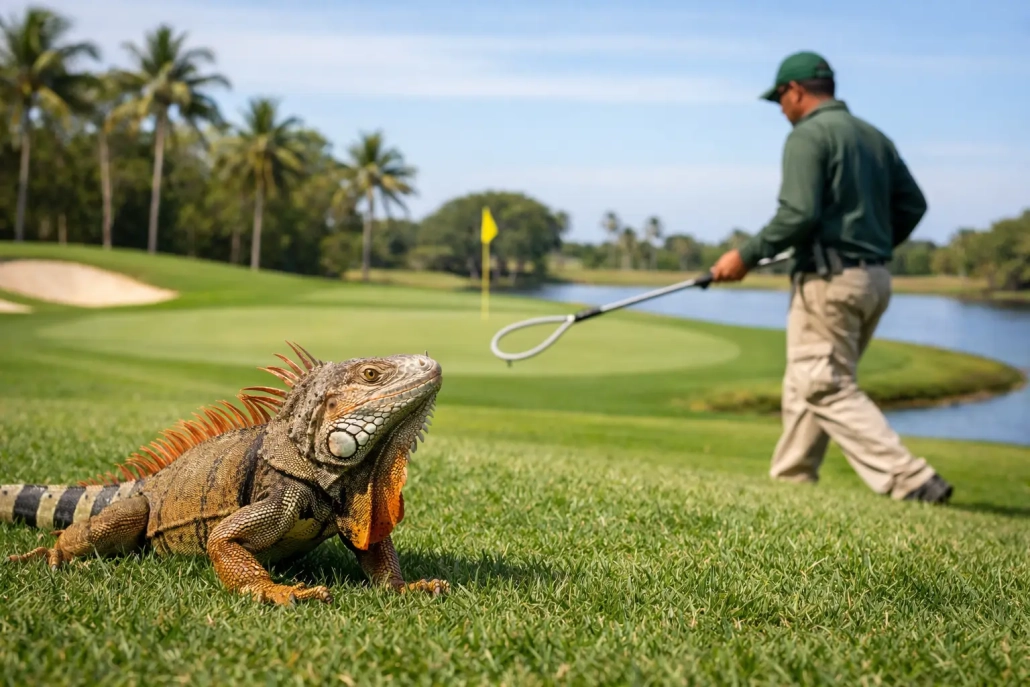
Golf Course Iguana Control That Protects Play
A few iguanas along a pond bank can look like a minor grounds issue. Then the cart path begins to settle, a bunker edge caves in, guests complain about droppings near the patio, or a maintenance crew finds fresh holes beside irrigation and electrical equipment. Golf course iguana control is not about chasing reptiles off the fairway for a day. It is about protecting the ground, structures, guest experience, and operating budget behind a well-kept course.
For South Florida course operators, invasive green iguanas are a recurring property problem. They are strong climbers, persistent burrowers, and comfortable around water, landscaped beds, warm equipment areas, and maintained turf. Once a site offers food, cover, and sunny places to bask, a small population can grow quickly.
Why Iguanas Create Expensive Course Problems
A golf course has more vulnerable ground than most commercial properties. There are pond edges, canal banks, drainage areas, bunker faces, bridges, cart paths, tees, landscaped entrances, maintenance buildings, and outdoor dining spaces. Iguanas use many of those same areas for shelter and travel.
Burrowing is the biggest concern. Iguanas can dig into slopes, banks, seawalls, retaining areas, and soil near paved surfaces. Their tunnels may weaken soil below walkways and cart paths, contribute to erosion around water features, and leave soft spots where employees or players can step into a hole. A fresh burrow may look manageable from the surface, but the void beneath it can extend farther than expected.
The risk rises after heavy rain. Saturated soil can collapse into existing burrows, and washouts can expose damage that was building quietly over time. Repairing turf is one thing. Repairing a failed bank, undermined path, or compromised hardscape is another expense entirely.
Droppings create a separate issue. Iguana waste around clubhouses, pool areas, patios, starter stations, bag-drop zones, benches, and cart staging areas looks bad and creates a sanitation concern. Reptiles can carry salmonella, so employees should not treat cleanup as a casual housekeeping job. Areas with repeated droppings need safe cleaning practices and a plan to stop the activity at the source.
There is also the guest experience. Players expect a course to look intentional. Repeated iguana sightings near dining areas, damaged landscaping, torn bunker edges, and waste on walkways can make a property feel neglected even when the maintenance team is working hard behind the scenes.
Where Golf Course Iguana Control Matters Most
Iguanas do not spread evenly across a course. They settle where cover, warmth, water, and easy food sources meet. A good control program starts by identifying the sections that keep producing activity instead of treating every acre the same.
Pond Banks, Canals, and Drainage Edges
Water-adjacent areas are prime iguana territory. Pond banks provide access to vegetation, open sun, and loose soil for digging. If a course has bulkheads, riprap, retaining walls, or drainage structures, those areas deserve regular inspection. Fresh soil at a hole entrance, small slides in a slope, and trails through groundcover are early signs that should not be ignored.
Cart Paths, Bridges, and Walkways
A cart path can show damage long after burrowing begins underneath nearby soil. Look for cracking, settling, soft shoulders, or holes along the edges. The same goes for pedestrian paths near clubhouses, restrooms, and practice facilities. These are liability-sensitive areas, so an active burrow should be addressed before someone twists an ankle or a cart leaves the pavement.
Bunkers, Landscape Beds, and Tee Boxes
Iguanas are drawn to manicured landscape beds because they offer cover and soft digging material. Bunker edges and decorative plantings near tees can also become feeding and basking spots. Course crews often end up repairing the visible damage repeatedly without removing the animals responsible for it. That turns a wildlife issue into an endless maintenance task.
Maintenance and Mechanical Areas
Warmth from equipment and protected spaces around buildings can attract iguanas. They may shelter near HVAC units, utility boxes, sheds, and storage areas. Waste, nesting activity, and damaged wiring or insulation can create problems that go beyond appearances. Maintenance staff should report activity quickly rather than trying to handle a large reptile in a confined area.
What Effective Control Looks Like
Effective iguana control is targeted, consistent, and safe. It is not a one-time walk through the property followed by a hope that the problem disappears. Courses need a response that accounts for the size of the property, the areas guests use, the season, and the locations where iguanas are reproducing or repeatedly burrowing.
The first step is site assessment. A professional should identify active burrows, travel routes, basking areas, feeding sources, and high-risk infrastructure. On a golf course, that may mean separating an isolated sighting near a pond from a recurring population working along several banks and landscaped corridors.
Removal should be handled by trained professionals who understand safe capture methods, property access, and Florida requirements for invasive species. This matters on an active course. Work must be planned around golfers, staff, events, maintenance schedules, and restricted areas. A careless approach can disrupt play, create a safety problem, or simply push animals into another part of the property.
After removal, the course should address the conditions that keep drawing iguanas back. That can include managing access around vulnerable structures, removing obvious food sources, repairing active burrows once they are confirmed empty, and adjusting landscape areas that provide dense cover right beside high-value infrastructure. The right prevention steps depend on the property. A pond-side hole near a bulkhead calls for a different response than activity around a clubhouse patio.
Do Not Let Crews Handle the Risk Alone
Golf course maintenance teams are skilled at turf, irrigation, equipment, and daily presentation. They should not be expected to become wildlife removal specialists on top of everything else. Large iguanas can scratch, bite, whip their tails, and react unpredictably when cornered. Attempting to grab one near water, equipment, or a busy guest area can lead to an injury or an escaped animal in an even worse location.
Staff can still play an important role by documenting sightings and damage. A simple reporting process helps: note the location, date, number of iguanas seen, fresh burrows, droppings, and any damage to turf or hardscape. Photos can help show whether a hole is growing or whether an animal is using the same area repeatedly.
What crews should avoid is filling an active burrow immediately, placing food out to lure animals, or using unapproved methods that put guests, pets, protected wildlife, or employees at risk. Filling a burrow before activity is properly assessed can leave the underlying problem unresolved. It can also cause an animal to dig elsewhere, closer to a path, wall, or building.
The Cost of Waiting Usually Shows Up Later
Iguana control often gets delayed because the first signs seem cosmetic. A few holes, scattered droppings, chewed plants, and regular sightings may not trigger an emergency work order. But the longer a population is allowed to settle in, the more places it can occupy and the more repairs a course may face.
Waiting can mean repeated landscape replacement, erosion control work, contaminated guest spaces, and disruptions when damage finally needs urgent repair. For private clubs and public courses alike, a rough-looking pond edge or closed cart path affects the standard members and guests paid to enjoy.
A planned response is usually easier to manage than an emergency call after a bank failure or safety complaint. It also gives property managers a clearer record of what was found, what was removed, and what areas need continued monitoring.
A Practical Partner for South Florida Courses
Florida Iguana Ops provides professional iguana removal for commercial properties, including golf courses across Palm Beach County. As a local, family-owned team, we understand that a course cannot pause operations every time wildlife becomes a problem. The job is to show up on time, work carefully around your property, and deal with the issue without gimmicks or runaround.
If your staff is seeing repeat activity around ponds, paths, landscaping, or guest areas, act before the damage spreads underground. Request an assessment, protect the areas that cost the most to repair, and give your grounds team one less recurring problem to chase.



Leave a Reply
Want to join the discussion?Feel free to contribute!