
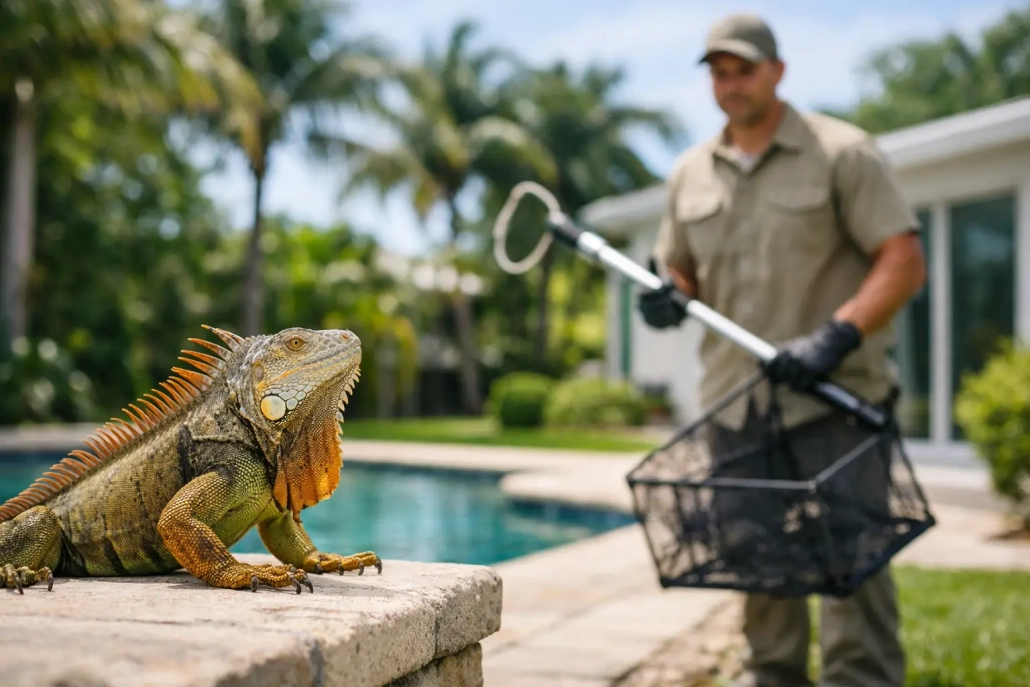
Iguana Removal Florida Property Owners Can Trust
A fresh iguana burrow beside a pool deck or seawall is not a cosmetic problem. It is a warning that soil is moving where it should stay packed and supported. Iguana removal Florida property owners arrange early can prevent a manageable nuisance from becoming a costly repair, especially around water, concrete, landscaping, and mechanical equipment.
Green iguanas are invasive in South Florida, and they are built to settle into the places property owners work hard to maintain. They climb, dig, feed, leave waste, and return to familiar shelter when the conditions are right. One lizard on a fence may not mean you have an infestation. Multiple sightings, active burrows, and droppings around common areas are a different situation. That is when prompt, professional action makes sense.
Why Iguanas Become an Expensive Property Problem
Iguanas are not just passing through when they establish burrows. They dig into banks, landscaped beds, under walkways, beside driveways, and around seawalls. Over time, that digging can loosen soil and create voids beneath structures that need stable ground. Rain, irrigation, and rising water can make the damage worse.
On a residential property, the first signs may be cracked pavers, sinking edges near a patio, chewed ornamentals, or holes near the pool equipment. On commercial sites, the exposure can be much bigger. A marina, golf course, apartment community, hotel, or office property may have long seawalls, high-traffic walkways, guest areas, drainage features, and extensive landscaping to protect.
The main risks tend to fall into four areas:
- Burrowing damage: Holes and tunnels can compromise soil around seawalls, foundations, sidewalks, pool decks, driveways, and retaining areas.
- Sanitation concerns: Iguana droppings can contaminate outdoor living spaces, docks, patios, pool areas, and employee or guest walkways. Reptiles can carry salmonella, so waste should be handled carefully.
- Landscaping losses: Iguanas eat many ornamental plants, flowers, fruits, and vegetables. They can turn a well-maintained landscape into an ongoing replacement bill.
- Equipment and operational risk: Iguanas seek warm, protected spaces and can interfere with outdoor HVAC equipment and other mechanical areas. For commercial properties, a damaged unit or emergency repair can disrupt normal operations quickly.
Waiting for the problem to disappear is usually the costly choice. Iguanas reproduce, young animals use the same favorable habitat, and established burrows can draw repeat activity even after the original animal is gone.
Signs You Need Iguana Removal in Florida
You do not have to see a large group every day to have an active issue. Iguanas are often most visible when they are warming up in the morning, feeding, or moving between trees, canals, docks, and shelter. The evidence they leave behind is often more useful than a single sighting.
Look for clean-edged holes near concrete, canal banks, seawalls, garden borders, or pool decks. Fresh soil pushed outside an opening is a strong clue that a burrow is active. You may also notice droppings on docks, patios, roofs, walkways, and around pools. Large droppings in a repeated location usually mean the animal has made your property part of its routine.
Plant damage matters too. Missing leaves, stripped flowers, broken stems, and damage to vegetable gardens can point to regular feeding. If you manage a commercial property, pay attention to complaints from tenants, guests, maintenance staff, or grounds crews. Repeated sightings near entrances, outdoor dining, recreation areas, or mechanical yards should be addressed before the issue affects safety or appearance.
A single hole is worth checking. Several holes near infrastructure call for a professional assessment. The right response depends on where the activity is happening, how long it has been present, and whether the ground already shows signs of settling or erosion.
Why DIY Iguana Control Can Create More Trouble
Property owners often try barriers, repellents, loud noises, or makeshift traps first. These methods may temporarily change an iguana’s behavior, but they rarely solve an established infestation. An iguana that loses access to one food source or hiding place may simply move to another part of the property.
There is also a safety issue. Large iguanas can bite, scratch, whip with their tails, and carry bacteria. Trying to corner one around a pool, dock, roofline, or HVAC unit can put people, pets, and property at risk. Handling is not a job for an untrained homeowner or maintenance employee.
Legal compliance matters as well. Florida’s rules for invasive species and wildlife handling can change, and the proper method depends on the animal, location, and circumstances. A professional provider understands the current requirements and uses appropriate, humane removal practices. That keeps property owners from having to guess what is allowed or what to do after capture.
The bigger issue is follow-through. Removing one visible iguana without inspecting for burrows, access points, food sources, and repeat activity is often a short-term fix. Good control looks at why the property is attractive in the first place.
What Professional Iguana Removal Should Look Like
A professional visit should start with the property, not a one-size-fits-all promise. The technician should inspect the active areas, identify signs of travel and shelter, and consider the specific risks around structures, water, landscaping, equipment, and public access.
From there, the removal plan should be clear. You should know what areas are being addressed, what type of activity has been found, and what steps are needed to reduce repeat problems. On a residential property, that may mean focusing on a pool area, backyard landscaping, canal edge, or roof-access zone. At a marina or commercial site, it may involve coordinated work around docks, guest spaces, maintenance operations, and high-value infrastructure.
Professional removal is not about creating drama or selling services you do not need. It is about reducing active iguana pressure safely and addressing the conditions that allow the problem to keep growing. That includes clear communication, punctual service, proper insurance, and respect for the property while the work is being done.
Florida Iguana Ops approaches the work with that standard: show up on time, assess the actual issue, do the job right, and explain what comes next without gimmicks or runaround.
Different Properties Need Different Protection
A homeowner may be most concerned about children near the pool, pet safety, ruined landscaping, and a new hole beside the patio. A property manager may be dealing with tenant complaints, sanitation around common areas, and the cost of repairing a walkway before it becomes a trip hazard.
Marinas and waterfront properties have their own concerns. Burrows near seawalls and banks deserve quick attention because moving soil near water can become a major repair issue. Golf courses and large landscaped properties may face widespread feeding damage and numerous hiding areas. Commercial facilities often need work scheduled around customers, employees, deliveries, and normal operations.
That is why the cheapest quote is not always the best value. The right provider should have experience with the kind of property you manage and should understand what is at stake if the issue is ignored. A fast removal that misses active burrows or repeat access can cost more than a thorough plan from the start.
When to Call for Help
Call when you see active burrows near concrete, seawalls, foundations, or pool structures. Call when droppings are building up in areas where people, pets, customers, or employees spend time. Call when landscaping damage is repeated, or when iguanas are showing up around HVAC systems, docks, roofs, or other sensitive equipment.
Do not wait for a major crack, a collapsed edge, or an emergency repair bill to take the problem seriously. Take photos from a safe distance, keep children and pets away from active burrows, and avoid trying to block or fill holes before the activity has been assessed. A prompt inspection gives you a clearer picture of the risk and a practical path to protecting the property you have worked hard to build.


Leave a Reply
Want to join the discussion?Feel free to contribute!