
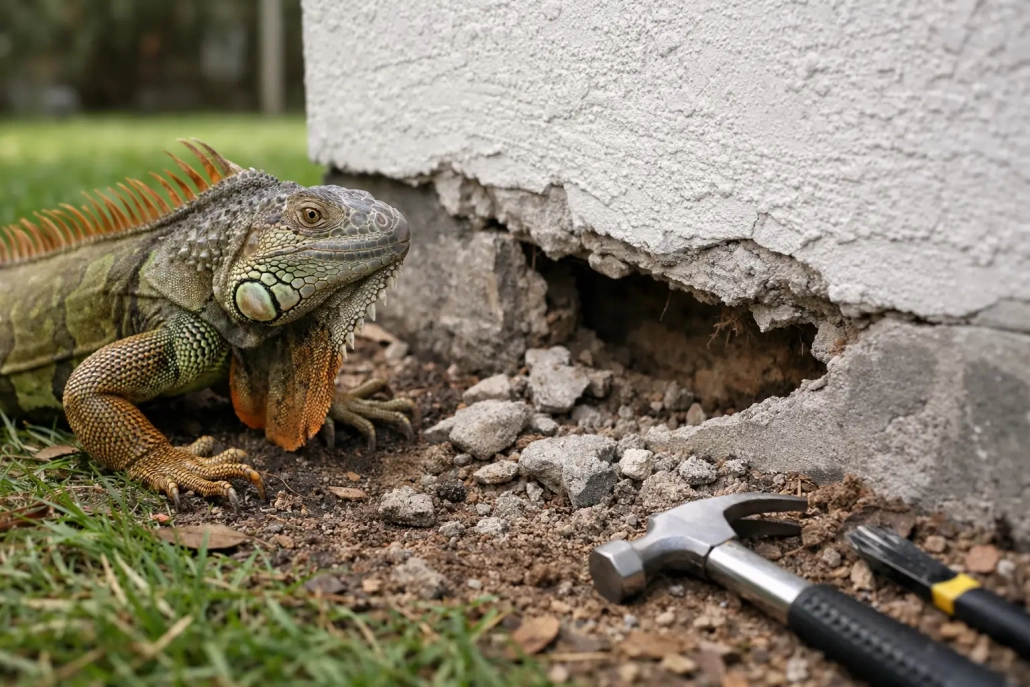
Iguana Damage to Foundations and What to Do
A fresh hole beside a slab, porch, pool deck, or seawall may look like a landscaping problem. It can be the beginning of iguana damage to foundations. In South Florida, invasive green iguanas dig burrows for shelter and nesting, and repeated digging can remove or loosen the soil that supports hardscape and structures.
The iguana is not usually breaking apart a concrete foundation with its teeth or claws. The bigger problem is what happens underneath and alongside it. Burrows create voids, rainfall moves soil, irrigation saturates weakened areas, and the ground can settle. By the time a crack becomes obvious, the underground problem may have been growing for months.
For homeowners, property managers, marina operators, and commercial facilities teams, the right move is to address both sides of the issue: remove the animals causing the activity, then evaluate and repair the affected area. Filling an active burrow before the iguanas are removed often turns into a frustrating repeat job.
How Iguana Damage to Foundations Starts
Iguanas look for warm, protected areas with loose or workable soil. Around a property, that often means the edges of a house slab, retaining wall, patio, walkway, pool deck, utility pad, driveway, or seawall. Landscaping mulch, gaps around irrigation lines, and soil softened by leaking water can make these areas even more attractive.
A single shallow hole is not always a structural emergency. The risk goes up when burrows are deep, active, repeated, or located close to a load-bearing area. Multiple iguanas using the same zone can create a network of tunnels and disturbed soil. Heavy summer rain can then wash material into those openings or collapse the weakened ground.
Florida properties are especially vulnerable because many outdoor features sit on compacted fill or shallow soil conditions. When support soil shifts, concrete does not flex very well. It cracks, settles, separates at joints, or develops uneven spots that become trip hazards.
The chain reaction property owners miss
Burrowing is only part of the story. Iguana droppings can accumulate around the same nesting and basking areas, creating an unpleasant sanitation issue near doors, patios, pool areas, docks, and guest walkways. Their feeding can also strip landscaping that helps hold soil in place.
Water makes everything worse. A downspout that discharges near a burrow, an irrigation leak, or ordinary runoff can carry soil away from an already disturbed area. This is why a hole that seemed minor during the dry season can become a soft spot, depression, or cracked section after a hard rain.
Warning Signs Near Your Home or Building
Do not wait for a large crack to take the problem seriously. Walk the property regularly, especially around structures where you have seen iguanas resting, feeding, or entering cover. Look for soil pushed out of openings, fresh claw marks, repeated holes, droppings, and paths through mulch or plant beds.
Pay close attention if you see a gap opening between a slab and an adjacent wall, a patio section that feels uneven, loose pavers, new cracks in concrete, or soil sinking next to the building. Doors that suddenly stick or cracks appearing inside a home can have several causes, so they do not automatically mean iguana activity is to blame. But if those signs appear near active burrows, the situation deserves a closer look from the right professionals.
On commercial sites, the damage can show up around equipment pads, sidewalks, parking-area edges, boat docks, golf-course structures, and drainage features. An undermined HVAC pad or walkway is more than an appearance issue. It can become a safety problem, disrupt operations, and lead to costly repairs if the support base fails.
What to Do When You Find a Burrow
Start by documenting what you see. Take clear photos of the hole, surrounding soil, cracks, droppings, and the nearest structure. Note whether you have seen iguanas entering or leaving the opening and whether the area changes after rain. This gives you a useful baseline and helps contractors understand what they are dealing with.
Avoid collapsing or permanently sealing an active burrow without first dealing with the animals. That can force iguanas to dig another exit, move to a nearby location, or continue working around the same vulnerable area. It also does nothing to stop other iguanas from returning if the property has become an established feeding and shelter site.
Keep foot traffic, lawn equipment, and heavy loads away from soft or undermined ground. If the burrow is near a pool deck, seawall, driveway, or structure, do not assume a surface patch is enough. A qualified repair contractor, engineer, or foundation professional may need to assess the extent of settlement or voids before repairs are made.
Removal Comes Before Lasting Repairs
The practical order matters. First, stop the active iguana pressure with professional removal. Next, confirm that burrow activity has ended. Then repair voids, restore compacted soil, and fix damaged concrete, pavers, drainage, or landscaping as needed.
That does not mean every hole requires a major construction project. Some shallow landscape burrows can be restored after removal with proper backfill and compaction. Others, particularly those near a foundation edge, seawall, retaining wall, or equipment pad, need a more careful inspection. The repair should match the location, depth, water conditions, and the weight carried above it.
Trying to solve the problem with repellents or a quick fill can waste time. Repellents may have limited value in some settings, but they do not remove a burrowing iguana population or repair support soil. Exclusion and habitat changes can help after removal, yet they work best as part of a full property-protection plan rather than a substitute for it.
Prevention after removal
Once active iguanas are gone and damaged areas are repaired, reduce what draws them back. Trim dense vegetation that gives them cover, pick up fallen fruit, manage pet food outdoors, and correct irrigation leaks or drainage issues that soften soil. In some locations, hardening vulnerable edges or using appropriate barriers may make sense.
Prevention is not one-size-fits-all. A waterfront property, golf course, apartment community, and single-family home face different access points and pressure levels. The best approach focuses on where iguanas are entering, feeding, climbing, and burrowing on that specific property.
When the Risk Calls for Fast Action
Treat the situation as urgent when a burrow is directly next to a foundation, under a deck or slab, near a seawall, beside an HVAC pad, or causing visible settlement. The same is true when a walkway feels unstable, cracks widen quickly, or heavy rain has washed soil out of the area.
If there is any chance the ground is compromised around a structure, keep people away from the affected section until it is evaluated. For managers of commercial properties, resorts, marinas, and shared communities, that can mean marking off the area promptly to reduce liability while removal and repair plans are arranged.
Florida Iguana Ops provides local, licensed and insured iguana removal for properties dealing with recurring burrows and nuisance activity. The goal is straightforward: remove the invasive animals safely, help stop repeat damage, and give property owners a clear path to protecting what they have worked hard to maintain.
A burrow beside your building is not a problem to watch from the window. Handle the active iguanas early, protect the area from water and traffic, and get the right repair assessment before a small hole turns into an expensive structural headache.



Leave a Reply
Want to join the discussion?Feel free to contribute!