
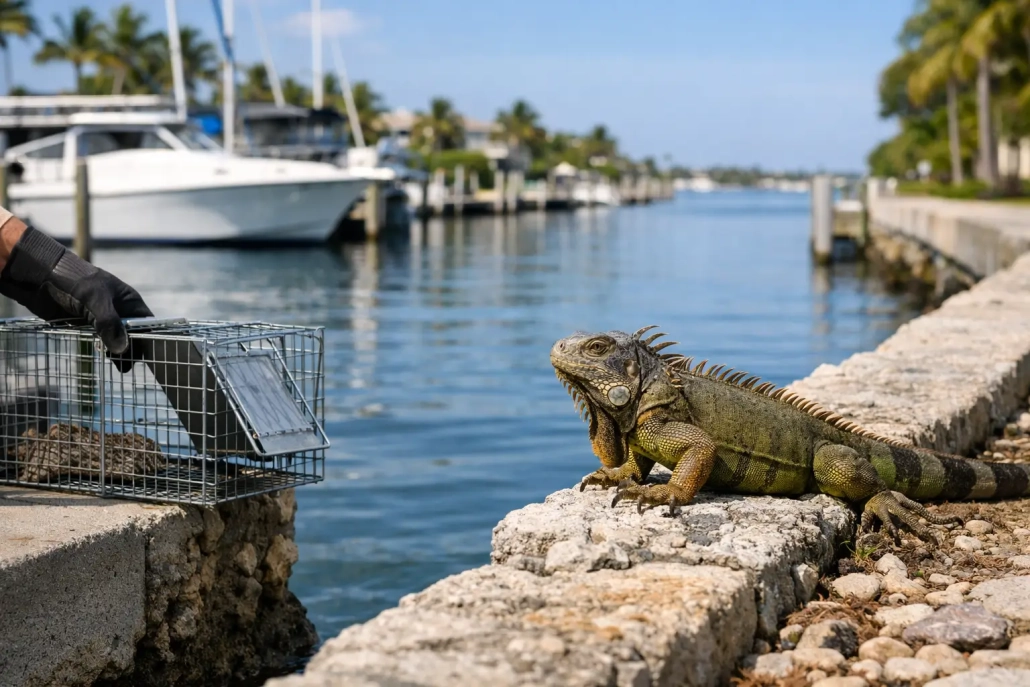
Marina Iguana Removal Protects Your Seawall
A fresh pile of dirt at the base of a seawall is not just a landscaping issue. It can be the first visible sign that an invasive iguana is tunneling where marina infrastructure cannot afford to fail. Marina iguana removal is about protecting the ground behind the wall, the walkways above it, and the people using the property every day.
At a waterfront property, iguanas have everything they need: sun-warmed concrete, water access, landscaped food sources, rock edges, dock structures, and quiet places to hide. Once a few establish themselves, the problem can grow quickly. Waiting until a burrow becomes a washout or droppings become a guest complaint usually costs more than addressing the activity early.
Why Iguanas Create Bigger Problems at Marinas
A marina puts expensive assets in a small, high-traffic area. Seawalls, docks, utility pedestals, landscaping, walkways, boat slips, storage areas, and buildings all depend on stable ground and clean conditions. Green iguanas do not understand property lines or maintenance budgets. They use the easiest available cover and the best sunning locations.
The biggest concern is burrowing. Iguanas dig into loose soil near seawalls, retaining walls, dock approaches, foundations, and landscaped edges. A single hole may not look serious from above, but repeated digging can remove soil that supports hardscape and waterfront structures. Rain, irrigation, wave action, and high water can then move into those weakened areas.
That is why a marina should not treat recurring iguana holes as something to fill and forget. Filling a burrow without addressing the animals often leads to new tunnels nearby. The surface may look repaired while the infestation continues along another section of the property.
Droppings are another operational headache. Iguanas leave waste on docks, finger piers, pool areas, sidewalks, boat ramps, outdoor seating, and electrical equipment. Besides looking bad, reptile waste can carry bacteria such as Salmonella. Staff should not have to repeatedly clean contaminated areas without knowing whether the source is being controlled.
At commercial properties, the effects spread beyond maintenance. Guests may complain about animals near food service or common areas. Tenants may raise concerns when droppings build up around entrances. A hole beside a walkway can become a trip hazard. If iguanas start using mechanical areas, they can also create problems around outdoor HVAC equipment and utility spaces.
Signs You Need Marina Iguana Removal
The iguana itself is not always the first thing a dockmaster, property manager, or maintenance team sees. Activity is often easiest to spot early in the morning, when iguanas come out to warm themselves, or during routine grounds checks.
Watch for several signs occurring in the same area: fresh soil pushed out near a seawall or planter, round burrow openings along hardscape edges, large droppings on docks and walkways, chewed foliage, and repeated sightings of iguanas using the same sunning spot. Juveniles are a warning sign too. Where smaller iguanas are present, larger breeding adults may be nearby or may have used the area previously.
A few animals seen passing through do not always mean a full infestation. It depends on where they are traveling, whether burrows are present, and how often they return. But active digging near waterfront infrastructure is reason to act promptly, even if the property has only seen one or two large iguanas.
Marina Iguana Removal Is More Than Catching One Lizard
Effective removal starts with an inspection of the activity pattern. A professional needs to identify where iguanas are entering, feeding, sunning, sheltering, and burrowing. At a marina, that may include seawall lines, landscape islands, storage yards, dock access points, drainage areas, and spaces behind equipment.
The removal method should fit the property. Busy marinas have employees, members, contractors, guests, and boat traffic moving through the site. That means the work needs to be controlled, safe, and scheduled with normal operations in mind. A one-size-fits-all approach can miss active areas or create unnecessary disruption.
After targeted removal, the next job is reducing the reasons iguanas keep returning. This may involve identifying access points, clearing attractive hiding areas where appropriate, changing how certain landscape zones are maintained, and monitoring the locations with the most repeat activity. Not every waterfront site can be made iguana-proof, but a smart plan can greatly reduce pressure on vulnerable areas.
Burrow repairs also require judgment. An old, inactive opening may be repaired differently than a fresh burrow with ongoing activity. If structural support is in question, marina management should involve the appropriate seawall, engineering, or construction professional. Wildlife removal solves the animal problem; it does not replace a proper assessment of compromised infrastructure.
Protecting Staff, Guests, and Waterfront Assets
Maintenance teams are often the first line of defense, but they should not be expected to handle aggressive or large iguanas on their own. Iguanas can scratch, bite, whip with their tails, and create sanitation concerns when handled improperly. Cornering an animal around a dock, water edge, or electrical area can also make a simple problem more dangerous.
A practical site policy helps. Staff can document sightings, note fresh burrows, keep guests away from active removal areas, and report repeat locations quickly. They should avoid feeding iguanas or leaving food waste accessible around waterfront gathering areas. Feeding wildlife teaches animals that people and buildings are a food source, which makes repeat problems more likely.
For marina operators, timing matters. Removal and follow-up should be planned before a hole expands, before a holiday weekend fills the docks, and before a recurring sanitation issue becomes a reputation problem. This is especially true in South Florida, where warm conditions allow iguanas to stay active through much of the year.
Legal Compliance and Professional Handling Matter
Iguanas are invasive in Florida, but that does not mean anyone can handle removal however they want. Wildlife rules, approved methods, local property restrictions, and safe handling requirements all matter. A professional service should work within current Florida regulations and use methods suited to the specific property.
Hiring a licensed and insured local company also protects the marina from avoidable risk. Waterfront sites are not ordinary backyards. There may be public access, expensive vessels, employees, contractors, restricted areas, and sensitive utility equipment nearby. The provider should understand how to work carefully around those conditions and communicate clearly about the plan.
Florida Iguana Ops approaches these jobs as property protection work. The goal is not gimmicks or vague promises. It is to identify the active problem, remove invasive iguanas professionally, and help the property stop absorbing the same damage over and over.
When Emergency Action Is Needed
Some situations should move to the top of the maintenance list. Fresh burrows directly behind a seawall, soil loss beside a dock approach, sinking pavers, cracks that are getting worse, or a hole opening near a heavily used walkway deserve immediate attention. The same goes for iguanas gathering around outdoor food areas, pools, or HVAC equipment.
Do not assume that a repaired surface means the risk is gone. If water is washing soil from a damaged area or the ground feels unstable, restrict access and have the structure evaluated. Then arrange professional iguana removal so the source of repeated digging is addressed alongside the repair.
A well-run marina is built on small details being handled before they become expensive failures. If iguanas are burrowing along your seawall or fouling the docks, deal with the activity now, document the damage, and give your waterfront property a real chance to stay ahead of the next repair.



Leave a Reply
Want to join the discussion?Feel free to contribute!