
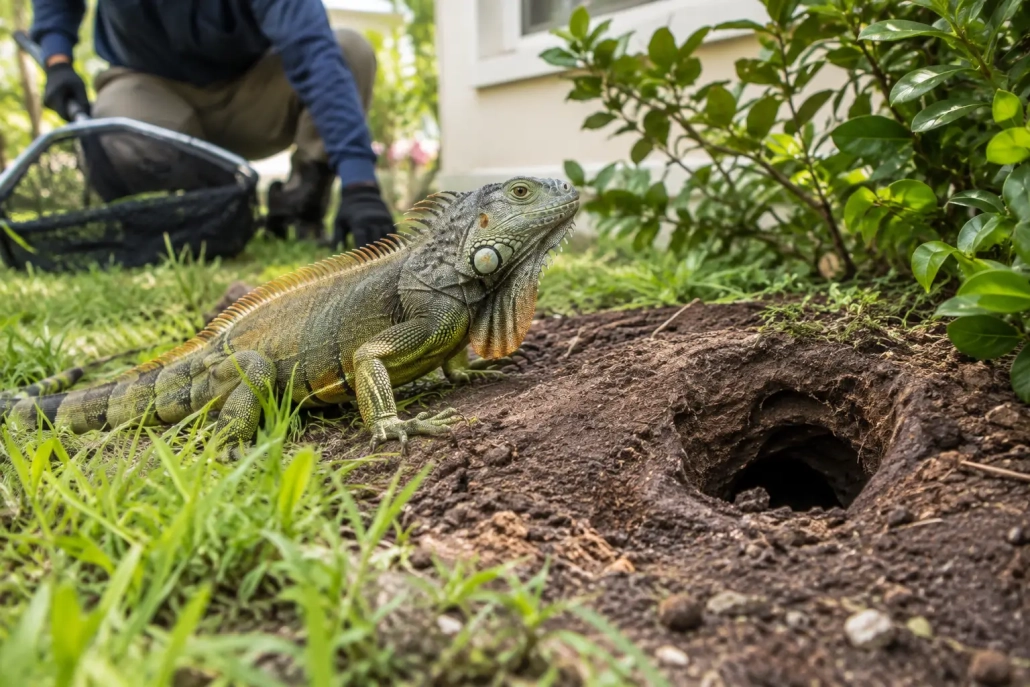
Iguana Removal Before Burrows Damage Your Property
A single iguana on a fence may seem like a nuisance. A group living under a pool deck, beside a seawall, or around commercial equipment is a property problem that gets more expensive with time. Professional iguana removal is not about reacting to an ugly mess after the fact. It is about stopping invasive reptiles before burrowing, droppings, and repeated activity compromise the places you have paid to maintain.
South Florida properties give iguanas what they need: warm shelter, vegetation, water, hardscape edges, and plenty of places to hide. Once they find a reliable spot, they often return. Waiting for them to move along is rarely a plan that protects a home, marina, golf course, restaurant patio, or multifamily property.
Why Iguanas Become a Property Threat
Green iguanas are invasive in Florida, and their damage is not limited to chewed plants. They dig. They climb. They gather in numbers. Their habits can turn a manageable wildlife issue into a repair project.
Burrows are often the biggest concern. Iguanas may tunnel along seawalls, canal banks, foundations, walkways, driveways, retaining areas, and pool decks. The opening you see above ground is not always a clear picture of the space below it. Repeated digging can remove soil support where it matters most, especially around water-facing structures and hard surfaces.
On a residential property, that can mean cracked pavers, loose soil around a patio, damaged irrigation, or landscaping that never seems to recover. On commercial sites, the stakes can be higher. A marina operator may need to protect shoreline structures. A property manager may be dealing with guest complaints and sanitation concerns. A facilities manager may find iguanas nesting near mechanical equipment, including HVAC areas where disruption or damage can lead to expensive service calls.
Droppings create another problem. Iguanas leave waste on docks, pool decks, sidewalks, roofs, patios, boat lifts, and outdoor seating areas. Aside from looking bad, reptile waste can carry bacteria such as salmonella. That matters around children, pets, tenants, customers, employees, and any area where people eat or gather.
The Signs You Need Iguana Removal
You do not need to see a large iguana every morning to have an active issue. Many property owners first notice the evidence: fresh holes in a bank, disturbed mulch, missing flowers, scattered droppings, or soil washing out along an edge after rain.
Watch for regular basking activity on roofs, seawalls, docks, pool cages, and sunny pavement. Iguanas often use the same routes between food, water, and shelter. If you see them entering one area repeatedly, there may be a nesting or burrowing location nearby.
Pay close attention to these conditions:
- New or expanding holes near a seawall, foundation, deck, sidewalk, driveway, or canal bank
- Repeated droppings around pools, patios, docks, boat slips, and outdoor common areas
- Chewed flowers, shrubs, fruiting plants, or vegetable gardens
- Iguanas gathering near HVAC units, utility areas, roofs, or equipment pads
- Soil loss, sinking pavers, cracking surfaces, or loose ground around a burrow
A lone iguana does not always require an emergency response. Active burrowing near valuable infrastructure does. The right response depends on the location, the number of animals, the condition of the property, and whether the area is used by residents, guests, pets, or employees.
Why DIY Iguana Control Often Falls Short
Property owners understandably try quick fixes first. They may fill a hole, add a repellent, remove visible food sources, or chase the iguana away. Some of those steps can reduce attraction, but they do not reliably solve an established infestation.
Filling a burrow without first confirming it is inactive can lead to more digging nearby. A burrow may also extend farther than expected. If the underlying reason the iguanas chose the area remains unchanged, another animal can reopen the same location or start a new one a few feet away.
DIY efforts also create practical safety issues. Iguanas can scratch, bite, whip their tails, and spread bacteria through waste. Handling an animal, working around a shoreline, climbing near a roofline, or investigating holes around unstable ground adds risk fast. Commercial properties have another layer of concern: removal needs to happen without disrupting customers, residents, or operations.
There is also the question of legal compliance. Wildlife rules and approved handling methods matter. A professional service understands how to approach nuisance iguana work responsibly, document the activity when needed, and avoid putting the property owner in a bad position.
What Professional Iguana Removal Should Address
Good iguana control starts with more than catching the animal in plain view. The goal is to identify where the activity is happening, what is drawing the iguanas in, and which parts of the property need immediate protection.
A thorough service visit should focus on active travel routes, basking areas, likely burrows, vegetation damage, waste accumulation, and vulnerable structures. At a home, that may mean checking the pool area, fence lines, landscaping beds, roof edges, and canal-side ground. At a commercial property, it can include docks, equipment areas, exterior dining spaces, retention edges, parking areas, and shared walkways.
Removal strategy should match the site. A gated community, golf course, waterfront estate, and busy marina do not have the same access conditions or risk points. The work needs to be planned around safety, property use, and the level of infestation rather than treated as a one-size-fits-all job.
After the active removal work, prevention deserves attention. Depending on the property, that can include reducing food sources, managing dense vegetation near vulnerable areas, addressing access points, repairing burrow damage, and monitoring spots where iguanas have repeatedly returned. No provider should promise that wildlife will never appear again in South Florida. What professional work can do is reduce active pressure and help you protect the areas most likely to suffer damage.
Protecting Seawalls, Pools, and Outdoor Assets
Waterfront property owners have a particular reason to act early. Seawalls and canal banks are expensive to repair, and small signs of burrowing should not be ignored. Iguanas do not cause every crack, settlement issue, or bank problem, but their tunneling can worsen weak areas and create avoidable concerns beneath the surface.
Pool areas also deserve a fast response. Iguanas are drawn to warm decks, planted borders, and nearby water. Droppings around a pool are more than an inconvenience. They create a sanitation issue and can make an outdoor space unpleasant for family, tenants, or guests. On rental and hospitality properties, recurring wildlife waste can quickly become a reputation problem.
Landscaping damage is often the first cost people see. Freshly installed plants, edible gardens, flowering shrubs, and low vegetation can all become targets. But it is the hidden damage – the burrows, undermined soil, and repeated activity near structures – that usually makes professional removal worth calling for.
Choosing an Iguana Removal Company
When the property is at risk, look beyond the lowest quote or a vague promise to “take care of it.” Ask whether the company is licensed and insured, whether it works on both residential and commercial sites, and whether it explains the problem in plain language. You should know what areas will be inspected, what the removal plan involves, and whether the team has experience around pools, seawalls, docks, landscaping, and sensitive equipment.
Local knowledge matters, too. South Florida iguana activity changes with weather, habitat, and property layout. A crew that works these conditions regularly can spot the difference between a passing animal and an established pattern that needs attention.
Florida Iguana Ops takes a straightforward approach: show up on time, assess the property, handle the removal professionally, and help the owner understand where the next problem may start. No gimmicks, no runaround, and no pretending a serious burrow is just a cosmetic issue.
If you are seeing fresh digging, repeat droppings, or iguanas returning to the same part of your property, take a few photos from a safe distance and make note of the location. That simple information can help a qualified local professional respond with the right plan before a small wildlife issue turns into structural damage.



Leave a Reply
Want to join the discussion?Feel free to contribute!