
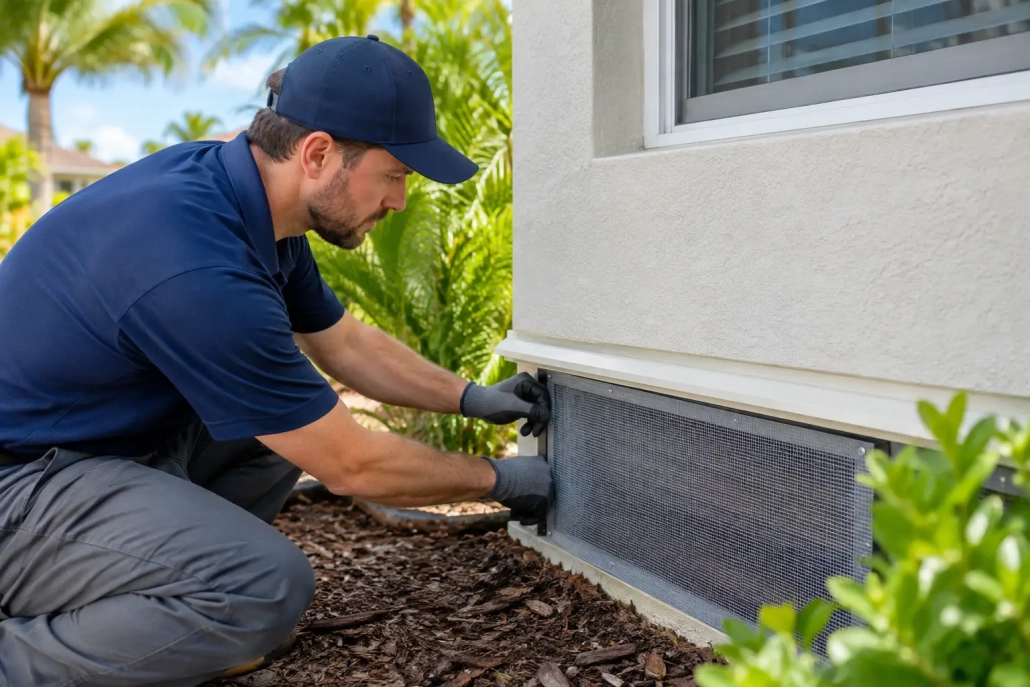
Wildlife Exclusion That Protects South Florida Property
A fresh burrow beside a pool deck or seawall is not a cosmetic problem. It can be the first warning that invasive iguanas or other nuisance animals have found a place to feed, shelter, and return to. Wildlife exclusion is how property owners stop that pattern by removing the animal pressure and making the property harder to re-enter.
For South Florida homes, marinas, golf courses, and commercial sites, exclusion work needs to account for more than a gap under a fence. Iguanas climb, dig, swim, hide in dense landscaping, and use warm equipment areas for cover. A quick patch may block one route while leaving three others open. The goal is to protect the property, not just make the problem less visible for a few days.
What Wildlife Exclusion Really Means
Wildlife exclusion means identifying the routes animals use to access a structure or outdoor area, then closing or modifying those routes after the active problem is addressed. It may involve securing openings around equipment, repairing damaged barriers, managing vegetation near access points, or protecting areas where burrowing is causing damage.
Removal and exclusion work best together. Removing iguanas from a property without correcting the conditions that attracted or sheltered them can lead to repeat activity. On the other hand, sealing an area while animals are still using it can create a worse problem, including trapped wildlife, damage to materials, or animals finding a new route into a more sensitive area.
That is why the first step is always an inspection. A professional should look at what is happening on the whole property: active burrows, travel paths, droppings, feeding areas, roof or wall access, damaged screens, landscaping cover, and vulnerable infrastructure.
Why Iguana Exclusion Is Different in South Florida
Iguanas are invasive reptiles, and they cause problems that ordinary pest-proofing does not solve. They can climb walls and trees, move through canal systems, and burrow into soil around structures. Their digging can undermine the ground near walkways, patios, pool decks, driveways, foundations, and seawalls.
Seawalls deserve special attention. A burrow near a seawall can allow water to move through compromised soil, creating conditions that may lead to expensive repairs. At a marina, waterfront community, or golf course, repeated iguana activity can put high-value infrastructure at risk long before a visible failure occurs.
Commercial properties also face operational issues. Iguanas may shelter around HVAC equipment, electrical areas, loading zones, storage areas, docks, and landscaped entrances. Droppings around customer-facing spaces create sanitation concerns, while animal activity near equipment can lead to disruption and repair costs. The right solution depends on the site. A single-family home with a pool has different vulnerabilities than a marina or a multi-building property management portfolio.
Signs Your Property Needs Wildlife Exclusion
Some animal activity is obvious, but the most expensive damage often starts in places people do not inspect every day. Watch for fresh soil pushed out from holes, repeated droppings on decks or docks, chewed or damaged screening, tracks along walls, and animals using the same landscaped path at dawn or late afternoon.
Burrows are a clear warning sign. They may appear along retaining areas, canal edges, landscaping borders, foundations, pool structures, and sidewalks. Do not assume a filled-in hole is permanently resolved. If the underlying attractants and access conditions remain, an iguana may reopen it or begin another burrow nearby.
Pay attention after heavy rain, construction work, landscaping changes, or cold weather. Those conditions can shift where animals seek cover and expose weak points around the property. A small access issue can become more obvious when wildlife is pressured to find shelter.
The Right Order: Inspect, Remove, Then Exclude
Good wildlife exclusion is not a one-size-fits-all product. It is a sequence of work based on how the animal is using the property.
First, the property needs to be inspected for active wildlife and damage. This identifies where iguanas are entering, resting, feeding, or burrowing. It also helps separate a current infestation from old damage that needs repair but is no longer active.
Next comes safe, lawful removal of active nuisance wildlife. This step matters because exclusion efforts should not trap animals inside enclosed spaces or force them toward more damaging areas. Experienced local professionals understand the difference between a visible iguana and a larger pattern of activity across a property.
After removal, exclusion work can focus on the routes that matter. That may mean securing gaps at ground level, addressing vulnerable equipment areas, repairing barriers, or changing conditions that give wildlife easy cover. The final step is monitoring. If an area has been heavily used, it should be checked for new burrowing, damaged materials, or signs that another access route has developed.
Where Property Owners Often Miss the Problem
A fence can look secure while the area beneath it remains open. Landscaping can look healthy while dense ground cover creates a protected travel lane. A seawall edge can appear stable while nearby digging loosens soil below the surface.
People also tend to focus on the animal they see rather than the conditions that support it. Fallen fruit, pet food left outdoors, open storage areas, accessible shelter, and unmanaged vegetation can keep wildlife coming back. Removing attractants is helpful, but it is not a substitute for professional exclusion where structural access or burrowing is involved.
DIY fixes have their place for minor maintenance, such as keeping gates closed and cleaning up food sources. But expanding foam, loose mesh, or a rushed hole repair may not hold up against digging, weather, or repeated animal pressure. Poorly installed materials can also create sharp edges, interfere with drainage, or conceal a growing issue until it costs more to fix.
Protecting High-Risk Areas
Pool decks, docks, seawalls, and foundations should be treated as priority areas because the cost of failure is high. If you see digging near these structures, act before the damage spreads. Waiting for a large collapse, cracked surface, or drainage problem is rarely the economical choice.
HVAC equipment needs protection as well. Reptiles and other nuisance wildlife can shelter in or around mechanical areas, where droppings, nesting material, and physical damage can affect service access and equipment performance. Commercial facilities should include these areas in regular exterior inspections, especially when landscaping or construction creates new cover.
For larger properties, the best approach is often a site plan rather than one-off fixes. A golf course, marina, condominium community, or business campus may need priority zones based on foot traffic, guest exposure, infrastructure value, and observed wildlife pressure. Start with the areas where damage or sanitation risk would have the biggest consequence.
Why Professional Wildlife Exclusion Pays Off
Professional wildlife exclusion is about preventing repeat loss. It protects more than landscaping. It can help protect structural areas, reduce sanitation issues from droppings, limit exposure around guests and residents, and reduce the chance that nuisance wildlife turns into an emergency repair.
Florida Iguana Ops approaches this work with the practical standard property owners expect: show up on time, assess the real problem, handle removal responsibly, and recommend work that fits the site. No gimmicks and no runaround. Licensed and insured service matters when work involves active wildlife, sensitive property areas, and the need for clear accountability.
If you are seeing burrows, repeated iguana activity, or animal damage near a seawall, deck, pool, foundation, or equipment area, do not wait for a larger repair bill. A timely inspection gives you a clear picture of what needs to be removed, what needs to be secured, and how to keep the problem from settling back in.



Leave a Reply
Want to join the discussion?Feel free to contribute!