
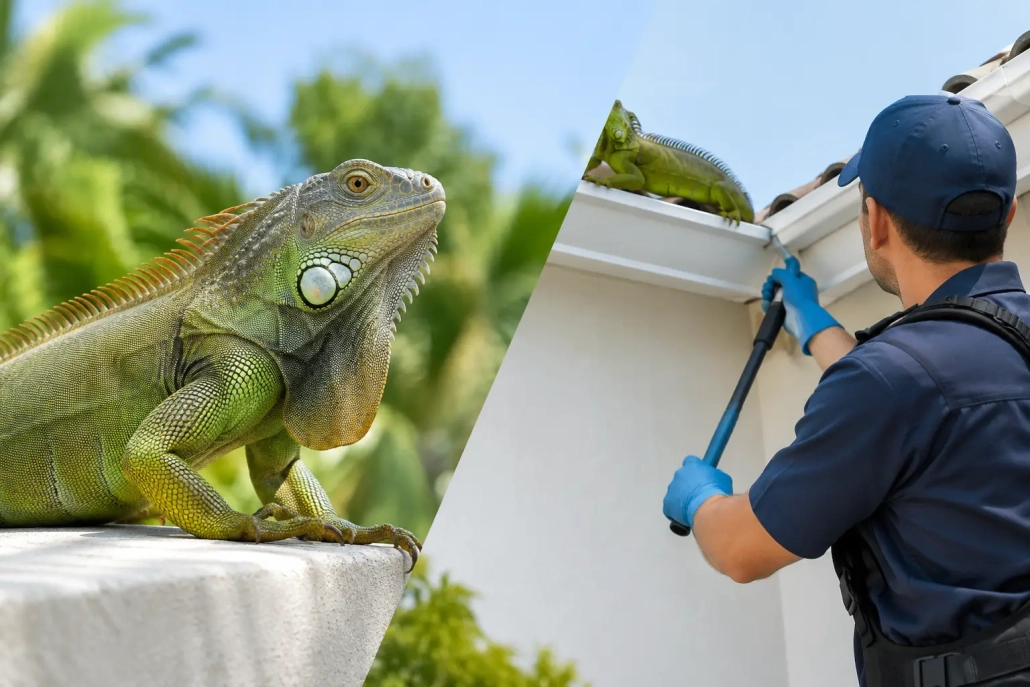
Recurring Versus Seasonal Iguana Service
An iguana seen once on a pool deck may call for a targeted visit. Iguanas returning to the same seawall, landscaping bed, roofline, or equipment area are a different problem. The choice between recurring versus seasonal iguana service comes down to what the animals are doing on your property, how much damage is already at stake, and whether your site gives them a reason to keep coming back.
For South Florida property owners and managers, waiting until damage is obvious is usually the expensive option. Iguanas burrow where soil is loose, warm themselves near hard surfaces, shelter around mechanical equipment, and leave droppings where people, pets, guests, and employees have to walk. A service plan should match the pressure on the property, not a one-size-fits-all schedule.
What Seasonal Iguana Service Is Built For
Seasonal iguana service is planned around the times of year when activity, visibility, or breeding-related pressure rises on a property. It is a practical fit for locations that are generally quiet but develop a predictable issue during warmer or wetter periods, after landscaping changes, or when nearby vegetation and water sources draw reptiles closer.
This approach commonly starts with an inspection and targeted removal, followed by scheduled follow-up visits during the property’s known problem window. The goal is to reduce activity before a few visible iguanas turn into occupied burrows, repeated droppings, or a larger population using the same site.
Seasonal service can make sense for a homeowner who notices iguanas only during part of the year, especially if there is no evidence of active burrowing or repeated structural damage. It can also work well for properties with a clear seasonal pattern, such as a landscaped community entrance, a vacation property, or a commercial site where activity increases around a certain pond, dock, or planting area.
The benefit is straightforward: you receive professional attention when the risk is highest without paying for frequent visits during periods when the property stays quiet. The trade-off is that seasonal service is less protective when iguanas have already established a routine. If a site has active burrows, easy food sources, dense cover, or neighboring pressure, the animals do not necessarily follow a convenient calendar.
When Recurring Iguana Service Makes More Sense
Recurring iguana service is ongoing removal and monitoring on a set schedule. It is designed for properties where iguanas are not an occasional nuisance but a repeat threat to grounds, structures, sanitation, or operations.
This is often the better choice when a property has a seawall, canal edge, lake bank, retaining area, pool deck, foundation-adjacent landscaping, marina infrastructure, or broad grounds with multiple hiding areas. Iguanas can return to familiar cover and burrowing locations quickly. Removing a few animals once may provide relief, but it does not always stop new activity from moving in.
A recurring plan gives a trained professional the chance to spot changes early. Fresh digging around a seawall is not the same as an old, inactive hole. New droppings under an AC unit, tracks near a walkway, or repeated basking on a roof can show that pressure is building before a property owner sees major damage.
For commercial properties, consistency matters even more. A golf course, marina, apartment community, hotel, business park, or managed residential community cannot wait for a guest complaint or a maintenance emergency to find out iguanas have been tunneling along a bank. Ongoing service helps keep removal, observation, and documentation on a regular track.
Recurring visits also give the provider a clearer picture of what is attracting activity. That may include overgrown ground cover, open access beneath equipment, vulnerable landscape beds, water-adjacent soil, or fruit and food sources that should be addressed. Removal is the immediate job. Reducing the conditions that make the property attractive is what helps protect the investment over time.
Recurring Versus Seasonal Iguana Service: The Real Difference
The biggest difference is not simply how often someone shows up. It is whether the service is reactive to a known season or proactive against a continuing property risk.
Seasonal service is a good middle ground when activity is limited, predictable, and caught early. It gives property owners a planned response without treating every month like an emergency. For a low-pressure property, that can be the responsible and cost-conscious choice.
Recurring service is for conditions that can create repeated losses. Iguana burrows may weaken soil around seawalls, sidewalks, driveways, patios, and foundations. Their droppings create a sanitation issue and may carry salmonella. They can damage plantings, interfere with outdoor areas, and take shelter around equipment where access and safety become concerns.
The more expensive the surrounding infrastructure, the less sense it makes to treat repeat activity as a minor annoyance. A single damaged landscape bed is one thing. Repeated digging next to a seawall, pool deck, drainage area, or commercial HVAC equipment is another. In those cases, recurring service can be less costly than waiting for a repair bill.
Signs You Should Move Beyond a One-Time Visit
A one-time removal is useful when you have an isolated animal and no signs that the site is becoming established habitat. It is not a long-term strategy when the same warning signs keep appearing.
Consider seasonal or recurring professional service if you are seeing four or more of these issues:
- Fresh holes or expanding burrows near seawalls, foundations, walkways, patios, or pool areas
- Iguanas returning to the same roof, dock, retaining wall, landscaping bed, or equipment enclosure
- Frequent droppings around entrances, outdoor seating, pools, common areas, or workspaces
- Damaged plants, disturbed mulch, digging around irrigation, or repeated landscape replacement costs
- Multiple iguanas of different sizes, which can indicate a more established local population
- Complaints from tenants, guests, neighbors, customers, or staff about reptile activity
Repeated evidence matters more than the size of any one iguana. A large animal gets attention, but smaller animals and fresh burrows can tell you just as much about the direction of the problem.
How to Choose the Right Schedule for Your Property
Start with the risk, not the budget line alone. Ask where iguanas are appearing, how often they return, and what sits nearby if they dig or shelter there. A homeowner with occasional activity in an open yard may need a very different plan than a waterfront community with miles of vulnerable shoreline.
Property use should also guide the decision. A private backyard may be able to tolerate a short observation period after removal. A marina, condo association, restaurant patio, or golf-course facility has more people moving through outdoor spaces every day. Those sites often need quicker follow-up because sanitation, customer experience, safety, and infrastructure are all on the line.
It also helps to think about the time cost of waiting. Burrows do not repair themselves, and droppings do not become less of a health concern when left in common areas. If maintenance crews are repeatedly filling holes, cleaning waste, replacing plants, or responding to calls, a recurring plan may bring more control to an issue that is already consuming labor.
A professional inspection should result in a clear recommendation, not pressure for the biggest package. The right schedule may be one targeted visit, a seasonal plan during known high-activity months, or ongoing monitoring and removal. The answer depends on the evidence on your site.
Professional Removal Protects More Than the Landscape
Trying to handle an active iguana problem without the right experience can create more trouble than it solves. Iguanas can bite, scratch, and move quickly when cornered. They also tend to retreat into areas that are difficult to reach safely, including dense vegetation, roof spaces, water edges, and mechanical areas.
Florida Iguana Ops provides licensed and insured, local service focused on safe removal and practical property protection. That means looking beyond the animal in plain sight and checking the places where repeat activity causes real losses.
Whether you choose seasonal coverage or a recurring schedule, the goal is the same: stop an invasive nuisance from becoming a repair project. If fresh burrows, repeat droppings, or returning iguanas are showing up on your property, address the pattern while the fix is still manageable.



Leave a Reply
Want to join the discussion?Feel free to contribute!