
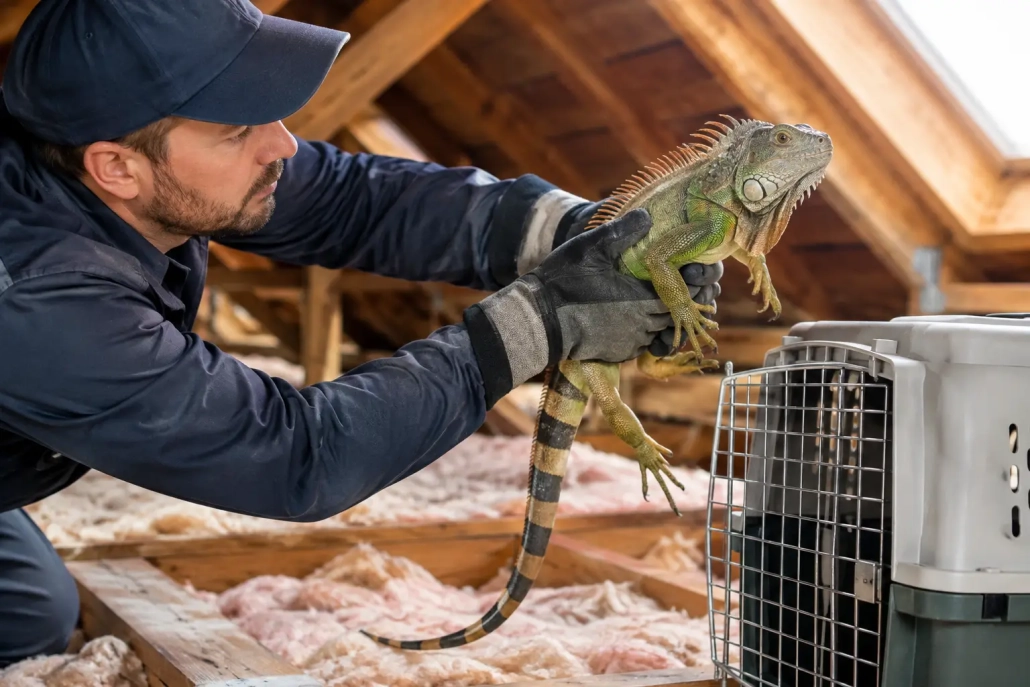
How to Remove Iguanas From Attics Safely
A heavy reptile moving above the ceiling is not a problem to ignore. In South Florida, an iguana can get into an attic through a loose soffit, damaged roof vent, broken fascia, or another small opening near the roofline. If you need to remove iguanas from attics, the priority is protecting people, preventing further damage, and closing off the route that let the animal inside.
An attic iguana is not always easy to see, but it can leave behind droppings, odors, insulation damage, and noise that gets worse when the animal searches for a way out. Trying to chase it through a hot, cramped attic can push it deeper into the structure or turn a manageable issue into a repair bill. The right response is careful removal followed by a full inspection of the entry point.
Signs an Iguana May Be in Your Attic
Iguanas are cold-blooded animals, so a sheltered attic can be attractive during a cold snap, heavy rain, or periods when outdoor cover is limited. They may also use rooflines and tree branches as travel routes, then find an opening that was already present.
You may hear slow, heavy scratching or thumping above the ceiling, especially early in the morning or late in the day. Unlike the quick scurrying often associated with rats, an adult iguana can make deliberate, weighty sounds. Other warning signs include droppings around roof access points, disturbed or compressed insulation, a foul smell, damage near soffits and vents, or a reptile seen climbing onto the roof.
Still, not every attic noise is an iguana. Rats, squirrels, birds, raccoons, and even loose ductwork can create similar sounds. That is why a proper inspection matters. Guessing at the animal and sealing an opening too soon can leave wildlife trapped inside the home.
Why Attic Iguanas Need Prompt Attention
An iguana may seem less threatening than a raccoon or other nuisance wildlife, but it can cause real trouble in an enclosed structure. Large iguanas have strong claws, powerful tails, and a tendency to force their way through weak materials when stressed. Once inside, they can tear insulation, damage flexible ductwork, contaminate stored belongings, or worsen an existing opening around the roofline.
Droppings are another concern. Iguanas can carry salmonella, and dried waste can create sanitation problems near air handlers, storage areas, or ceiling penetrations. You should not sweep up droppings dry or handle them without proper protection. Keep children and pets away from the area, and wash hands thoroughly after contact with any surface that may be contaminated.
There is also the issue of a trapped animal. An iguana that cannot find its exit may move toward light, warmth, or air flow. That can lead it into wall cavities, garage areas, or around HVAC equipment. The longer it remains inside, the more likely the situation becomes a repair and cleanup job instead of a straightforward removal.
How Professionals Remove Iguanas From Attics
To remove iguanas from attics safely, the work should begin with an inspection from both inside and outside the structure. A trained technician checks the attic, roof edges, soffits, vents, eaves, tree access, and nearby openings. The goal is to confirm where the iguana is located, identify how it entered, and make sure there are not additional animals using the same route.
Removal methods depend on the layout of the home and the animal’s location. In some cases, the iguana can be guided toward a controlled exit. In other situations, humane capture equipment and careful hands-on handling are needed. A technician should avoid damaging insulation, cutting unnecessary openings, or creating an escape route that sends the animal into another part of the building.
Once the animal is secured, the work is not finished. The attic should be checked for droppings, damaged insulation, disturbed ductwork, chewed or displaced materials, and moisture issues around the entry point. If waste is present, cleanup should be handled with the appropriate protective measures. A professional can also recommend whether insulation needs to be removed, repaired, or replaced in the affected area.
Florida regulations matter as well. Green iguanas are invasive, but removal must still be handled humanely and in accordance with applicable rules. Releasing an unwanted iguana somewhere else is not a responsible solution. A local wildlife-control professional can handle the situation without putting the property owner in the position of figuring out the rules, handling a stressed animal, or transporting it.
What Not to Do When You Hear an Iguana Overhead
Do not block every opening the moment you hear movement. If an iguana is still inside, sealing its main exit can trap it in the attic or force it into living spaces. Avoid using poison, glue boards, smoke, or improvised traps. Those methods can create a worse sanitation issue, harm non-target animals, and leave you with a dead animal in an inaccessible part of the structure.
It is also a bad idea to climb into a tight attic with a net or broom. Adult iguanas can bite, scratch, and whip with their tails when cornered. Attics add other hazards: exposed electrical wiring, weak walking surfaces, extreme heat, nails, and low visibility. The risk is not worth it, especially if you do not know exactly what animal is up there.
Keep Iguanas From Getting Back Into the Attic
Exclusion is the part that prevents repeat calls. After removal, repair the specific entry point rather than relying on a temporary patch. That may mean securing loose soffits, repairing fascia, screening vulnerable vent openings with suitable materials, and addressing gaps where rooflines meet walls. The repair has to allow proper ventilation while keeping wildlife out.
Tree limbs can also be part of the problem. Branches that touch or hang close to a roof give iguanas an easy route to upper levels. Trimming them back can reduce access, although it will not solve a damaged soffit or open vent by itself. Inspect areas around pool equipment, outdoor air-conditioning units, and landscaping too. Iguanas often travel between ground-level cover and roof access points.
For property managers, marinas, golf facilities, and commercial buildings, attic activity may be one piece of a larger iguana problem. Active burrows near walkways, pool decks, seawalls, driveways, and foundations should be addressed before they become expensive repairs. A property with food sources, dense landscaping, water access, and unsealed building openings can support repeat activity unless the whole site is evaluated.
When to Call for Attic Iguana Removal
Call for professional help when you hear repeated movement overhead, find fresh droppings near roof access, see damage around soffits or vents, or spot an iguana entering the roofline. Fast action is especially worthwhile if the attic contains HVAC equipment, valuable stored items, or signs of contamination.
Florida Iguana Ops provides licensed and insured iguana removal for homes and commercial properties across Palm Beach County communities. The approach is simple: inspect the problem, remove the animal safely, identify the access point, and help you stop the next one from getting in. No gimmicks, no runaround.
Your attic should protect the building below it, not become shelter for invasive wildlife. Address the animal, repair the opening, and you can get back to using your property without wondering what is moving above the ceiling.



Leave a Reply
Want to join the discussion?Feel free to contribute!