
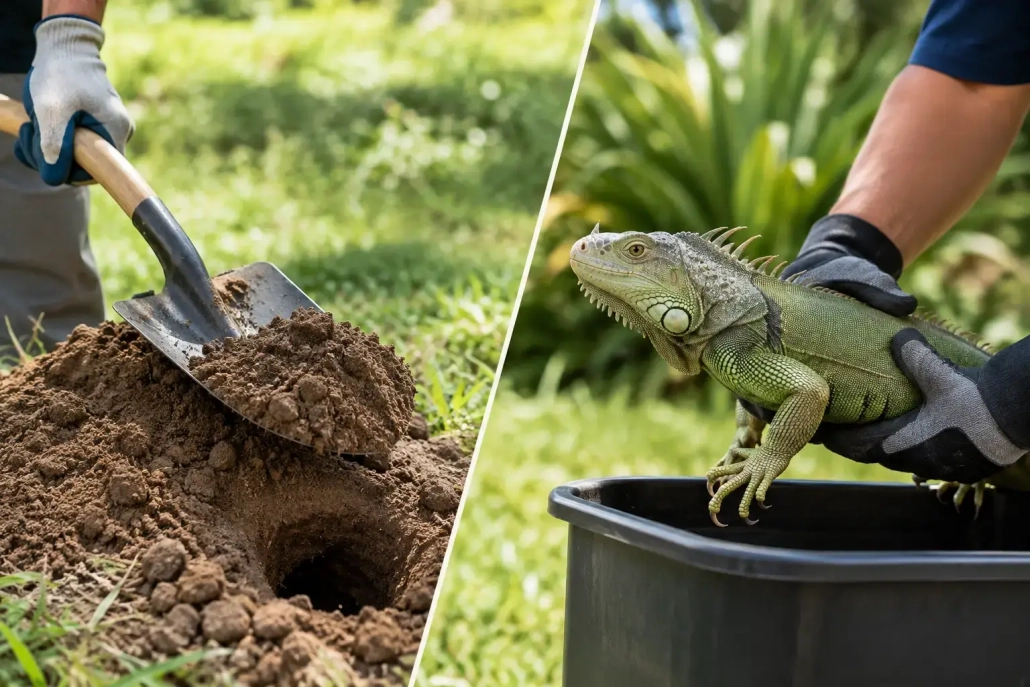
Burrow Filling Versus Iguana Removal: What Works?
A fresh iguana burrow beside a pool deck, seawall, driveway, or HVAC pad is not just a hole in the ground. It is a warning that soil is being displaced where your property needs support. The question of burrow filling versus iguana removal comes up often because filling a hole feels like the fastest fix. But if the iguanas are still on-site, they can reopen that burrow or start another one nearby.
For most South Florida properties, removal and burrow repair are not competing solutions. They are two parts of the same property-protection job. The order matters: address the active iguanas first, then inspect and repair the damage they leave behind.
Why Filling an Active Burrow Usually Fails
Iguanas burrow for shelter, nesting, and protection from weather. Once they find a favorable area with loose soil, cover, warmth, and access to food or water, they may keep returning. A filled burrow does not remove those conditions, and it does not remove the animal that created the problem.
A homeowner may pack soil into an opening on a Friday, only to find fresh digging by Monday. That can be frustrating around landscaping. Near a seawall, foundation, retaining wall, sidewalk, dock, or pool deck, it can become costly.
The concern is not always the visible entrance. Burrows can extend farther underground than expected, leaving voids that weaken surrounding soil. Water can move through those disturbed areas, particularly after hard rain or irrigation. Over time, that movement may contribute to settling, cracking, erosion, or instability around structures that were never designed to sit over hollowed-out ground.
Filling first can also make it harder to tell whether the burrow is still active. If an iguana is inside, sealing the entrance is not a dependable removal method. The animal may find another exit, dig around the fill, or move its activity to another vulnerable part of the property.
Burrow Filling Versus Iguana Removal Is the Wrong Choice
The better question is: what needs to happen first, and what level of repair does this location need?
Professional iguana removal addresses the cause of recurring burrows. A trained wildlife-control team evaluates activity across the property, not just at the one hole you noticed. That matters because one visible burrow can be part of a larger pattern around canal edges, dense landscaping, rock piles, sheds, docks, pool equipment, or warm mechanical areas.
After active iguanas are removed, the affected area can be assessed more accurately. Small, shallow holes in open landscaping may need straightforward backfilling and restoration. Damage beside a seawall, concrete slab, paved drive, retaining wall, or building foundation deserves more caution. In those areas, the right repair may require compaction, drainage review, or evaluation by a qualified structural or marine professional.
Removal does not replace repair. Repair does not replace removal. Skipping either step can leave the property exposed.
When a Burrow Needs Immediate Attention
Not every hole in a lawn is an emergency, but location changes the risk. A burrow that appears near a seawall, pool deck, walkway, dock, driveway, foundation, or air-conditioning equipment should be treated seriously. The same goes for areas where soil is sinking, pavers are shifting, concrete is cracking, or water is washing into the opening.
Commercial properties have additional exposure. At a marina, a damaged bank or compromised walkway can create a safety issue for guests and staff. At a golf course or community property, recurring digging near cart paths, landscaping, and water features can create maintenance headaches that never seem to end. For property managers, waiting until the damage becomes obvious is usually the expensive route.
If you see an active iguana entering or leaving the burrow, fresh soil piled at the entrance, claw marks, droppings, or new openings nearby, do not assume a quick shovel-and-soil repair will solve it. Document the area, keep people and pets away from unstable ground, and get the animal activity addressed before closing up the site.
What Professional Iguana Removal Changes
A professional service is not just about taking one iguana off a property. It is about reducing the repeat activity that keeps damaging the same areas.
A proper visit starts with identifying where iguanas are feeding, basking, hiding, and entering the property. That may include inspection around landscaping, fences, water edges, utility areas, patios, rooflines, docks, and pool equipment. The goal is to remove active nuisance iguanas safely and legally while helping the owner understand where the property remains vulnerable.
This approach also protects people from unnecessary risks. Iguanas can scratch, bite, and whip with their tails when handled. Their droppings can create sanitation concerns near patios, pools, docks, outdoor kitchens, and shared common areas. Trying to trap or handle an animal without the right experience can turn a property issue into a personal injury or cleanup problem.
Florida Iguana Ops provides licensed and insured removal for homeowners and commercial properties that need a straight answer and a job done right. No gimmicks, no runaround. The focus is on removing invasive iguanas before their digging creates a bigger repair bill.
Repairing Burrows the Right Way After Removal
Once the active animal issue is under control, repair should match the site. Simply covering a burrow entrance with loose topsoil may make the lawn look better for a day, but it may not restore support below the surface.
For a shallow landscape burrow, the work may involve clearing loose material, filling the void with appropriate soil, compacting in layers, and restoring sod or mulch. The area should be watched for renewed digging or settling, especially after rain.
For burrows near hardscapes or structural features, a deeper inspection is the smart move. Soil loss beneath pavers, slabs, seawalls, and equipment pads is not something to guess at. If the ground is soft, sunken, cracked, or washing away, contact the appropriate repair professional before placing weight on the area or covering up the evidence.
Do not pour concrete into an active burrow or attempt to flood it. Those shortcuts can push the problem elsewhere, harm surrounding landscaping, affect drainage, and complicate a later inspection. They also do nothing to control other iguanas already using the property.
Prevention After the Burrow Is Closed
No property can be made completely unattractive to wildlife, especially near canals, lakes, and coastal areas. Still, a few practical adjustments can reduce repeat pressure after removal and repair.
Keep fallen fruit picked up, secure pet food, and avoid leaving food scraps in outdoor areas. Trim dense ground cover where iguanas can hide. Repair damaged fencing where practical, and pay close attention to gaps around sheds, docks, equipment enclosures, and landscaping borders. Regular monitoring matters most after heavy rain, during nesting activity, and when you have seen iguanas repeatedly using the same part of the property.
The key is not to mistake prevention for a substitute for removal. If iguanas are already established and burrowing, reducing attractants alone is rarely enough. Active control comes first, then maintenance helps protect the work.
Protect the Ground Before Damage Spreads
A burrow can look minor until rain, erosion, and repeat digging turn it into a compromised walkway, damaged deck edge, or costly seawall concern. Filling it may be part of the fix, but it should not be the whole plan.
If you are seeing fresh iguana activity or recurring holes around your South Florida property, act while the damage is still limited. Remove the animals, inspect the ground honestly, and repair the area based on the risk instead of hoping the next shovel full of dirt holds.


Leave a Reply
Want to join the discussion?Feel free to contribute!