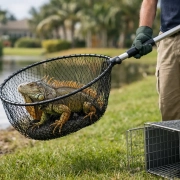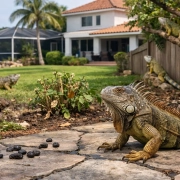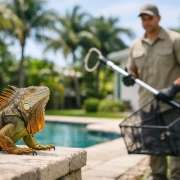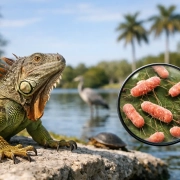
An iguana on a seawall or pool deck can look like a property nuisance. The droppings left behind make it a sanitation issue, too. Do iguanas carry salmonella? Yes, they can. That risk is one reason an active iguana problem should be handled before waste builds up around patios, walkways, docks, landscaping, and outdoor gathering areas.

For South Florida property owners, the practical question is not whether every iguana is visibly sick. Most reptiles carrying Salmonella appear perfectly healthy. The question is whether droppings, contaminated surfaces, pets, children, guests, or maintenance workers are being exposed on your property.

Do Iguanas Carry Salmonella? Yes, They Can

Iguanas, like many reptiles, can carry Salmonella bacteria in their digestive tract. They may shed the bacteria through feces without showing any signs of illness. That means a healthy-looking green iguana near your pool or marina can still leave contaminated waste behind.

People usually get sick when bacteria from reptile droppings gets onto their hands and is then transferred to the mouth, food, drinks, cigarettes, or frequently touched surfaces. The risk is not limited to touching an iguana directly. It can come from cleaning droppings off a deck, moving a planter near a burrow, handling contaminated garden tools, or letting a dog track through waste and then come indoors.

A single dropping does not guarantee someone will get sick. Exposure depends on the amount of bacteria present, how the area is cleaned, and whether proper handwashing happens afterward. Still, repeated iguana activity raises the odds of repeated contamination, especially in areas people use every day.

Why Iguana Droppings Create a Bigger Problem Than a Mess

Large iguanas leave large droppings. On an active property, those piles can collect quickly near pool equipment, docks, patios, boat ramps, garden beds, golf-cart paths, and HVAC units. Rain can spread waste across hard surfaces or carry it toward drains and water-adjacent areas.

The sanitation concern often overlaps with property damage. Iguanas burrow near seawalls, foundations, walkways, pool decks, and landscaped slopes. A property manager may first notice a hole, cracked paver, or eroded edge, then find droppings nearby. Both issues point to the same problem: the animals are established and using the site regularly.

For commercial properties, the stakes can be higher. A contaminated guest area, an unsanitary walkway near a restaurant patio, or recurring droppings around marina facilities creates a maintenance burden that staff should not have to manage indefinitely. If the infestation continues, cleanup becomes a recurring cost instead of a one-time response.

Who Faces the Highest Salmonella Risk?

Anyone can become ill from Salmonella, but some people are more likely to have severe symptoms or complications. Extra caution is needed around young children, adults age 65 and older, pregnant people, and anyone with a weakened immune system.

Pets also deserve attention. Dogs are curious, and they may sniff, lick, or eat iguana droppings. Even if a dog does not become sick, it can bring contamination inside on its paws or fur. Keep pets away from known iguana activity areas until the waste is cleaned and the animals are removed.

Common symptoms of a Salmonella infection can include diarrhea, fever, stomach cramps, nausea, or vomiting. Symptoms can range from mild to serious. Anyone who feels ill after possible exposure should contact a healthcare provider, particularly if symptoms are severe, persistent, or affecting a high-risk person.

How to Clean Iguana Droppings Safely

If you find a small amount of droppings and need to address it right away, treat the area as contaminated. Do not sweep dry waste with a broom or blast it around with a leaf blower. That can spread material across a larger area and onto nearby surfaces.

Use disposable gloves, keep children and pets back, and carefully pick up the waste with disposable towels or a scoop reserved for that purpose. Bag it securely before placing it in the trash. Then clean the hard surface with soap and water first if needed, followed by a household disinfectant used according to its label directions.

Afterward, wash your hands thoroughly with soap and running water. Clean or disinfect any tools used during the job, and avoid bringing contaminated gloves, footwear, or equipment into your home, vehicle, office, or maintenance storage area.

For larger accumulations or droppings around unstable ground, seawalls, electrical equipment, HVAC systems, docks, or difficult-to-reach spaces, do not turn it into a risky DIY project. The waste is only part of the issue. There may be active burrows and more iguanas returning to the same location.

What Not to Do When Iguanas Are Active

Property owners sometimes focus on cleanup while leaving the source untouched. That is how a weekly nuisance turns into a long-running infestation. Avoid these common mistakes:

  • Do not feed iguanas, intentionally or by leaving pet food, produce scraps, or open trash accessible outdoors.
  • Do not let pets investigate droppings, burrows, or areas where iguanas gather.
  • Do not handle an iguana, alive or dead, without proper protection and knowledge of safe procedures.
  • Do not assume one removed iguana means the problem is over if you still see fresh droppings, tracks, or new burrows.

It also helps to look at the conditions drawing iguanas in. Dense vegetation, accessible food sources, water access, sunny basking spots, and unmanaged burrow areas can make a property more attractive. Changes to landscaping and site maintenance may reduce activity, but they are not always enough when iguanas are already established.

Removal Protects More Than Your Landscaping

Iguana removal is not just about getting rid of an animal that is eating ornamental plants. It is about reducing repeated contamination and protecting the structures around the areas iguanas favor.

On South Florida properties, that can mean protecting seawalls from burrowing pressure, pool decks from undermined soil, walkways from settlement, and expensive landscaping from ongoing damage. At marinas and waterfront sites, a small burrow can become a bigger repair concern when erosion and water exposure enter the picture.

Professional removal also gives property owners a more controlled response. Instead of repeatedly chasing iguanas away, cleaning waste, and waiting for them to return, a trained team can assess activity, target the animals, and identify where recurring use is happening. That is especially helpful for communities, commercial sites, golf courses, and large residential properties where one person cannot watch every corner of the grounds.

Florida Iguana Ops provides professional iguana removal for property owners who need a straightforward answer to active iguana activity, burrows, droppings, and damage. The goal is simple: show up, handle the problem safely, and help protect the property from the next round of mess and repairs.

When It Is Time to Call for Iguana Removal

Fresh droppings every few days are a clear sign that iguanas are using your property as part of their routine. Visible burrows near a seawall, deck, foundation, driveway, or retaining area make the situation more urgent. So do iguanas congregating near pools, outdoor kitchens, guest spaces, pet areas, or mechanical equipment.

You do not need to wait for a major structural failure or a health scare to act. Early removal is usually easier than dealing with an established population that has learned where to feed, hide, bask, and burrow.

If iguanas are leaving droppings where your family, guests, customers, or workers spend time, treat it like the property issue it is. Clean the immediate mess carefully, keep people and pets clear of active areas, and stop the repeat visits before the damage and sanitation burden grow.
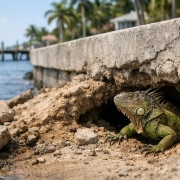
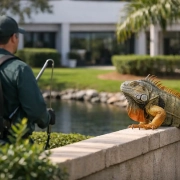
A burrow near a seawall is not just an ugly hole in the landscaping. Iguana burrowing seawall damage can remove and loosen soil that helps support the ground behind a waterfront wall. What starts with one iguana slipping under a cap or through a crack can become recurring erosion, settling pavers, washouts after heavy rain, and a repair bill that belongs in the serious-property-expense category.

For South Florida homeowners, marina operators, and property managers, the right response is early removal and a close look at the affected area. Waiting for the burrow to get bigger is rarely the cheaper option.

Why Iguanas Burrow Along Seawalls

Green iguanas are invasive in South Florida, and waterfront properties give them what they need: sun, vegetation, water, cover, and loose or disturbed soil. The warm, protected ground behind a seawall can be especially attractive for nesting females. Retaining-wall edges, riprap gaps, dock approaches, canal banks, and planting beds all create easy entry points.

An iguana may use an existing void, but it can also dig and expand one. Burrows may run several feet into the ground and branch in ways that are not obvious from the surface. One opening beside a walkway does not tell you how much soil has been displaced underneath it.

The problem is often seasonal, but the property risk is not limited to one time of year. Once iguanas find a dependable nesting or sheltering spot, they tend to return. More iguanas can follow, especially where food sources and hiding places remain available.

How Iguana Burrowing Seawall Damage Gets Worse

A seawall relies on stable conditions behind and beneath it. When iguanas tunnel into that soil, they can create voids where water can travel and material can shift. Rain, irrigation, tidal movement, and wave action may then carry loose soil through weak points or gaps.

That does not mean every iguana burrow means a seawall is failing. The condition of the wall, its age, drainage setup, soil type, and proximity of the burrow all matter. But a repeated burrowing problem next to a seawall should be treated as a warning sign, not a minor landscaping issue.

Soil Loss Can Lead to Settlement

The first visible damage may show up away from the burrow itself. Pavers can dip. A pool deck may develop cracks. Fence posts may lean, and landscape edging can separate. You may notice a soft spot where the ground once felt firm or see soil washing out near a seawall joint after a storm.

These signs can point to a void below the surface. Filling the visible opening without addressing active iguanas may only give them an easier place to dig again.

Water Finds the Weakest Path

Waterfront structures deal with constant moisture and changing water levels. A burrow near a drainage path, wall seam, or utility penetration can give water another route into the soil behind the seawall. Over time, that can worsen erosion and put added stress on surrounding hardscape.

This is why an active burrow deserves attention before the next heavy rain. It is also why owners should avoid blindly pumping concrete, sand, or foam into a hole while an animal may still be inside. That can be inhumane, may not solve the actual tunnel path, and can complicate proper removal and repair.

Seawall Repairs Are Not a DIY Gamble

There is a line between minor landscape restoration and a potential structural issue. If the wall is leaning, cracking, bulging, separating at joints, or showing pronounced washout behind it, contact a qualified seawall or marine-construction professional promptly. Animal removal protects the site from continued excavation, but it does not replace an assessment of a compromised wall.

The best sequence is usually straightforward: stop the active burrowing, inspect the affected ground and seawall, then complete repairs that match the condition of the property. Skipping the first step can lead to repairing the same area twice.

Signs You May Have an Active Iguana Burrow

Iguana activity is not always obvious during the day. They may be basking in trees, on docks, or along the canal bank when you look for them. The ground often tells the clearer story.

Look for fresh soil piled around a hole, tracks in sandy ground, claw marks, droppings near walls or patios, and openings around seawall caps, landscaping, sheds, and dock supports. A burrow entrance may be partly hidden under mulch or plants. It may also appear as a shallow depression instead of a clean, round hole where the tunnel has begun to collapse.

Pay attention after rain. Water can expose new sink areas, enlarge openings, and reveal soil loss that was not visible in dry weather. On commercial properties, routine inspections should include seawall edges, parking or cart paths near water, utility pads, marina walkways, and landscaped areas where guests or staff could step into a void.

What Property Owners Should Do First

Keep people, pets, and equipment off soft ground near the burrow. A collapsing void beside a seawall or walkway is not a safe place to investigate with a shovel. Do not reach into a hole. Iguanas can bite, scratch, and whip with their tails when cornered.

Take clear photos of the opening, nearby cracks, settled pavers, and any visible washout. Note when you first saw the problem and whether it changes after rain or high water. That documentation can help a removal professional and, if needed, a seawall contractor understand what has been happening.

Then arrange professional iguana removal. In Florida, green iguanas are invasive, but that does not make careless handling a good idea. A licensed, insured wildlife-control team can remove the animals safely and lawfully, identify likely activity zones, and help stop the repeat cycle before restoration work begins.

Why Trapping One Iguana May Not Solve the Property Problem

A single iguana seen on a seawall may be the one that gets your attention, not the only one using the property. Waterfront sites often support several iguanas of different sizes, including nesting females and young animals using the same cover.

Effective control starts with the whole site. That means checking nearby burrows, dense vegetation, sunny dock areas, fence lines, rooflines, pool equipment zones, and food sources. Fallen fruit, accessible pet food, open compost, and unprotected ornamental plants can keep iguanas coming back even after removal.

Exclusion and habitat adjustments can help after removal, but they need to fit the property. Blocking an opening before confirming it is inactive can trap an animal inside. Aggressive clearing may also create erosion issues of its own along a waterfront edge. This is a situation where a practical site-specific plan beats a one-size-fits-all fix.

Protecting a Seawall After Iguana Removal

Once active iguanas are removed, the burrow area can be evaluated for safe restoration. Small, shallow landscape holes may need properly compacted fill and surface repair. Larger voids, areas near the wall footing, or locations with signs of washout may require a seawall professional to determine the right repair method.

Keep the repaired area under observation, especially through heavy-rain periods. New depressions, loose soil, widening cracks, or fresh openings should be addressed quickly. The goal is not just to make the hole disappear. The goal is to prevent more animals from excavating the soil that supports your waterfront property.

For properties in Palm Beach County, Florida Iguana Ops handles invasive iguana removal with the same standard we bring to every job: show up on time, do the job right, and give you a straight answer about what we find. If burrows are appearing near your seawall, deck, dock, or canal edge, act before the next storm turns a manageable wildlife issue into a costly repair.

A few iguanas around a commercial property can turn into a costly maintenance problem faster than most managers expect. Commercial iguana control is not about reacting to one lizard on a wall. It is about protecting the ground, structures, equipment, customers, and staff before burrows, droppings, and repeat activity create a larger issue.

Across South Florida, green iguanas are invasive, active year-round, and comfortable around developed properties. They settle where there is warmth, water, shelter, and easy access to vegetation. That makes marinas, golf courses, apartment communities, restaurants, warehouses, office parks, hotels, and retail centers especially attractive.

When the problem is visible, it has usually been building for a while. A professional response gives property decision-makers a clear picture of where iguanas are active, what assets are exposed, and what needs to happen next.

Why Iguanas Become a Commercial Property Problem

Iguanas do not stay neatly contained in landscaped beds. They climb roofs and trees, gather near water features, travel along seawalls, hide around HVAC equipment, and dig into soft or compromised ground. On a commercial site, those habits can affect far more than curb appeal.

Burrowing is often the biggest concern. Iguanas dig dens in banks, under walkways, near foundations, around pool decks, and along seawalls. Those holes can weaken soil and create voids beneath hard surfaces. A small opening near a paved area may look minor, but repeated digging and rain can wash material into the burrow and worsen the damage.

At waterfront properties, the stakes are higher. Iguana burrows along seawalls, canal banks, and slopes can contribute to erosion and instability. Marina operators, community associations, and waterfront facilities cannot afford to ignore activity near retaining structures. Waiting until there is a visible collapse can turn a manageable wildlife issue into an emergency repair.

Droppings are another practical concern. Iguanas leave waste on decks, docks, pool areas, sidewalks, outdoor dining spaces, loading areas, and mechanical equipment. Their feces can carry salmonella, which is a sanitation risk for guests, tenants, employees, maintenance crews, and pets. It also creates a poor impression at properties that depend on clean, well-kept outdoor spaces.

Then there is the damage that is harder to see from a distance. Iguanas may chew or disturb landscaping, leave droppings near air-conditioning units, and create repeated cleanup work for maintenance teams. On large properties, staff can spend hours dealing with the same locations while the population continues to grow.

Signs You Need Commercial Iguana Control

A single sighting does not always mean a full infestation. But recurring activity around the same areas should be taken seriously, particularly when the property includes water, retaining walls, ornamental landscaping, or exposed utility equipment.

Watch for fresh burrows in soil, rock beds, canal banks, or beneath slabs. Look for piles of droppings on docks, pool decks, walkways, roofs, and around HVAC units. Property teams may also notice damaged plants, claw marks, disturbed mulch, or iguanas repeatedly entering the same crawlspace, landscape edge, or seawall opening.

The time of day can be telling. Iguanas often come out to warm themselves in sunny areas, so early morning activity on pavement, docks, rooftops, and retaining walls is common. If staff see them in the same places week after week, the site is providing a reliable food source, shelter, or nesting location.

For commercial managers, the real question is not simply, “How many iguanas are there?” It is, “Where are they causing exposure?” One active burrow near a seawall, foundation, or high-traffic walkway can matter more than several iguanas seen in an open field.

What Professional Commercial Iguana Control Should Include

Commercial iguana control needs to fit the property, its operating hours, and the specific damage risks involved. A golf course has different concerns than a marina. A hotel pool deck requires a different plan than an industrial yard. Good service starts with a site assessment, not a one-size-fits-all answer.

The first step is identifying active areas. That includes burrows, common basking locations, travel routes, nesting zones, water access, and areas where iguanas are getting close to customers or critical infrastructure. A trained local crew can also spot conditions that keep drawing iguanas back, such as dense plant cover, unsecured access points, or neglected ground around seawalls and equipment.

Removal should be handled by professionals who understand Florida regulations and safe field practices. Commercial properties should not rely on employees to catch, corner, or remove iguanas themselves. That can put staff at risk, create liability issues, and lead to poor results when animals escape or return to the same area.

After removal, the work should shift to prevention. Depending on the property, that may mean addressing vulnerable burrow areas, changing access around equipment, improving cleanup routines, or adjusting landscape conditions that provide easy cover. Prevention is not a promise that no iguana will ever appear again. South Florida has a large invasive iguana population. It is a practical effort to reduce repeat activity and catch new problems before they become expensive.

Documentation also matters for commercial clients. Property managers and facilities teams often need a clear record of what was found, where activity occurred, and what follow-up is recommended. That helps with budgeting, vendor coordination, board communication, and maintenance planning.

High-Risk Areas on Commercial Sites

Some locations deserve faster attention because failure there can affect safety, operations, or major assets. Seawalls and canal banks belong at the top of the list. Burrows near these structures should not be treated as a landscaping nuisance. The soil behind a seawall helps support it, and erosion can develop below the surface before the damage is obvious.

Pools, patios, walkways, and outdoor guest areas are also high priority. Droppings create a sanitation issue, while burrows near paved surfaces can lead to settling, cracks, and trip hazards. For restaurants, resorts, clubs, and multifamily communities, visible iguana activity can quickly become a complaint issue as well.

HVAC areas deserve a close look. Iguanas are drawn to warm equipment and protected spaces. Droppings, nesting material, and animal activity around condensers can complicate routine maintenance and create avoidable service calls. A commercial HVAC repair is expensive enough without wildlife adding to the problem.

Golf courses and landscaped communities face a broader challenge. Iguanas can move through water features, ornamental beds, cart paths, retaining edges, and maintenance zones. Treating only the spot where an iguana was last seen rarely solves the problem. The property needs an approach that follows the activity across the site.

Why Timing Matters

The longer an infestation is allowed to continue, the more established it can become. Iguanas reproduce, use familiar shelter, and return to places that provide food and warmth. A property that delays action may end up dealing with more burrows, more waste, more landscape damage, and a bigger removal job later.

Fast action does not mean rushed work. It means inspecting the affected areas, removing the active problem safely, and addressing the conditions that are making the site attractive. That is especially important before heavy rain, major events, seasonal occupancy increases, or planned maintenance projects.

For a marina, a burrow found before a busy weekend is easier to address than one discovered after erosion has affected a dockside area. For a property manager, it is easier to schedule professional service than to explain why residents are stepping around droppings near the pool. For a facilities manager, it is better to handle iguana activity before it becomes an emergency call tied to a damaged surface or equipment issue.

Choose a Local Team That Does the Job Right

Commercial wildlife work should be straightforward. You need a provider that shows up on time, understands South Florida property conditions, works safely around tenants and guests, and communicates clearly about what is happening on site. Licensing and insurance matter. So does experience with the specific risks iguanas create around seawalls, decks, landscapes, and mechanical equipment.

Florida Iguana Ops provides professional removal for commercial properties that need a direct, practical answer to invasive iguana activity. No gimmicks, no runaround – just local service focused on protecting the parts of your property that are expensive to repair.

If your staff is seeing recurring iguanas, fresh burrows, or droppings near active areas, do not wait for the damage to announce itself. A prompt inspection can protect the property, reduce repeat cleanup, and give your team a workable plan before a small wildlife problem becomes a major maintenance bill.

An iguana on a fence is one thing. Iguanas digging beneath a pool deck, seawall, walkway, or air-conditioning unit are a property problem that can get expensive fast. Knowing how to remove iguanas safely means protecting people, pets, and the structure they are already working to undermine.

In South Florida, green iguanas are invasive. They reproduce quickly, settle near water and warm cover, and return to places where food, shelter, and burrowing space are easy to find. Waiting for them to move along is rarely a reliable plan. If the conditions stay favorable, the iguanas usually do too.

Start by Identifying the Real Problem

A single adult iguana may be visible only during the day, but the damage can continue after it disappears into landscaping or a burrow. Adult males can be especially territorial, and nesting females may excavate repeatedly in loose soil around foundations, retaining walls, pool equipment, and seawalls.

Look for fresh holes with loose soil pushed outward, claw marks near patio edges, droppings on docks or pool decks, chewed plants, and iguanas gathering in sunny areas near a water source. Commercial properties may see damage near restaurant patios, marina slips, golf-course cart paths, storage yards, and mechanical equipment.

Burrows deserve immediate attention. A hole beneath a slab, driveway, or seawall is not just a landscaping issue. Repeated excavation can wash out soil, weaken support, create trip hazards, and contribute to much larger repairs after heavy rain or high water.

Why DIY Iguana Removal Can Go Wrong

Many property owners first try to chase iguanas away with a hose, loud noises, or a dog. That may move one animal for a few minutes, but it does not fix the habitat that drew it in. It can also push an iguana deeper into a burrow, under a deck, or into equipment areas where removal becomes harder.

Trying to grab an iguana is a bigger mistake. They can bite, scratch, whip with their tails, and carry salmonella in their droppings. A cornered animal may also bolt through a screened enclosure, jump into a pool, or wedge itself behind HVAC equipment. Children and pets should be kept away from active iguana areas, especially where droppings are present.

Do not use poison, glue boards, homemade snares, or improvised traps. These methods can injure non-target wildlife, create risks for pets, and leave a homeowner with a distressed animal and a legal problem. Do not relocate an iguana without understanding current Florida rules. Wildlife regulations and approved methods can change, and the location, species, and property type all matter.

How to Remove Iguanas Safely: Control Access First

Safe removal starts with making the property less inviting. This is not a substitute for removing established iguanas, but it helps stop the same cycle from repeating after service is complete.

Remove fallen fruit and avoid leaving pet food outdoors. Keep trash lids secure, clean up birdseed, and eliminate standing water where practical. If an iguana has regular access to a dock, pool ledge, open patio, or low roof, it has a travel route worth addressing.

Trim dense vegetation around structures and remove clutter that creates cool hiding spots. Protect vulnerable ornamental plants with appropriate barriers. Fence gaps, damaged screens, and openings around utility lines should be repaired when they are safe to access. On waterfront property, the goal is not to seal off every inch of the landscape. It is to reduce easy shelter and protect the places where burrowing would cause the most damage.

Do not fill an active burrow while an iguana may still be inside. That can create an animal-welfare issue and may cause the iguana to dig an alternate exit closer to a foundation or hardscape. A burrow should be inspected, cleared using an appropriate removal plan, and then repaired with material suited to the location.

Use a Professional When There Is Damage or Recurring Activity

A licensed, insured wildlife-control professional is the sensible choice when iguanas are burrowing, entering structures, damaging equipment, or returning after basic deterrents. Professional removal is not just about catching what is visible. It means assessing where the animals are feeding, nesting, hiding, and moving across the property.

That matters on a residential lot, and it matters even more at a marina, condominium, hotel, golf course, or commercial facility. A recurring iguana issue can affect guest areas, employee safety, sanitation, landscaping budgets, and the condition of costly infrastructure. One weak section near a seawall or drainage feature can become an emergency repair after a major storm.

A qualified provider can use lawful, humane, property-appropriate methods and explain what work is being performed. They should be able to identify active areas, remove the nuisance animals, and recommend practical exclusion or site changes. Ask direct questions about licensing, insurance, removal methods, expected timing, and whether burrow repair or prevention recommendations are included. Straight answers are a good sign.

Florida Iguana Ops takes that practical approach: show up, assess the damage, remove the problem safely, and help protect the property from the next round of activity. No gimmicks or vague promises. Just local service focused on the areas iguanas target most.

Protect People From Droppings and Contaminated Areas

Iguana waste is not something to ignore, particularly near pools, outdoor kitchens, docks, children’s play areas, and restaurant seating. Droppings can contain bacteria, including salmonella. The risk rises when waste is tracked indoors on shoes, washed into water features, or left where children or pets may touch it.

Wear gloves when cleaning droppings and avoid dry sweeping, which can scatter contaminated dust. Pick up solid waste with disposable materials, bag it, and disinfect the surface using a cleaner suitable for that surface. Wash hands thoroughly afterward. If waste has collected near food-preparation areas, pool furniture, or HVAC equipment, give those locations extra attention.

For larger accumulations or areas with difficult access, it is better to have the site evaluated than to send maintenance staff into a confined space with an active iguana problem. Safety procedures should match the property, especially where ladders, roofs, docks, electrical equipment, or unstable ground are involved.

Watch for These Signs That the Problem Is Growing

Iguana activity tends to increase before property owners realize it. Act sooner if you notice several animals using the same area, new burrows appearing after they are filled, repeated droppings in high-traffic spaces, or landscaping and hardscape damage expanding from one spot to another.

Also pay attention after cold weather. Iguanas can become sluggish in low temperatures, but they are not automatically gone or dead. Handling a cold-stunned iguana can still lead to injury when it warms up and becomes active. Keep your distance and arrange proper removal rather than treating it as harmless.

The same goes for iguanas near water. They are strong swimmers and can disappear quickly, then return to the same shoreline, dock, or canal-side landscaping. A removal plan should account for the surrounding habitat, not just the animal seen at that moment.

Do Not Let a Small Burrow Become a Major Repair

Iguanas are easier and less costly to address before burrows spread beneath concrete, retaining walls, or utility areas. If you see fresh digging, droppings, structural gaps, or repeated iguana traffic, document the area, keep people and pets clear, and get a professional assessment.

Quick action protects more than your landscaping. It helps preserve the pool deck, seawall, foundation, equipment, and outdoor spaces you paid for. The right time to deal with an iguana problem is while it is still a nuisance, not after it turns into a repair bill.

A fresh hole beside a pool deck or seawall can look minor at first. Then rain hits, the soil shifts, and what seemed like a landscaping issue becomes a repair bill. In South Florida, the signs of an iguana infestation often show up around the parts of a property you can least afford to lose: foundations, walkways, seawalls, docks, landscaping, and outdoor mechanical equipment.

Green iguanas are invasive in Florida, and they do not need much time to turn a quiet yard, marina, golf course, or commercial site into a recurring problem. Seeing one iguana does not always mean you have an infestation. Seeing repeated activity, damage, droppings, or burrows is different. Here is what to watch for and when it is time to act.

1. Repeated Iguana Sightings in the Same Areas

An iguana crossing the yard once may be passing through. But if you see iguanas day after day around the same wall, canal edge, roofline, pool area, or landscaped bed, they have likely found food, sun, shelter, or a nesting location.

Look for patterns. Iguanas commonly gather in warm, open areas where they can bask, then retreat into dense vegetation, under decks, near rock piles, or into burrows when they are disturbed. On commercial properties, they may settle near loading areas, retention ponds, golf-course water features, marina infrastructure, and HVAC pads.

Large adults are hard to miss, but smaller iguanas matter too. A property with juveniles may have a nearby breeding population, which means the problem can grow quickly if it is ignored.

2. Fresh Burrows Near Structures

Burrows are one of the clearest signs of an iguana infestation and one of the most serious. Iguanas dig tunnels for shelter and nesting, usually in dry, sunny soil. A burrow may look like a round or oval opening in the ground with loose dirt pushed out in front of it.

Do not assume every hole belongs to an iguana. Rodents, crabs, and other wildlife can also leave openings. Iguana burrows are especially concerning when they appear beside a seawall, canal bank, foundation, driveway, pool deck, walkway, dock, or retaining wall.

The risk is not just the visible entrance. The hidden tunnel removes soil beneath or beside the structure. Over time, that loss of support can contribute to settling, cracks, erosion, and washouts. Along waterfront property, repeated burrowing can put pressure on a seawall system already dealing with water movement and saturated soil.

3. Cracked Pavers, Settling Soil, or Soft Spots

A new dip in the lawn, loose pavers near the water, or soil washing out around a deck deserves attention. These conditions do not prove iguanas are responsible, but they are common clues when burrows are nearby.

Walk the affected area carefully. If the ground feels hollow or gives slightly underfoot, stay off it until the area can be assessed. This is especially true near pool decks, seawalls, docks, and walkways used by guests, tenants, customers, or employees. A small cavity can become a safety problem without much warning after heavy rain.

Property managers should document the location and take dated photos before repairs cover the evidence. Fixing surface damage without addressing active wildlife activity can lead to the same repair being needed again.

4. Droppings on Decks, Docks, and Outdoor Living Areas

Iguana droppings are another obvious warning sign. They are often dark, pellet-like or tubular, and may have a white urate portion. You may find them on patios, pool coping, docks, boats, walkways, rooftops, balconies, and beneath favorite basking spots.

This is more than an appearance issue. Reptile waste can carry bacteria, including salmonella. That creates a sanitation concern around outdoor kitchens, pool areas, playgrounds, restaurant patios, marina walkways, and any surface where people or pets spend time.

Avoid sweeping dry droppings into the air or rinsing them toward storm drains and water features. Keep children and pets away from the area, wear gloves for cleanup, and wash hands thoroughly afterward. If droppings keep returning after cleanup, there is active iguana traffic nearby.

5. Damaged Landscaping and Missing Plants

Iguanas are not polite garden visitors. They feed on leaves, flowers, fruit, and tender new growth, often leaving ornamental beds stripped or unevenly damaged. Hibiscus, bougainvillea, orchids, flowering annuals, and vegetable gardens can all draw their attention.

The damage often appears as chewed leaves, broken stems, missing blooms, and plants that look repeatedly grazed from the ground up. Freshly planted beds are particularly vulnerable because they offer soft growth and exposed soil that is easy to dig.

Changing plants can reduce some feeding pressure, but landscaping changes alone rarely solve an established infestation. If iguanas have already claimed the property for shelter and nesting, they may simply move to another food source or another section of the yard.

6. Iguanas Around HVAC Equipment or Utility Areas

Outdoor mechanical areas offer warmth, cover, and protection from foot traffic. Iguanas may hide beneath condenser units, around utility boxes, behind equipment enclosures, or in vegetation surrounding HVAC pads.

This creates a practical problem for homeowners and facilities teams. Droppings, nesting material, digging, and animal activity can interfere with access for maintenance. In some cases, wildlife around electrical or mechanical equipment can contribute to damage and downtime. For a business, a disabled unit during South Florida heat is not a small inconvenience.

Do not reach under equipment or try to flush an iguana out yourself. A cornered iguana can bite, scratch, whip with its tail, or make a quick run into a more difficult area.

7. Scratching, Thumping, or Movement in Attics and Rooflines

Iguanas are strong climbers. They can get onto roofs, into dense tree canopies, and around elevated ledges where they find warmth and safety. If you hear unusual movement near a roofline, soffit, attic opening, or screened enclosure, investigate from a safe distance.

Not every roof noise is an iguana. Squirrels, rats, birds, and other wildlife can make similar sounds. The difference is often the supporting evidence outside: visible climbing marks, droppings below a wall or tree, iguanas basking on the roof, or repeated activity near a gap.

Roof and attic access needs prompt attention. Wildlife entry points can worsen over time, and a rushed DIY attempt can damage screens, vents, wiring, or roofing materials.

8. Burrow Activity During Nesting Season

Female iguanas can dig nesting tunnels in open soil, mulch beds, canal banks, and loose areas near structures. You may notice fresh excavation, soil piles, or a burrow that appears suddenly in a sunny location.

Nesting activity changes the urgency. Removing a visible adult while leaving active burrows and favorable conditions behind may not stop the cycle. A proper response considers where iguanas are entering, feeding, hiding, and digging – not just the one animal currently in view.

For larger properties, this is why a site-wide assessment matters. A golf course, marina, apartment community, or waterfront business may have several activity zones that need attention, not one isolated hole.

9. A Problem That Keeps Coming Back After DIY Efforts

Store-bought repellents, motion sprinklers, fencing, and home remedies may discourage occasional visitors. They can be useful around a small garden, but they have limits. They do not repair burrow damage, safely remove established iguanas, or address a population that has made your property part of its routine.

If you are filling the same holes, cleaning droppings every week, replacing plants, or seeing iguanas return after each attempt, the issue needs a more direct plan. The right approach depends on the property, the size of the activity area, nearby water, access points, and the condition of affected structures.

When to Call for Professional Iguana Removal

Call for help promptly when burrows are near a seawall, foundation, pool deck, driveway, dock, or other structure. The same goes for recurring droppings in guest areas, iguanas around equipment, or repeated sightings at a home or commercial property.

Professional removal is not about creating drama over one lizard. It is about stopping active damage before it becomes a larger structural, sanitation, or liability issue. A licensed and insured local team can assess the activity, remove nuisance iguanas safely, and help identify the conditions that are keeping them on site.

Florida Iguana Ops takes the straightforward route: show up, assess the problem, remove the iguanas, and help protect the property without gimmicks or runaround. If fresh holes or daily sightings are becoming normal on your property, do not wait for the next storm to show you what is happening underneath.

A fresh iguana burrow beside a pool deck or seawall is not a cosmetic problem. It is a warning that soil is moving where it should stay packed and supported. Iguana removal Florida property owners arrange early can prevent a manageable nuisance from becoming a costly repair, especially around water, concrete, landscaping, and mechanical equipment.

Green iguanas are invasive in South Florida, and they are built to settle into the places property owners work hard to maintain. They climb, dig, feed, leave waste, and return to familiar shelter when the conditions are right. One lizard on a fence may not mean you have an infestation. Multiple sightings, active burrows, and droppings around common areas are a different situation. That is when prompt, professional action makes sense.

Why Iguanas Become an Expensive Property Problem

Iguanas are not just passing through when they establish burrows. They dig into banks, landscaped beds, under walkways, beside driveways, and around seawalls. Over time, that digging can loosen soil and create voids beneath structures that need stable ground. Rain, irrigation, and rising water can make the damage worse.

On a residential property, the first signs may be cracked pavers, sinking edges near a patio, chewed ornamentals, or holes near the pool equipment. On commercial sites, the exposure can be much bigger. A marina, golf course, apartment community, hotel, or office property may have long seawalls, high-traffic walkways, guest areas, drainage features, and extensive landscaping to protect.

The main risks tend to fall into four areas:

  • Burrowing damage: Holes and tunnels can compromise soil around seawalls, foundations, sidewalks, pool decks, driveways, and retaining areas.
  • Sanitation concerns: Iguana droppings can contaminate outdoor living spaces, docks, patios, pool areas, and employee or guest walkways. Reptiles can carry salmonella, so waste should be handled carefully.
  • Landscaping losses: Iguanas eat many ornamental plants, flowers, fruits, and vegetables. They can turn a well-maintained landscape into an ongoing replacement bill.
  • Equipment and operational risk: Iguanas seek warm, protected spaces and can interfere with outdoor HVAC equipment and other mechanical areas. For commercial properties, a damaged unit or emergency repair can disrupt normal operations quickly.

Waiting for the problem to disappear is usually the costly choice. Iguanas reproduce, young animals use the same favorable habitat, and established burrows can draw repeat activity even after the original animal is gone.

Signs You Need Iguana Removal in Florida

You do not have to see a large group every day to have an active issue. Iguanas are often most visible when they are warming up in the morning, feeding, or moving between trees, canals, docks, and shelter. The evidence they leave behind is often more useful than a single sighting.

Look for clean-edged holes near concrete, canal banks, seawalls, garden borders, or pool decks. Fresh soil pushed outside an opening is a strong clue that a burrow is active. You may also notice droppings on docks, patios, roofs, walkways, and around pools. Large droppings in a repeated location usually mean the animal has made your property part of its routine.

Plant damage matters too. Missing leaves, stripped flowers, broken stems, and damage to vegetable gardens can point to regular feeding. If you manage a commercial property, pay attention to complaints from tenants, guests, maintenance staff, or grounds crews. Repeated sightings near entrances, outdoor dining, recreation areas, or mechanical yards should be addressed before the issue affects safety or appearance.

A single hole is worth checking. Several holes near infrastructure call for a professional assessment. The right response depends on where the activity is happening, how long it has been present, and whether the ground already shows signs of settling or erosion.

Why DIY Iguana Control Can Create More Trouble

Property owners often try barriers, repellents, loud noises, or makeshift traps first. These methods may temporarily change an iguana’s behavior, but they rarely solve an established infestation. An iguana that loses access to one food source or hiding place may simply move to another part of the property.

There is also a safety issue. Large iguanas can bite, scratch, whip with their tails, and carry bacteria. Trying to corner one around a pool, dock, roofline, or HVAC unit can put people, pets, and property at risk. Handling is not a job for an untrained homeowner or maintenance employee.

Legal compliance matters as well. Florida’s rules for invasive species and wildlife handling can change, and the proper method depends on the animal, location, and circumstances. A professional provider understands the current requirements and uses appropriate, humane removal practices. That keeps property owners from having to guess what is allowed or what to do after capture.

The bigger issue is follow-through. Removing one visible iguana without inspecting for burrows, access points, food sources, and repeat activity is often a short-term fix. Good control looks at why the property is attractive in the first place.

What Professional Iguana Removal Should Look Like

A professional visit should start with the property, not a one-size-fits-all promise. The technician should inspect the active areas, identify signs of travel and shelter, and consider the specific risks around structures, water, landscaping, equipment, and public access.

From there, the removal plan should be clear. You should know what areas are being addressed, what type of activity has been found, and what steps are needed to reduce repeat problems. On a residential property, that may mean focusing on a pool area, backyard landscaping, canal edge, or roof-access zone. At a marina or commercial site, it may involve coordinated work around docks, guest spaces, maintenance operations, and high-value infrastructure.

Professional removal is not about creating drama or selling services you do not need. It is about reducing active iguana pressure safely and addressing the conditions that allow the problem to keep growing. That includes clear communication, punctual service, proper insurance, and respect for the property while the work is being done.

Florida Iguana Ops approaches the work with that standard: show up on time, assess the actual issue, do the job right, and explain what comes next without gimmicks or runaround.

Different Properties Need Different Protection

A homeowner may be most concerned about children near the pool, pet safety, ruined landscaping, and a new hole beside the patio. A property manager may be dealing with tenant complaints, sanitation around common areas, and the cost of repairing a walkway before it becomes a trip hazard.

Marinas and waterfront properties have their own concerns. Burrows near seawalls and banks deserve quick attention because moving soil near water can become a major repair issue. Golf courses and large landscaped properties may face widespread feeding damage and numerous hiding areas. Commercial facilities often need work scheduled around customers, employees, deliveries, and normal operations.

That is why the cheapest quote is not always the best value. The right provider should have experience with the kind of property you manage and should understand what is at stake if the issue is ignored. A fast removal that misses active burrows or repeat access can cost more than a thorough plan from the start.

When to Call for Help

Call when you see active burrows near concrete, seawalls, foundations, or pool structures. Call when droppings are building up in areas where people, pets, customers, or employees spend time. Call when landscaping damage is repeated, or when iguanas are showing up around HVAC systems, docks, roofs, or other sensitive equipment.

Do not wait for a major crack, a collapsed edge, or an emergency repair bill to take the problem seriously. Take photos from a safe distance, keep children and pets away from active burrows, and avoid trying to block or fill holes before the activity has been assessed. A prompt inspection gives you a clearer picture of the risk and a practical path to protecting the property you have worked hard to build.