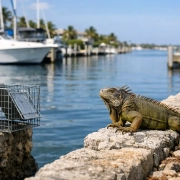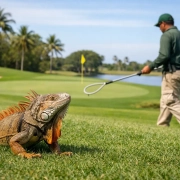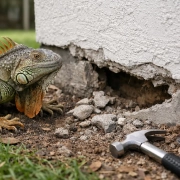
A rooftop unit stops cooling during a South Florida heat wave. A condenser will not start. The service technician opens the electrical compartment and finds gnawed insulation, loose wire, droppings, and signs that something has been living around the equipment. Iguanas chewing HVAC wires are not the most common explanation for every air-conditioning failure, but on properties with active iguana traffic, it is a risk that deserves a serious look.

Large invasive iguanas are strong, persistent, and drawn to the same features that make HVAC systems vulnerable: warmth, shade, protected cavities, and elevated locations with few predators. They can climb onto ground units, enter fenced equipment areas, settle beneath raised condensers, and reach rooftop mechanical spaces through nearby trees, walls, or utility routes. Once a reptile has claimed the area, the damage can go beyond a mess.

Can Iguanas Really Damage HVAC Wiring?

Yes, but the details matter. Green iguanas are primarily plant-eaters, so they do not target electrical wire as food in the way rodents often do. Still, they can bite, scrape, tug, and damage exposed wire insulation while moving through a tight equipment area or investigating materials. They may also crush, dislodge, or foul vulnerable components as they climb and rest on units.

The bigger issue is that wire damage rarely happens alone. An iguana using an HVAC area can leave droppings and urates around disconnects, control panels, conduits, fan guards, and drain lines. Moisture, debris, and contamination can contribute to corrosion or electrical problems over time. A large animal pressing against lines or entering a poorly sealed compartment may loosen connections or damage insulation that was already weathered.

That is why a careful diagnosis matters. Blaming an iguana without checking the system is just guesswork. A qualified HVAC technician should identify and repair the electrical fault. A professional wildlife-control company should address the animal activity that keeps putting the equipment at risk. Fixing only the wire can leave you right back where you started.

Warning Signs of Iguanas Chewing HVAC Wires

A damaged wire is often hidden inside conduit, behind a panel, or under insulation. Property owners usually notice the clues around the equipment before they see the actual failure.

Look for repeated iguana sightings near the condenser, rooftop units, or mechanical yard. Fresh droppings on or around the unit are a clear sign that the animal is spending time there, not merely passing through. You may also find claw marks, disturbed mulch, burrows beneath nearby slabs, chewed foam insulation, torn low-voltage wiring, or a trail leading from landscaping to the unit.

Operational symptoms can include a unit that trips a breaker, will not start, short-cycles, loses cooling unexpectedly, or shows intermittent control errors. These symptoms have many possible causes, including age, storm damage, ordinary wear, or a failed component. Do not assume wildlife is the cause. But if you have visible iguana activity at the same time, it should be part of the inspection.

Commercial sites can have an even harder time spotting the early problem. Mechanical equipment may sit behind a building, on a roof, beside a marina structure, or in a service area that staff do not visit daily. By the time an outage occurs, the damage may affect tenants, guests, inventory, server rooms, kitchen operations, or staff comfort. A small opening around an electrical cabinet can become an expensive emergency call after hours.

Why HVAC Areas Attract Iguanas

Iguanas are opportunistic. They look for places that offer cover, warmth, access to vegetation, and a fast escape route. HVAC installations often provide several of those conditions at once.

Ground-level condensers may be surrounded by dense shrubs that hide an animal from view. The concrete pad can hold warmth after sunset. Piping and conduit create protected edges, while a loose equipment screen may offer a convenient perch. At larger facilities, rooftop units can provide sunny resting areas and sheltered spaces beneath or beside the equipment.

The landscape around the unit also plays a role. Overgrown vegetation, fruiting trees, dense groundcover, open drainage areas, and nearby seawalls can support regular iguana traffic. If the unit is near a burrow, do not treat the HVAC area as a separate problem. The animal has already established a route through the property.

What Not to Do When You Find Damage

Do not reach into an electrical compartment or try to chase an iguana out of a unit. Even a seemingly calm iguana can bite, scratch, whip its tail, or bolt into a tighter part of the equipment. A frightened animal near energized components creates a bad situation for everyone.

Do not seal off a suspected hiding place while the iguana may still be inside. Blocking an animal into or under mechanical equipment can lead to more damage and a harder removal job. Avoid using poison, glue traps, or improvised traps as well. These methods can create legal, safety, and sanitation problems, especially around homes, employees, pets, and customer areas.

If wires appear exposed, insulation is damaged, or you smell burning, keep people clear of the area and contact an HVAC professional promptly. If it is safe to do so, turn the system off at the appropriate disconnect or breaker only if you know how to do it without approaching damaged components. Do not spray the unit with water or attempt a quick repair with tape.

The Right Order of Protection and Repair

The most effective response is straightforward: make the area safe, remove the iguana pressure, repair the equipment, then reduce the chance of repeat access. The order matters.

First, document what you see. Take photos of droppings, visible damage, tracks, and the surrounding landscape from a safe distance. For commercial managers, note the unit number, date, and any operational issues. Good documentation helps both the HVAC technician and the removal professional determine whether wildlife activity is concentrated in one location or spread across the property.

Next, have the electrical and mechanical condition evaluated by a qualified HVAC technician. They can identify damaged conductors, inspect connections, test controls, and determine whether the unit can safely return to service. A wildlife removal provider should not substitute for a licensed HVAC repair professional, and an HVAC repair does not substitute for iguana control.

Then address the active infestation. Florida Iguana Ops provides targeted, professional removal for homes and commercial properties where invasive iguanas are creating property risks. The goal is not to make a lot of noise and leave. It is to remove the animals safely, identify where they are accessing the equipment area, and help the property owner stop the cycle of repeat damage.

After removal, practical exclusion and site cleanup can make a real difference. The right solution depends on the equipment layout. It may include securing a damaged screen, reducing vegetation that creates hidden approach routes, closing gaps that allow access beneath a raised unit, or coordinating with an HVAC contractor on protective measures that do not restrict airflow or violate equipment requirements.

Prevention Depends on the Property

There is no single fix for every HVAC system. A decorative enclosure may look good but trap heat if it is too close to the condenser. Heavy mesh may deter large reptiles in one area but complicate technician access in another. Rooftop equipment needs a different approach than a residential ground unit beside a pool deck.

The best prevention plan starts with what is actually happening on site. If iguanas are entering from a seawall and using trees as a bridge to the roof, a new wire cover alone will not solve it. If a ground unit sits next to a recurring burrow, the burrow activity and nearby shelter need attention. If droppings keep appearing around a commercial mechanical yard, the site may need regular monitoring rather than a one-time response.

South Florida property owners already have enough to manage between heat, storms, landscaping, and routine maintenance. An air-conditioning outage caused by animal activity is one more problem that can quickly become costly. Treat visible iguana activity around HVAC equipment as an early warning, not a minor nuisance. The sooner the animals and their access routes are handled, the better chance you have of protecting the system before a small bite, loose connection, or contaminated compartment turns into a no-cooling emergency.
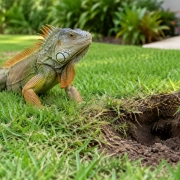
A patch of dying grass near a pool deck may look like a landscaping problem. A fresh hole along a walkway may seem small enough to fill. But iguana lawn damage rarely stays small when the animals are still on the property. In South Florida, invasive iguanas dig, nest, travel, and feed across lawns that sit next to expensive hardscapes, irrigation lines, seawalls, and foundations.

The grass is often the first thing you notice. The real concern is what may be happening below it. Active burrows can loosen soil, undermine edges, and create repeat damage when new iguanas move into the same area. Acting early is usually far less expensive than waiting for a soft spot, cracked paver, or failed section of landscaping to force the issue.

What Iguana Lawn Damage Looks Like

Iguanas do not damage every yard the same way. A single animal passing through may leave droppings and nibbled plants. A recurring population is different. You may see worn trails through ground cover, torn sod, shallow pits around plants, and holes dug into sunny or protected sections of the yard.

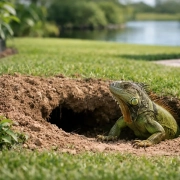
Burrows are the biggest red flag. They can be found along fence lines, beneath shrubs, near retaining walls, beside patios, around pool equipment, or on the slope leading toward a canal or seawall. An opening may look modest from the surface, but the tunnel behind it can extend much farther than expected.

Watch for these signs, especially when they appear together:

  • Round or oval holes in soil, mulch, or turf, often near a structure or landscaped edge.
  • Grass that feels spongy, settles underfoot, or dies in irregular patches.
  • Displaced mulch, exposed roots, and soil pushed onto walkways or pool decks.
  • Repeated droppings on lawns, patios, docks, or near outdoor seating areas.
  • Iguanas sunning on roofs, seawalls, decks, trees, or near HVAC equipment.

A lawn can also be damaged by raccoons, armadillos, rodents, or water and drainage problems. That is why the location of the damage matters. Holes beside a seawall or under a deck deserve a different response than a shallow divot in an open lawn after heavy rain.

Why Burrows Become a Property Problem

An iguana burrow is not just a hole to cover with dirt. Digging removes and relocates soil, weakening the ground that supports whatever sits nearby. On a large open lot, the immediate risk may be limited to damaged turf and landscaping. Near hardscape or water, the stakes are higher.

Pool decks, paver walkways, driveways, retaining walls, and patio edges depend on stable ground. As soil shifts, surfaces can settle unevenly. That can lead to cracks, lifted pavers, trip hazards, and drainage issues. Filling the visible opening while an iguana remains active underground can mean the same damage returns within days.

For waterfront homes, marinas, and commercial properties, burrowing near a seawall or canal bank requires quick attention. Soil loss around these structures can contribute to erosion and instability. Seawall repairs are not a minor landscaping bill, and waiting until there is obvious movement can turn a manageable wildlife issue into an urgent construction problem.

Commercial sites have their own exposure. A golf course can see damaged turf, bunker edges, and guest-area sanitation problems. A marina can deal with droppings on docks and unstable shoreline areas. At offices, retail centers, and multifamily communities, iguanas may burrow near sidewalks, equipment pads, and landscaped common areas where a hole becomes a liability issue.

The Damage Is Not Limited to Grass

Iguanas are herbivores, and well-kept landscaping gives them plenty to eat. They commonly feed on flowers, leafy plants, fruit, and tender new growth. A property owner may replace the same ornamental plants repeatedly without realizing the problem is an active iguana population, not poor plant quality.

They also leave waste where people and pets use the property. Droppings around pools, patios, outdoor kitchens, docks, and walkways are unpleasant, but the concern is more than appearance. Reptile waste can carry bacteria, including salmonella. Children and pets should be kept away from droppings, and hands should be washed after any cleanup.

There is also a practical nuisance factor. Iguanas climb, hide, and seek warm protected spaces. They may show up on roofs, in trees, beneath decks, and around HVAC equipment. When they are comfortable enough to stay, the lawn damage is usually one part of a broader property-control problem.

What Not to Do When You Find an Active Burrow

Do not assume every hole should be packed with soil immediately. If an iguana is actively using the burrow, blocking the entrance can create a new problem elsewhere as the animal digs out or moves to another vulnerable location. It can also make it harder to determine where the main tunnel runs.

Avoid reaching into holes, lifting heavy pavers alone, or trying to corner an adult iguana. They can scratch, bite, whip with their tails, and move quickly when trapped. A large iguana near a seawall, elevated deck, roofline, or mechanical equipment is not a safe DIY situation.

It also pays to avoid quick fixes that only address the surface. Fresh sod and mulch may improve the appearance of the yard, but they do not remove the animals or correct unstable soil. Repair work should follow a proper assessment and removal plan, not replace it.

A Practical Response for Homeowners and Property Managers

Start by documenting what you see. Take clear photos of holes, settling areas, damaged plants, droppings, and the iguanas themselves if you can do so safely. Note where the activity occurs and whether it is close to a pool, foundation, seawall, sidewalk, utility line, or HVAC pad. This information helps show whether the issue is isolated or recurring.

Next, limit access to the immediate area. Keep children and pets away from burrows and droppings. If the ground feels unstable near a walkway, deck, or shoreline, treat it as a safety concern rather than a cosmetic one. Property managers should also alert maintenance staff so they do not mow over soft ground or conceal a hazard with mulch.

Then address the source. Iguanas are an invasive species in Florida, but removal still needs to be handled responsibly and in accordance with applicable rules. A professional wildlife-control company can identify active areas, remove nuisance iguanas safely, and help you determine what repairs should wait until the activity has stopped.

After removal, inspect the site before restoring the lawn. Depending on the location and severity, that may mean filling and compacting soil, repairing irrigation, replacing sod, reinforcing vulnerable landscape edges, or bringing in a qualified contractor for damage near structural features. If there is any concern about a seawall, foundation, pool deck, or major settling, do not treat it as a standard yard repair.

Prevention Works Best After Removal

There is no single trick that keeps every iguana away forever. South Florida’s warm climate, water access, dense landscaping, and sunny hardscapes are attractive to them. Still, a maintained property is less inviting when iguanas no longer have easy shelter, food, and repeated access to vulnerable areas.

Keep vegetation trimmed where it creates dense hiding cover near decks, walls, and equipment. Pick up fallen fruit, monitor ornamental plants that show repeated feeding, and repair gaps beneath gates or around low-access areas where practical. On waterfront properties, regular inspection of shoreline edges can catch new digging before it grows into a larger erosion concern.

The key is not to confuse prevention with removal. Barriers and landscaping changes can help after the active animals are gone. They are much less effective when a population has already established burrows across the property.

When It Is Time to Call for Help

Call for professional help when you see multiple burrows, repeated damage after repairs, iguanas around pools or guest areas, or activity near a seawall, foundation, driveway, deck, or commercial equipment. The same goes for properties where droppings are creating sanitation concerns or staff and residents are being asked to handle animals themselves.

Florida Iguana Ops provides local, licensed, and insured iguana removal for South Florida homes and commercial properties. The goal is straightforward: remove the nuisance animals safely, identify the areas at risk, and help protect the property before lawn damage becomes a much larger repair bill.

A torn patch of turf can be replaced. Soil that has shifted beneath a deck, walkway, or seawall is a different matter. Treat the first signs of iguana activity as a reason to inspect closely and act while the fix is still in your control.

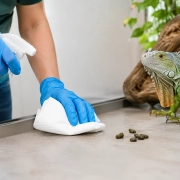
A pile of iguana droppings beside the pool, on a patio chair, or near an outdoor kitchen is more than an ugly cleanup job. Knowing how to clean iguana droppings the right way helps limit salmonella exposure and keeps contaminated waste from being tracked into your home or business.

The bigger issue is usually not the one pile. Repeated droppings often mean iguanas are feeding, resting, or nesting on the property. In South Florida, that can lead to damaged landscaping, burrows near decks and seawalls, and ongoing sanitation trouble in places people use every day.

Why Iguana Droppings Need Careful Cleanup

Iguana droppings are typically dark brown or greenish, tubular, and often have a chalky white urate cap at one end. They can look similar to large rodent or small dog waste, but their location usually tells the story. You may find them along pool decks, dock walkways, patios, roofs, ledges, pavers, planters, and under shrubs where iguanas shelter.

Like many reptiles, iguanas can carry Salmonella bacteria in their droppings. A healthy-looking iguana can still leave behind contaminated waste. The risk is not limited to direct contact with the droppings. It can spread when someone steps in it, brushes against a soiled surface, handles contaminated tools, or uses a hose that splashes particles onto nearby furniture and walkways.

This matters most around areas where people eat, swim, sit barefoot, or children play. It also matters at commercial properties. A dirty entrance, marina walkway, golf-course cart path, restaurant patio, or pool area can quickly become a guest complaint and a liability concern.

How to Clean Iguana Droppings Safely

Do not rush outside with a leaf blower or a dry broom. Blowing, sweeping, or vacuuming dry droppings can break up material and spread contaminated dust. Start by keeping people and pets away from the immediate area until the surface is cleaned.

Put on disposable gloves. If the droppings are dry, old, or in a tight area with little airflow, wear a mask as well. Closed-toe shoes are a smart call, especially when cleaning around landscaping, docks, equipment pads, or uneven pavers.

First, lightly wet the droppings with a household disinfectant that is labeled for use on hard surfaces, or use a bleach solution made with 1 tablespoon of regular unscented household bleach per gallon of water. Let the solution sit for several minutes so it can disinfect the material before you pick it up. Never mix bleach with other cleaners, especially ammonia-based products.

Use paper towels, a disposable scoop, or a dedicated plastic scraper to lift the waste. Place everything, including the used towels and gloves, into a plastic bag. Seal the bag and put it in the trash. Do not compost iguana waste or leave it in an open landscape bin where pets and pests can get into it.

Once the visible waste is gone, disinfect the affected hard surface again. Let it remain wet for the contact time stated on the disinfectant label, then rinse if the product instructions require it. For a pool deck, outdoor kitchen counter, patio table, or other touch surface, a final rinse with clean water is usually sensible after disinfection.

Wash your hands thoroughly with soap and warm water when you finish. Hand sanitizer can be useful when you are away from a sink, but it should not replace proper handwashing after handling animal waste.

Cleaning Different Surfaces

On concrete, pavers, tile, composite decking, and other nonporous surfaces, the process is straightforward: wet, remove, disinfect, and rinse as needed. Check the label on your cleaner before using it on colored pavers, natural stone, painted surfaces, or decorative coatings. Strong bleach solutions can discolor some finishes.

For outdoor furniture, remove the waste first, then clean the area with soap and water before applying a surface-safe disinfectant. Pay attention to seams, cushion edges, chair arms, and table undersides. If droppings landed on fabric cushions, remove and wash the covers according to their care labels. A heavily soiled cushion insert may be difficult to disinfect fully and may need replacement.

Grass and planting beds are different. Pick up the solid waste with gloves and a scoop, bag it, and rinse the immediate area lightly if practical. Do not saturate delicate plants with bleach. If the droppings are in a vegetable garden or near herbs, avoid harvesting from the affected area until the produce can be thoroughly washed. Keep pets and children out of that section of the yard until cleanup is complete.

If droppings are on a roof, in a gutter, near electrical equipment, on an elevated ledge, or beside an HVAC unit, do not create a fall or equipment hazard trying to clean it yourself. The waste may be the visible sign of a larger iguana problem in a hard-to-reach location.

What Not to Do When Cleaning Iguana Waste

A few common shortcuts create more trouble than they solve. Do not pressure wash droppings before removing the solid material. High-pressure water can spread contamination across walls, screens, windows, furniture, pool equipment, and nearby walkways.

Do not hose the droppings into a storm drain, canal edge, or landscaping area. That simply moves the waste and can spread bacteria farther across the property. Avoid handling it with bare hands, even if you plan to wash up right afterward. And do not let dogs investigate or eat the droppings. Besides the bacteria concern, a pet that has access to the waste can carry contamination indoors on its paws or fur.

Keep cleanup tools separate from tools used for food, grills, or indoor cleaning. A dedicated outdoor scoop, brush, or scraper should be disinfected after use and stored away from children and pets.

When Droppings Mean You Have an Iguana Problem

One dropping may come from a passing iguana. A regular pattern is different. If you are cleaning the same areas every few days, seeing fresh waste each morning, or finding droppings near disturbed soil, you likely have iguanas using the property as a routine stop.

Look for tracks in loose dirt, chewed ornamental plants, flattened vegetation, damaged screens, and burrow openings. Burrows are especially serious near seawalls, foundations, sidewalks, pool decks, driveways, and utility equipment. Iguanas can undermine soil where you need it to stay stable. Waiting until a collapse or repair emergency is never the cost-effective option.

At commercial properties, recurring droppings can also point to an operational problem. Marinas may see waste around docks and shorelines. Golf courses can deal with damage around ponds, bunkers, and cart paths. Multifamily communities may face recurring complaints around pool areas, mail stations, sidewalks, and landscaping. Cleaning crews can remove the waste, but they cannot solve the source if the iguanas remain active on-site.

Reduce the Chances of More Droppings

Cleaning is necessary, but prevention starts with removing what attracts or shelters iguanas. Do not leave pet food outdoors. Pick up fallen fruit, secure trash, and avoid feeding wildlife. Trim dense ground cover near patios, walls, and equipment pads where iguanas can hide.

Inspect the property for access points and soft soil around structures. A small burrow near a seawall or pool deck should not be ignored just because the opening looks minor. Filling a burrow without addressing the animal activity can lead to reopening or new digging nearby.

Physical exclusion can help in some locations, but every property is different. What works around a small patio may not work around a marina, large yard, golf course, or waterfront community. The goal is not to make the property inconvenient for a day. It is to stop repeat activity before droppings, burrowing, and damage become part of the weekly maintenance routine.

Get Help Before the Cleanup Becomes Constant

If iguana droppings keep showing up, especially near a pool, outdoor kitchen, dock, seawall, HVAC equipment, or guest area, it is time to deal with the animals behind the mess. Professional removal helps protect the property while avoiding unsafe handling and guesswork about local wildlife rules.

Florida Iguana Ops provides licensed, insured iguana removal for residential and commercial properties across South Florida. We show up on time, assess the active areas, and focus on getting the problem handled without gimmicks or runaround.

A clean patio is good. A property that is no longer being used as an iguana bathroom, feeding ground, and burrowing site is the real fix.

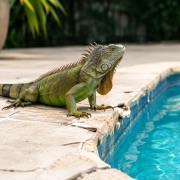
A cracked paver beside the pool can look like a small maintenance issue. Then the ground starts sinking near the edge, a burrow opens beneath the deck, and the repair becomes a bigger job than it should have been. Iguanas damaging pool decks are a real property risk across South Florida, especially where warm sun, irrigated landscaping, and easy access to water give them everything they need.

The problem is not that an iguana walks across the deck. The real damage happens below the surface. These invasive reptiles dig burrows in soil around pool structures, planter beds, retaining walls, and patio edges. Once soil is displaced or water begins moving through those openings, pavers can shift, concrete can lose support, and small defects can turn into costly repairs.

Why Iguanas Are Drawn to Pool Areas

Pool decks offer the kind of environment iguanas seek out. They are warm, open, and often bordered by landscaping with loose soil for digging. Nearby shrubs provide cover, pool equipment areas offer shelter, and water is always close.

A single iguana may be a nuisance. A breeding population is a property-protection problem. Female iguanas can use the same general area for nesting, while other iguanas may move into established burrows or create additional ones nearby. If you keep seeing iguanas around the same deck, seawall, or planter, assume there is a reason they are staying.

Pool areas also tend to be maintained with irrigation. Wet soil around deck footings, paver borders, and landscaped edges is easier to excavate. That combination of loose ground and repeated burrowing is where instability starts.

How Iguanas Damage Pool Decks

An iguana burrow is not just a shallow hole in a flower bed. Burrows can extend several feet into the ground, removing soil from places that need stable support. Near a pool deck, that missing soil can create voids beneath pavers, concrete slabs, coping, or surrounding walkways.

Paver decks are often the first place property owners notice the trouble. Individual pavers may rock underfoot, separate at the joints, dip near landscaping, or develop uneven edges. Those changes can create a trip hazard before the underlying issue is obvious.

Concrete decks can be affected differently. A slab may crack when supporting soil settles unevenly. Not every crack is caused by iguanas – normal settling, tree roots, drainage failures, and age can all play a role. But when cracks appear alongside fresh holes, disturbed mulch, or regular iguana activity, burrowing needs to be part of the investigation.

The risk increases near the pool shell, plumbing lines, skimmers, equipment pads, and retaining features. Burrowing does not automatically mean a pool is structurally compromised, but it is not something to ignore. Water entering a burrow can wash away more soil, particularly after heavy rain or irrigation cycles. What began as a manageable excavation issue can spread beneath a larger section of deck.

Damage rarely stays in one spot

Burrows can also compromise nearby landscaping and hardscape features. Planter walls may lean, decorative rock can sink, and edging can pull apart as soil shifts. If the pool deck sits near a seawall, canal bank, or retaining wall, the stakes are higher. Those structures depend on stable ground and should be checked promptly when burrows are present.

There is also a sanitation issue. Iguana droppings around a pool deck, lounge area, outdoor kitchen, or walkway are unpleasant and can carry bacteria such as Salmonella. On commercial properties, that means a poor guest experience and a potential safety concern. On residential properties, it means children, pets, and bare feet may be near contaminated surfaces.

Warning Signs Around Your Pool Deck

You do not need to see an iguana digging to recognize a developing issue. Walk the pool area after rainfall, irrigation, or a busy day of iguana activity. Look for these signs:

  • Fresh holes at the deck perimeter, in mulch beds, beneath shrubs, or beside equipment pads.
  • Pavers that rock, separate, sink, or sit lower than the surrounding surface.
  • New concrete cracks, widening gaps at coping, or soil washing out near deck edges.
  • Repeated iguana sightings, droppings, shed skin, or disturbed landscaping in the same area.

A burrow opening may be partly hidden by mulch or plants. Do not assume the visible opening shows the full extent of the tunnel. Filling a hole without addressing the iguanas often leads to the same area being reopened or a new burrow appearing nearby.

What to Do When You Find Burrows

Start by keeping people and pets away from any soft, sunken, or unstable section of deck. If pavers are moving underfoot, mark the area and avoid placing furniture, grills, or heavy equipment on it. Do not let a loose paver or fresh hole become a preventable fall.

Next, document what you see. A few clear photos showing the opening, nearby cracks, shifted pavers, and droppings can help a removal professional and, if needed, a pool contractor or hardscape repair company understand the scope of the problem. This is especially useful for property managers tracking recurring damage across a community, marina, hotel, or clubhouse.

Avoid trying to trap, handle, or relocate iguanas on your own. Wildlife rules, safety concerns, and the practical challenge of removing an established population all matter. A rushed do-it-yourself response may remove one visible animal while leaving the nesting activity and burrowing pressure in place.

Professional removal focuses on the active animals first, then helps identify the areas drawing them back. That can include known burrow zones, sunny deck edges, dense landscaping, food sources, and access points around the property. Once removal is handled, damaged burrows should be properly assessed and repaired so the deck has stable support again.

Prevention Works Best After Removal

Property owners often ask whether fencing, repellents, or a few landscaping changes will solve the problem. The honest answer is that it depends on the property and the size of the infestation. A clean, well-maintained pool area can still attract iguanas if there is easy shelter and a population nearby.

After active removal, prevention should focus on reducing the reasons iguanas remain. Keep fallen fruit and pet food off the ground, manage dense cover around common burrowing zones, and address openings near utility areas where practical. Repair compromised paver borders and fill voids correctly rather than covering them with loose soil.

Do not use poison or improvised deterrents around a pool. They can create risks for pets, children, non-target wildlife, and the people using the property. They also do nothing to fix unstable ground beneath the deck.

For commercial properties, a regular inspection schedule makes sense. Pool attendants, maintenance teams, and grounds crews should know that holes near hardscape are not just landscaping issues. Reporting fresh burrows early can prevent a small repair from becoming an emergency deck, wall, or drainage project.

When It Is Time to Call a Professional

Call for help when you see repeated iguana activity, fresh burrows, deck movement, or droppings in areas people use. Fast action is particularly important if the problem is near a pool shell, seawall, retaining wall, foundation, sidewalk, or HVAC equipment.

Florida Iguana Ops provides licensed and insured removal for South Florida property owners who need the issue handled without gimmicks or runaround. The goal is straightforward: remove the nuisance iguanas, help stop the repeat damage, and give you a clearer path to protecting the deck and the property around it.

A pool deck should be a place for family, guests, and customers to walk without watching every step. If burrows or shifting pavers are showing up around yours, deal with the iguanas before the ground underneath has a chance to get worse.

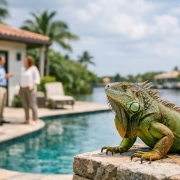
A green iguana on the pool deck is not just an ugly nuisance. One that has been digging beside a seawall, driveway, foundation, or canal bank can turn into a costly property problem fast. Florida iguana laws give property owners meaningful options to address invasive green iguanas, but those options come with rules on humane treatment, live transport, release, and where removal can happen.

For homeowners, managers, marina operators, and golf-course teams, the practical point is simple: you do not have to let iguanas damage your property, but you should not improvise a removal method that creates a legal or safety problem.

Florida Iguana Laws and Green Iguanas

Green iguanas are a nonnative invasive species in Florida. They are not protected as native wildlife, and Florida does not have a closed season or bag limit for removing them from private property with the owner’s permission. A homeowner can address iguanas on their own property, and a property manager or contractor can arrange removal with the proper authorization.

That does not mean anything goes. Florida requires invasive reptiles to be handled humanely. People should not use poisons, glue traps, cruel methods, or any approach that creates unnecessary suffering. They also cannot simply capture an iguana and drop it off somewhere else.

Since 2021, green iguanas have been regulated as prohibited species in Florida. In plain language, private individuals generally cannot acquire, buy, sell, breed, import, or keep new green iguanas as pets without the applicable state authorization. Limited exceptions and permit requirements may apply to approved facilities, research, education, or specific pre-existing animals covered under state rules. Those narrow exceptions are not a workaround for moving a nuisance iguana off a property.

What You Can Do on Private Property

If an iguana is on land you own, you may take action year-round. If it is on property you manage or work on, get the owner’s authorization before removing it. This matters on condominium grounds, commercial centers, marinas, golf courses, vacant lots, and waterfront communities where several parties may have responsibility for the land.

The legal right to remove an invasive iguana does not override other laws. A few common issues still apply:

  • Local firearm-discharge rules and safety requirements still control. Never shoot near homes, roads, boats, public spaces, or occupied buildings.
  • Traps must be used responsibly, checked regularly, and set in a way that avoids catching pets or protected wildlife.
  • You cannot release a captured iguana onto another property, at a park, along a canal, in a preserve, or in the Everglades.
  • Transporting a live iguana is restricted. Moving the problem to a different neighborhood is not a legal solution.

The safest approach depends on the site. A single iguana eating landscape plants may call for targeted trapping and exclusion. A colony burrowing into a canal bank or seawall calls for a more organized response, because removing one visible animal while leaving active burrows and egg-laying areas untouched rarely solves the underlying problem.

Humane Removal Means More Than Catching It

Humane removal is not a slogan. It means using methods suited to the animal and the property, then handling the animal in line with Florida rules. Live traps can be effective in the right setting, but they require experience. Iguanas are strong, wary, and capable of injuring themselves or escaping when poorly handled.

It also means protecting people. Iguanas can scratch, bite, whip with their tails, and carry bacteria in their droppings, including salmonella. Do not handle one bare-handed, and do not let children or pets investigate a trap or a cornered animal. Clean contaminated outdoor areas carefully, especially around pools, patios, outdoor kitchens, docks, and play areas.

Do Not Relocate an Iguana

Relocation is one of the biggest misunderstandings around Florida iguana laws. Capturing an iguana and releasing it by a canal, in a wooded area, or on a distant vacant lot may feel like a kind solution. It is not. It spreads an invasive species, shifts damage to somebody else’s property, and can violate state rules.

The same concern applies to live transport. An iguana in a box, truck bed, or vehicle is not automatically legal to move just because it was trapped on private property. State regulations limit possession and transport of prohibited species. A qualified wildlife-control professional can remove the animal using legal, humane procedures without leaving the property owner to guess what comes next.

This is particularly important in South Florida. Iguanas travel easily through canal systems, seawall corridors, vacant lots, and dense landscape cover. Relocation does not remove the pressure on the neighborhood. It helps the infestation expand.

Public Land Is a Different Situation

Rules can be different on public land, including parks, preserves, road rights-of-way, and water-management areas. You cannot assume that the same authority you have in your backyard applies at a public marina, community park, or canal bank.

Before taking action on public property, confirm who owns or manages the site and what authorization is required. A homeowners association, city, county, state agency, or water-control district may have separate access and safety rules. In some locations, the issue is not whether the iguana is invasive. It is whether you are authorized to enter the area, set equipment, or perform removal there.

For commercial sites, this should be handled before crews arrive. A clear scope of work, access approval, and removal plan keep a routine wildlife job from becoming an operations headache.

Why Waiting Can Cost More

An iguana problem is rarely limited to what you see sunning on a dock or roof. Mature iguanas dig burrows that can undermine soil around walkways, pool decks, retaining areas, and seawalls. On waterfront properties, repeated burrowing near a seawall can contribute to erosion and voids that demand expensive inspection and repair.

They also damage landscaping, irrigation zones, ornamental plants, and produce gardens. At commercial properties, droppings near entrances, outdoor seating, carts, docks, and mechanical equipment create a sanitation issue that staff must keep cleaning up. Iguanas may also shelter around HVAC equipment, where their activity can interfere with access and add to maintenance problems.

Eggs are another reason to act early. Green iguanas can reproduce quickly in favorable South Florida conditions. If you are seeing several adults, fresh burrows, regular tracks, and droppings in the same areas, the issue may be established rather than occasional.

Prevention Still Matters After Removal

Removal handles the animals currently using the property. Prevention makes the result last longer. Once activity is brought under control, inspect the areas that attracted iguanas in the first place.

Look for open access under decks, dense plant cover against structures, food sources, unmanaged fruit, and soft soil along water edges. Repair burrows after confirming they are inactive, and address soil loss or structural concerns promptly. On a marina, golf course, or large residential community, routine monitoring is usually more cost-effective than waiting until a burrow becomes an emergency repair.

There is no single fix for every site. A waterfront estate with a compromised seawall needs a different plan than a restaurant patio dealing with droppings or a warehouse with iguanas around exterior equipment. Good removal work starts by identifying the damage, the travel routes, and the areas that need follow-up.

When to Call a Professional

Call for professional help when iguanas are burrowing near structural features, gathering in numbers, entering enclosed spaces, or creating a safety concern around guests, pets, or employees. The same applies if you are unsure whether the animal is on private or public property, or you need live trapping and lawful disposition handled correctly.

Florida Iguana Ops works with property owners and commercial decision-makers who need the job handled without gimmicks or runaround. A trained, insured local team can assess the active areas, remove invasive iguanas humanely, and help you focus on the damage points that could become expensive if ignored.

If fresh burrows or droppings are showing up around a seawall, pool deck, landscaping, or building equipment, address them while the work is still straightforward. The right response protects the property and keeps an invasive-species problem from becoming your neighbor’s problem.

A fresh hole beside a pool deck, seawall, driveway, or air-conditioning pad is not just a landscaping problem. Iguanas can keep digging, widen existing voids, and turn a small soft spot into an expensive repair. When people ask how prevent iguana burrows, the honest answer is that filling the hole alone will not solve it. You have to remove the iguanas using the area, correct the conditions attracting them, and repair the burrow at the right time.

In South Florida, burrowing iguanas are especially hard on properties with loose soil, rock edges, dense plant beds, canals, retaining walls, and warm sheltered spaces around equipment. The goal is not to make your yard look fortified. It is to make the property less useful to iguanas without creating a bigger issue for your foundation, seawall, pool deck, or drainage.

Why Iguana Burrows Need Fast Attention

Iguanas dig for shelter, nesting, temperature protection, and access beneath structures. A burrow may start as a hole under a shrub or along a wall, then extend farther than it appears from the surface. That is why a spot that looks minor can lead to settling pavers, eroded soil, cracked edging, damaged irrigation, or a weakened area beside concrete.

Seawalls and canal-side properties deserve extra caution. Burrowing near a seawall can allow soil to wash away or loosen the ground behind the wall. On commercial sites, iguanas may tunnel around landscape beds, mechanical pads, storage areas, walkways, and drainage features. The damage is not always obvious until a slab shifts or a washout appears.

Burrows also give iguanas a dependable home base. If food, water, cover, and easy access remain, new iguanas can move into the same area even after you patch a hole. Their droppings add another problem around patios, docks, pools, guest areas, and outdoor workspaces. Iguanas and their waste can carry bacteria such as salmonella, so cleanup should be handled carefully.

How to Prevent Iguana Burrows Without Making Damage Worse

The first rule is simple: do not permanently seal an active burrow while an iguana may still be inside. Blocking an occupied tunnel can trap the animal, force it to dig another escape route, or leave an odor and sanitation issue in a place you cannot reach. Around a seawall, foundation, pool structure, or utility line, digging blindly into the hole can also cause more damage.

Start by identifying whether the burrow is active. Fresh loose soil, tracks, droppings, newly disturbed mulch, or regular iguana activity around the opening are all warning signs. A hole that looks abandoned may still be in use, particularly if it disappears under thick plants, decking, riprap, or a structure.

Professional removal comes before exclusion and repair. A trained wildlife-control team can assess activity, remove invasive iguanas legally and safely, and identify the places they are entering or sheltering. This matters because one visible iguana is often not the whole problem. Eggs, juveniles, and other adults may be using the same landscape corridor.

After active iguanas are removed, the burrow should be evaluated based on where it sits. A shallow hole in an open planting bed may be filled and compacted with appropriate material. A void near a seawall, slab, driveway, pool deck, retaining wall, or foundation is different. That area may need a qualified contractor, engineer, or seawall professional to inspect the extent of soil loss before repair work begins.

Remove What Makes the Area Attractive

Iguanas do not choose every yard equally. They return to places that offer cover, easy meals, warm surfaces, and low disturbance. Habitat changes will not replace removal when there is an active infestation, but they can reduce repeat activity afterward.

Keep fallen fruit, vegetable scraps, pet food, and birdseed off the ground. Do not feed iguanas, even occasionally. Feeding teaches them that your patio, dock, or landscape is a reliable stop, and reliable food draws more reptiles into the area.

Trim dense vegetation near structures and along fences, walls, seawalls, and pool equipment. Iguanas use thick ground cover, ornamental plantings, brush piles, and stacked materials as cover while they travel between feeding and burrowing sites. You do not need to strip a property bare. The practical move is to create visibility and access for inspections, especially around high-value infrastructure.

Pay attention to irrigation leaks and standing water as well. Damp, loose soil is easier to dig, and water sources support the kind of landscape iguanas favor. Repair leaking heads, broken lines, and drainage problems rather than letting the same patch of ground stay soft all season.

Use Barriers Where They Actually Work

Exclusion can help, but only when it is designed for the specific location. A loose piece of mesh placed over a hole is not a long-term answer. Iguanas can dig around weak barriers, and poorly installed materials can create hazards for people, pets, landscaping crews, and other wildlife.

For vulnerable planting beds, equipment areas, and crawl-type access points, heavy-duty buried barriers may help discourage digging after removal and repair. The barrier needs to extend below the surface and be secured so an iguana cannot simply push under the edge. The right depth and material depend on the soil, drainage, slope, and whether utilities are nearby.

Hardscape edges should be maintained as well. Reset loose pavers, address washed-out joints, and repair gaps beneath deck edges or around utility pads before they become an easy entry point. If the area is next to a pool, foundation, seawall, or underground service, do not guess about where to dig or install material. A cheap patch is not a bargain if it damages a line or hides a growing void.

Do Not Rely on Repellents Alone

Home remedies, odor repellents, and visual scare devices are often disappointing with established iguanas. A product may make an area unpleasant for a short time, but it will not remove the shelter, food source, or existing burrow network. It also will not fix the structural risk beneath a slab or along a seawall.

Some homeowners try flooding burrows, using harsh chemicals, or placing debris into openings. These approaches can send the iguana deeper into the tunnel, contaminate nearby soil or water, and make the eventual repair harder. They can also create legal and safety concerns. The same goes for attempting to trap or handle large iguanas without the right experience.

The practical approach is targeted removal, followed by repair and exclusion. It takes more effort than tossing something in a hole, but it addresses the reason the hole keeps coming back.

Check the Places Iguanas Reuse

Once an infestation has been handled, make burrow checks part of regular property maintenance. This is particularly useful after heavy rain, landscaping work, irrigation repairs, or a period of warm weather when iguana activity increases.

Walk the property line and look closely at the base of walls, fences, sheds, pool decks, docks, canal edges, landscape berms, and HVAC equipment. Watch for fresh soil, sagging mulch, cracks that were not there before, settling pavers, or spots that feel soft underfoot. At commercial properties, add service yards, loading areas, golf-course infrastructure, marina edges, and guest walkways to the inspection routine.

If you find a new opening, take a photo and avoid collapsing it until you know whether it is active and whether important infrastructure is nearby. Early action is usually far less costly than waiting for a deck edge, driveway, or seawall area to show visible failure.

When to Call a Professional

Call for professional help when burrows are active, recurring, near structures, or connected to a larger iguana problem. That includes holes near pools, foundations, seawalls, retaining walls, walkways, utility equipment, and areas used by children, pets, customers, or employees.

Florida Iguana Ops provides local, licensed, and insured iguana removal for residential and commercial properties. The job is not finished when an iguana is out of sight. A proper plan looks at where the reptiles are sheltering, what is drawing them back, and what needs to be repaired or protected next.

A burrow is your property telling you to look below the surface. Deal with the animal first, repair the ground safely, and make the area less inviting before the next iguana decides it is home.

A fresh hole near a pool deck, seawall, driveway, or air-conditioning pad is not just a landscaping issue. In South Florida, it can be the first clear sign that an invasive iguana has started digging a nest or using an existing burrow on your property. Iguana nest removal addresses the problem before loose soil, erosion, droppings, and repeat activity turn one hole into a costly repair.

The trouble is not always what you can see from the surface. Iguanas dig tunnels that may extend beneath pavers, patios, walkways, retaining areas, and shoreline structures. Once a burrow weakens the soil below a hard surface, the repair can involve more than filling a hole. That is why property owners and managers should treat active nesting areas as a property-protection concern, not a wait-and-see situation.

Why Iguana Nests Cause Real Property Damage

Green iguanas are invasive in Florida, and they are strong diggers. Females excavate burrows to lay eggs, often choosing dry, sunny ground with loose soil. Those conditions are common around landscaped beds, canal banks, seawalls, pool areas, golf-course features, and building foundations.

A nest entrance may look small at first. Underneath, however, the tunnel can remove soil that supports a slab, paver system, curb, or embankment. Water makes the situation worse. Rain can wash loosened soil farther into the tunnel, while irrigation and runoff can enlarge the weak area around it.

On a residential property, that may mean cracked pavers, settling walkways, damaged plant beds, or a soft spot next to the pool. At a commercial site, the exposure can be higher. Burrows near marina infrastructure, golf-course paths, mechanical equipment, parking areas, or shoreline improvements can create safety issues and expensive maintenance work.

Seawalls deserve special attention. Iguana tunneling near a seawall can contribute to soil loss behind the wall, especially when water movement and rainfall are already working on the area. Not every burrow means a wall has failed, but ignoring repeated excavation near a shoreline structure is a gamble few property owners need to take.

Nesting Season Makes Timing Matter

Iguanas can reproduce throughout much of the year in South Florida, with nesting activity often becoming more noticeable during the warmer months. A female may return to favorable ground, and other iguanas may use or expand nearby holes. What starts as one nesting site can become a recurring problem if the animals remain on the property.

This is why simply covering a hole is rarely a lasting fix. If an iguana is still active nearby, it may dig around the repair, reopen the burrow, or choose another spot a few feet away. If eggs are present, the timing and condition of the site also matter. A proper response looks at the active animal, the burrow, and the conditions attracting iguanas to the area.

Professional service can help determine whether a hole is an active nest, an old burrow, or damage caused by another animal or drainage issue. That distinction matters before anyone starts digging, filling, or making structural repairs.

Signs You May Have an Active Iguana Nest

You may see a clean, freshly disturbed opening in a sunny bed or along the edge of a slab. Loose dirt pushed outside the entrance, tracks, tail drag marks, and regular sightings of a large female iguana near the same location are also common clues.

Look closely around vulnerable areas rather than focusing only on the hole itself. New settling in pavers, washed-out mulch, cracked edging, chewed vegetation, and droppings on decks or around equipment can show that the issue is broader than a single burrow.

Iguana droppings also create a sanitation concern. They can contaminate surfaces around pools, patios, docks, and outdoor gathering spaces. Like other reptile waste, they may carry salmonella. Families, employees, guests, and pets should not be asked to work around that risk while an active infestation continues.

What Professional Iguana Nest Removal Should Include

A good service is not just about removing one visible iguana. It should begin with an on-site assessment of activity, burrow locations, property risks, and likely access routes. The goal is to remove invasive iguanas safely and in accordance with applicable Florida requirements, then help stop the same area from becoming an easy nesting site again.

The work may include removal of active iguanas, inspection of suspected nesting areas, and attention to burrows that threaten infrastructure. Once the site is clear and conditions allow, damaged holes can be addressed so they are less likely to remain an open invitation for future activity. If a burrow is near a seawall, foundation, deck, or utility equipment, the property owner may also need a qualified contractor to evaluate any structural concern.

That last point is worth being candid about: wildlife removal and structural repair are not the same job. An experienced wildlife-control team can identify the animal problem and help prevent it from continuing. If soil loss or cracking is already significant, do not assume a surface patch has solved the underlying issue.

Florida Iguana Ops approaches the work as local property protection. That means showing up, assessing what is actually happening, removing the invasive animals professionally, and giving you a straightforward explanation of what needs attention next. No gimmicks, no runaround.

Why DIY Nest Removal Can Backfire

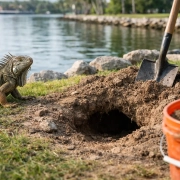
It is tempting to grab a shovel, fill the opening, and move on. Sometimes that only sends the iguana to a new location. More concerning, digging around a burrow near a slab, wall, or bank can destabilize already loose soil or hide the extent of erosion.

Handling an iguana also has its own risks. Large animals can bite, scratch, whip with their tails, and carry bacteria. Trying to catch one around a pool, dock, roofline, or electrical equipment can create a bigger problem than the original burrow.

Home remedies meant to scare iguanas away often have mixed results. Repellents, noise devices, and casual barriers may shift activity temporarily, but they do not address an established population, a favorable nesting area, or the property damage already in progress. The right approach depends on where the iguanas are nesting and what they can damage if they continue.

Preventing Repeat Burrowing After Removal

Removal is the first step. Prevention works best when it reduces food, shelter, and access around the places iguanas prefer to use. This does not mean turning your property into a fortress. It means correcting the obvious conditions that make a repeat infestation easy.

Keep fallen fruit and birdseed cleaned up, and avoid leaving pet food outdoors. Manage dense vegetation near vulnerable walls or equipment so iguanas have fewer protected hiding areas. Inspect landscaped borders, canal edges, and the spaces beside patios or pool decks after heavy rain, when fresh digging and soil movement are easier to spot.

For commercial properties, routine inspections are especially valuable around HVAC units, dock areas, golf-course cart paths, landscaped entrances, and guest-use spaces. A facilities manager who catches new burrows early can often avoid emergency repairs and interruptions later.

Physical exclusion may help in certain locations, but it needs to be suited to the site. A solution that works around a planting bed may be wrong for a seawall or a high-traffic marina. The priority is to protect the structure without trapping animals in a way that creates more damage.

Act Before the Hole Gets Bigger

If you are seeing repeated iguanas, new burrows, or soil loss near a pool, seawall, driveway, or foundation, do not wait for the next rainstorm to test the damage. Take photos from a safe distance, keep people and pets away from unstable ground, and have the area inspected.

Fast action is usually less expensive than repairing a failed deck section, eroded bank, damaged landscaping, or compromised equipment pad. A professional removal plan gives you a cleaner property, less sanitation exposure, and a real chance to stop the burrowing cycle before it spreads.

A fresh pile of dirt at the base of a seawall is not just a landscaping issue. It can be the first visible sign that an invasive iguana is tunneling where marina infrastructure cannot afford to fail. Marina iguana removal is about protecting the ground behind the wall, the walkways above it, and the people using the property every day.

At a waterfront property, iguanas have everything they need: sun-warmed concrete, water access, landscaped food sources, rock edges, dock structures, and quiet places to hide. Once a few establish themselves, the problem can grow quickly. Waiting until a burrow becomes a washout or droppings become a guest complaint usually costs more than addressing the activity early.

Why Iguanas Create Bigger Problems at Marinas

A marina puts expensive assets in a small, high-traffic area. Seawalls, docks, utility pedestals, landscaping, walkways, boat slips, storage areas, and buildings all depend on stable ground and clean conditions. Green iguanas do not understand property lines or maintenance budgets. They use the easiest available cover and the best sunning locations.

The biggest concern is burrowing. Iguanas dig into loose soil near seawalls, retaining walls, dock approaches, foundations, and landscaped edges. A single hole may not look serious from above, but repeated digging can remove soil that supports hardscape and waterfront structures. Rain, irrigation, wave action, and high water can then move into those weakened areas.

That is why a marina should not treat recurring iguana holes as something to fill and forget. Filling a burrow without addressing the animals often leads to new tunnels nearby. The surface may look repaired while the infestation continues along another section of the property.

Droppings are another operational headache. Iguanas leave waste on docks, finger piers, pool areas, sidewalks, boat ramps, outdoor seating, and electrical equipment. Besides looking bad, reptile waste can carry bacteria such as Salmonella. Staff should not have to repeatedly clean contaminated areas without knowing whether the source is being controlled.

At commercial properties, the effects spread beyond maintenance. Guests may complain about animals near food service or common areas. Tenants may raise concerns when droppings build up around entrances. A hole beside a walkway can become a trip hazard. If iguanas start using mechanical areas, they can also create problems around outdoor HVAC equipment and utility spaces.

Signs You Need Marina Iguana Removal

The iguana itself is not always the first thing a dockmaster, property manager, or maintenance team sees. Activity is often easiest to spot early in the morning, when iguanas come out to warm themselves, or during routine grounds checks.

Watch for several signs occurring in the same area: fresh soil pushed out near a seawall or planter, round burrow openings along hardscape edges, large droppings on docks and walkways, chewed foliage, and repeated sightings of iguanas using the same sunning spot. Juveniles are a warning sign too. Where smaller iguanas are present, larger breeding adults may be nearby or may have used the area previously.

A few animals seen passing through do not always mean a full infestation. It depends on where they are traveling, whether burrows are present, and how often they return. But active digging near waterfront infrastructure is reason to act promptly, even if the property has only seen one or two large iguanas.

Marina Iguana Removal Is More Than Catching One Lizard

Effective removal starts with an inspection of the activity pattern. A professional needs to identify where iguanas are entering, feeding, sunning, sheltering, and burrowing. At a marina, that may include seawall lines, landscape islands, storage yards, dock access points, drainage areas, and spaces behind equipment.

The removal method should fit the property. Busy marinas have employees, members, contractors, guests, and boat traffic moving through the site. That means the work needs to be controlled, safe, and scheduled with normal operations in mind. A one-size-fits-all approach can miss active areas or create unnecessary disruption.

After targeted removal, the next job is reducing the reasons iguanas keep returning. This may involve identifying access points, clearing attractive hiding areas where appropriate, changing how certain landscape zones are maintained, and monitoring the locations with the most repeat activity. Not every waterfront site can be made iguana-proof, but a smart plan can greatly reduce pressure on vulnerable areas.

Burrow repairs also require judgment. An old, inactive opening may be repaired differently than a fresh burrow with ongoing activity. If structural support is in question, marina management should involve the appropriate seawall, engineering, or construction professional. Wildlife removal solves the animal problem; it does not replace a proper assessment of compromised infrastructure.

Protecting Staff, Guests, and Waterfront Assets

Maintenance teams are often the first line of defense, but they should not be expected to handle aggressive or large iguanas on their own. Iguanas can scratch, bite, whip with their tails, and create sanitation concerns when handled improperly. Cornering an animal around a dock, water edge, or electrical area can also make a simple problem more dangerous.

A practical site policy helps. Staff can document sightings, note fresh burrows, keep guests away from active removal areas, and report repeat locations quickly. They should avoid feeding iguanas or leaving food waste accessible around waterfront gathering areas. Feeding wildlife teaches animals that people and buildings are a food source, which makes repeat problems more likely.

For marina operators, timing matters. Removal and follow-up should be planned before a hole expands, before a holiday weekend fills the docks, and before a recurring sanitation issue becomes a reputation problem. This is especially true in South Florida, where warm conditions allow iguanas to stay active through much of the year.

Legal Compliance and Professional Handling Matter

Iguanas are invasive in Florida, but that does not mean anyone can handle removal however they want. Wildlife rules, approved methods, local property restrictions, and safe handling requirements all matter. A professional service should work within current Florida regulations and use methods suited to the specific property.

Hiring a licensed and insured local company also protects the marina from avoidable risk. Waterfront sites are not ordinary backyards. There may be public access, expensive vessels, employees, contractors, restricted areas, and sensitive utility equipment nearby. The provider should understand how to work carefully around those conditions and communicate clearly about the plan.

Florida Iguana Ops approaches these jobs as property protection work. The goal is not gimmicks or vague promises. It is to identify the active problem, remove invasive iguanas professionally, and help the property stop absorbing the same damage over and over.

When Emergency Action Is Needed

Some situations should move to the top of the maintenance list. Fresh burrows directly behind a seawall, soil loss beside a dock approach, sinking pavers, cracks that are getting worse, or a hole opening near a heavily used walkway deserve immediate attention. The same goes for iguanas gathering around outdoor food areas, pools, or HVAC equipment.

Do not assume that a repaired surface means the risk is gone. If water is washing soil from a damaged area or the ground feels unstable, restrict access and have the structure evaluated. Then arrange professional iguana removal so the source of repeated digging is addressed alongside the repair.

A well-run marina is built on small details being handled before they become expensive failures. If iguanas are burrowing along your seawall or fouling the docks, deal with the activity now, document the damage, and give your waterfront property a real chance to stay ahead of the next repair.

A few iguanas along a pond bank can look like a minor grounds issue. Then the cart path begins to settle, a bunker edge caves in, guests complain about droppings near the patio, or a maintenance crew finds fresh holes beside irrigation and electrical equipment. Golf course iguana control is not about chasing reptiles off the fairway for a day. It is about protecting the ground, structures, guest experience, and operating budget behind a well-kept course.

For South Florida course operators, invasive green iguanas are a recurring property problem. They are strong climbers, persistent burrowers, and comfortable around water, landscaped beds, warm equipment areas, and maintained turf. Once a site offers food, cover, and sunny places to bask, a small population can grow quickly.

Why Iguanas Create Expensive Course Problems

A golf course has more vulnerable ground than most commercial properties. There are pond edges, canal banks, drainage areas, bunker faces, bridges, cart paths, tees, landscaped entrances, maintenance buildings, and outdoor dining spaces. Iguanas use many of those same areas for shelter and travel.

Burrowing is the biggest concern. Iguanas can dig into slopes, banks, seawalls, retaining areas, and soil near paved surfaces. Their tunnels may weaken soil below walkways and cart paths, contribute to erosion around water features, and leave soft spots where employees or players can step into a hole. A fresh burrow may look manageable from the surface, but the void beneath it can extend farther than expected.

The risk rises after heavy rain. Saturated soil can collapse into existing burrows, and washouts can expose damage that was building quietly over time. Repairing turf is one thing. Repairing a failed bank, undermined path, or compromised hardscape is another expense entirely.

Droppings create a separate issue. Iguana waste around clubhouses, pool areas, patios, starter stations, bag-drop zones, benches, and cart staging areas looks bad and creates a sanitation concern. Reptiles can carry salmonella, so employees should not treat cleanup as a casual housekeeping job. Areas with repeated droppings need safe cleaning practices and a plan to stop the activity at the source.

There is also the guest experience. Players expect a course to look intentional. Repeated iguana sightings near dining areas, damaged landscaping, torn bunker edges, and waste on walkways can make a property feel neglected even when the maintenance team is working hard behind the scenes.

Where Golf Course Iguana Control Matters Most

Iguanas do not spread evenly across a course. They settle where cover, warmth, water, and easy food sources meet. A good control program starts by identifying the sections that keep producing activity instead of treating every acre the same.

Pond Banks, Canals, and Drainage Edges

Water-adjacent areas are prime iguana territory. Pond banks provide access to vegetation, open sun, and loose soil for digging. If a course has bulkheads, riprap, retaining walls, or drainage structures, those areas deserve regular inspection. Fresh soil at a hole entrance, small slides in a slope, and trails through groundcover are early signs that should not be ignored.

Cart Paths, Bridges, and Walkways

A cart path can show damage long after burrowing begins underneath nearby soil. Look for cracking, settling, soft shoulders, or holes along the edges. The same goes for pedestrian paths near clubhouses, restrooms, and practice facilities. These are liability-sensitive areas, so an active burrow should be addressed before someone twists an ankle or a cart leaves the pavement.

Bunkers, Landscape Beds, and Tee Boxes

Iguanas are drawn to manicured landscape beds because they offer cover and soft digging material. Bunker edges and decorative plantings near tees can also become feeding and basking spots. Course crews often end up repairing the visible damage repeatedly without removing the animals responsible for it. That turns a wildlife issue into an endless maintenance task.

Maintenance and Mechanical Areas

Warmth from equipment and protected spaces around buildings can attract iguanas. They may shelter near HVAC units, utility boxes, sheds, and storage areas. Waste, nesting activity, and damaged wiring or insulation can create problems that go beyond appearances. Maintenance staff should report activity quickly rather than trying to handle a large reptile in a confined area.

What Effective Control Looks Like

Effective iguana control is targeted, consistent, and safe. It is not a one-time walk through the property followed by a hope that the problem disappears. Courses need a response that accounts for the size of the property, the areas guests use, the season, and the locations where iguanas are reproducing or repeatedly burrowing.

The first step is site assessment. A professional should identify active burrows, travel routes, basking areas, feeding sources, and high-risk infrastructure. On a golf course, that may mean separating an isolated sighting near a pond from a recurring population working along several banks and landscaped corridors.

Removal should be handled by trained professionals who understand safe capture methods, property access, and Florida requirements for invasive species. This matters on an active course. Work must be planned around golfers, staff, events, maintenance schedules, and restricted areas. A careless approach can disrupt play, create a safety problem, or simply push animals into another part of the property.

After removal, the course should address the conditions that keep drawing iguanas back. That can include managing access around vulnerable structures, removing obvious food sources, repairing active burrows once they are confirmed empty, and adjusting landscape areas that provide dense cover right beside high-value infrastructure. The right prevention steps depend on the property. A pond-side hole near a bulkhead calls for a different response than activity around a clubhouse patio.

Do Not Let Crews Handle the Risk Alone

Golf course maintenance teams are skilled at turf, irrigation, equipment, and daily presentation. They should not be expected to become wildlife removal specialists on top of everything else. Large iguanas can scratch, bite, whip their tails, and react unpredictably when cornered. Attempting to grab one near water, equipment, or a busy guest area can lead to an injury or an escaped animal in an even worse location.

Staff can still play an important role by documenting sightings and damage. A simple reporting process helps: note the location, date, number of iguanas seen, fresh burrows, droppings, and any damage to turf or hardscape. Photos can help show whether a hole is growing or whether an animal is using the same area repeatedly.

What crews should avoid is filling an active burrow immediately, placing food out to lure animals, or using unapproved methods that put guests, pets, protected wildlife, or employees at risk. Filling a burrow before activity is properly assessed can leave the underlying problem unresolved. It can also cause an animal to dig elsewhere, closer to a path, wall, or building.

The Cost of Waiting Usually Shows Up Later

Iguana control often gets delayed because the first signs seem cosmetic. A few holes, scattered droppings, chewed plants, and regular sightings may not trigger an emergency work order. But the longer a population is allowed to settle in, the more places it can occupy and the more repairs a course may face.

Waiting can mean repeated landscape replacement, erosion control work, contaminated guest spaces, and disruptions when damage finally needs urgent repair. For private clubs and public courses alike, a rough-looking pond edge or closed cart path affects the standard members and guests paid to enjoy.

A planned response is usually easier to manage than an emergency call after a bank failure or safety complaint. It also gives property managers a clearer record of what was found, what was removed, and what areas need continued monitoring.

A Practical Partner for South Florida Courses

Florida Iguana Ops provides professional iguana removal for commercial properties, including golf courses across Palm Beach County. As a local, family-owned team, we understand that a course cannot pause operations every time wildlife becomes a problem. The job is to show up on time, work carefully around your property, and deal with the issue without gimmicks or runaround.

If your staff is seeing repeat activity around ponds, paths, landscaping, or guest areas, act before the damage spreads underground. Request an assessment, protect the areas that cost the most to repair, and give your grounds team one less recurring problem to chase.

A fresh hole beside a slab, porch, pool deck, or seawall may look like a landscaping problem. It can be the beginning of iguana damage to foundations. In South Florida, invasive green iguanas dig burrows for shelter and nesting, and repeated digging can remove or loosen the soil that supports hardscape and structures.

The iguana is not usually breaking apart a concrete foundation with its teeth or claws. The bigger problem is what happens underneath and alongside it. Burrows create voids, rainfall moves soil, irrigation saturates weakened areas, and the ground can settle. By the time a crack becomes obvious, the underground problem may have been growing for months.

For homeowners, property managers, marina operators, and commercial facilities teams, the right move is to address both sides of the issue: remove the animals causing the activity, then evaluate and repair the affected area. Filling an active burrow before the iguanas are removed often turns into a frustrating repeat job.

How Iguana Damage to Foundations Starts

Iguanas look for warm, protected areas with loose or workable soil. Around a property, that often means the edges of a house slab, retaining wall, patio, walkway, pool deck, utility pad, driveway, or seawall. Landscaping mulch, gaps around irrigation lines, and soil softened by leaking water can make these areas even more attractive.

A single shallow hole is not always a structural emergency. The risk goes up when burrows are deep, active, repeated, or located close to a load-bearing area. Multiple iguanas using the same zone can create a network of tunnels and disturbed soil. Heavy summer rain can then wash material into those openings or collapse the weakened ground.

Florida properties are especially vulnerable because many outdoor features sit on compacted fill or shallow soil conditions. When support soil shifts, concrete does not flex very well. It cracks, settles, separates at joints, or develops uneven spots that become trip hazards.

The chain reaction property owners miss

Burrowing is only part of the story. Iguana droppings can accumulate around the same nesting and basking areas, creating an unpleasant sanitation issue near doors, patios, pool areas, docks, and guest walkways. Their feeding can also strip landscaping that helps hold soil in place.

Water makes everything worse. A downspout that discharges near a burrow, an irrigation leak, or ordinary runoff can carry soil away from an already disturbed area. This is why a hole that seemed minor during the dry season can become a soft spot, depression, or cracked section after a hard rain.

Warning Signs Near Your Home or Building

Do not wait for a large crack to take the problem seriously. Walk the property regularly, especially around structures where you have seen iguanas resting, feeding, or entering cover. Look for soil pushed out of openings, fresh claw marks, repeated holes, droppings, and paths through mulch or plant beds.

Pay close attention if you see a gap opening between a slab and an adjacent wall, a patio section that feels uneven, loose pavers, new cracks in concrete, or soil sinking next to the building. Doors that suddenly stick or cracks appearing inside a home can have several causes, so they do not automatically mean iguana activity is to blame. But if those signs appear near active burrows, the situation deserves a closer look from the right professionals.

On commercial sites, the damage can show up around equipment pads, sidewalks, parking-area edges, boat docks, golf-course structures, and drainage features. An undermined HVAC pad or walkway is more than an appearance issue. It can become a safety problem, disrupt operations, and lead to costly repairs if the support base fails.

What to Do When You Find a Burrow

Start by documenting what you see. Take clear photos of the hole, surrounding soil, cracks, droppings, and the nearest structure. Note whether you have seen iguanas entering or leaving the opening and whether the area changes after rain. This gives you a useful baseline and helps contractors understand what they are dealing with.

Avoid collapsing or permanently sealing an active burrow without first dealing with the animals. That can force iguanas to dig another exit, move to a nearby location, or continue working around the same vulnerable area. It also does nothing to stop other iguanas from returning if the property has become an established feeding and shelter site.

Keep foot traffic, lawn equipment, and heavy loads away from soft or undermined ground. If the burrow is near a pool deck, seawall, driveway, or structure, do not assume a surface patch is enough. A qualified repair contractor, engineer, or foundation professional may need to assess the extent of settlement or voids before repairs are made.

Removal Comes Before Lasting Repairs

The practical order matters. First, stop the active iguana pressure with professional removal. Next, confirm that burrow activity has ended. Then repair voids, restore compacted soil, and fix damaged concrete, pavers, drainage, or landscaping as needed.

That does not mean every hole requires a major construction project. Some shallow landscape burrows can be restored after removal with proper backfill and compaction. Others, particularly those near a foundation edge, seawall, retaining wall, or equipment pad, need a more careful inspection. The repair should match the location, depth, water conditions, and the weight carried above it.

Trying to solve the problem with repellents or a quick fill can waste time. Repellents may have limited value in some settings, but they do not remove a burrowing iguana population or repair support soil. Exclusion and habitat changes can help after removal, yet they work best as part of a full property-protection plan rather than a substitute for it.

Prevention after removal

Once active iguanas are gone and damaged areas are repaired, reduce what draws them back. Trim dense vegetation that gives them cover, pick up fallen fruit, manage pet food outdoors, and correct irrigation leaks or drainage issues that soften soil. In some locations, hardening vulnerable edges or using appropriate barriers may make sense.

Prevention is not one-size-fits-all. A waterfront property, golf course, apartment community, and single-family home face different access points and pressure levels. The best approach focuses on where iguanas are entering, feeding, climbing, and burrowing on that specific property.

When the Risk Calls for Fast Action

Treat the situation as urgent when a burrow is directly next to a foundation, under a deck or slab, near a seawall, beside an HVAC pad, or causing visible settlement. The same is true when a walkway feels unstable, cracks widen quickly, or heavy rain has washed soil out of the area.

If there is any chance the ground is compromised around a structure, keep people away from the affected section until it is evaluated. For managers of commercial properties, resorts, marinas, and shared communities, that can mean marking off the area promptly to reduce liability while removal and repair plans are arranged.

Florida Iguana Ops provides local, licensed and insured iguana removal for properties dealing with recurring burrows and nuisance activity. The goal is straightforward: remove the invasive animals safely, help stop repeat damage, and give property owners a clear path to protecting what they have worked hard to maintain.

A burrow beside your building is not a problem to watch from the window. Handle the active iguanas early, protect the area from water and traffic, and get the right repair assessment before a small hole turns into an expensive structural headache.