
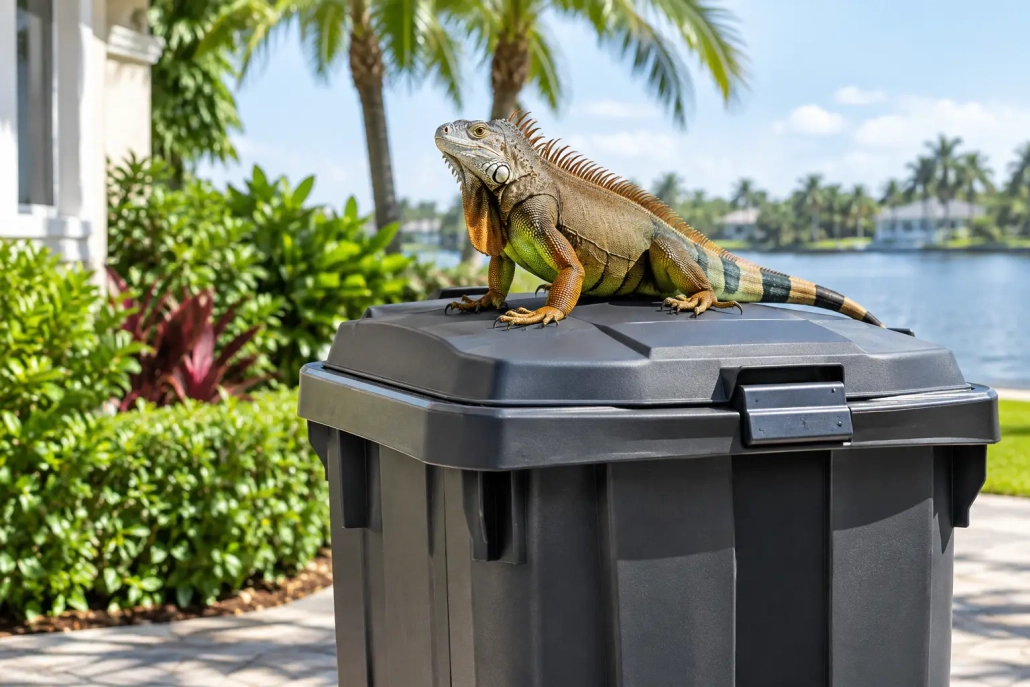
Best Iguana Proof Trash Bins for South Florida
A trash can tipped over beside the pool deck is more than an ugly cleanup. In South Florida, open food waste can draw iguanas into the same areas where they burrow near walkways, seawalls, landscaping, HVAC equipment, and foundations. The best iguana proof trash bins do not just hide garbage. They reduce easy access, limit repeat visits, and help keep a nuisance wildlife problem from getting worse.
Iguanas are strong climbers and persistent scavengers. A lightweight can with a loose lid may be easy for them to investigate, especially when it contains food scraps, pet food packaging, fruit peels, or takeout containers. A better bin is one part of protecting the property. It will not remove an established iguana population, but it can take away one reason they keep returning.
What Makes a Trash Bin Iguana Proof?
No outdoor trash bin is completely iguana-proof if it is left open, overfilled, damaged, or placed where an animal can knock it down. The goal is to make access difficult enough that iguanas move on instead of treating your garbage area like a dependable food source.
Start with the lid. A lid needs to close tightly and stay closed when the bin is bumped or tipped. Simple flip-top lids often leave gaps around the edge and can pop open under pressure. Look for a bin with a latching lid, a molded locking mechanism, or a lid that can be secured with a compatible strap or lock.
Material matters too. Heavy-duty plastic bins are often practical for homes, but thin plastic cracks in the Florida sun and becomes easy to damage. For commercial properties, marinas, restaurants, multifamily communities, and high-traffic common areas, metal dumpster enclosures or heavy commercial containers usually hold up better. They also make it harder for a large iguana to climb into waste through a broken side panel or warped lid.
The bin itself should be stable. A tall, narrow can may be convenient, but it is easier to tip than a wide-based container. Wheels are useful on collection day, yet bins should be stored where they cannot roll, lean, or get pushed against a wall that gives wildlife an easier route to the top.
The Best Iguana Proof Trash Bins by Property Type
The right setup depends on where the waste is generated and how much of it you handle. A homeowner with one curbside cart does not need the same equipment as a condo association, golf course clubhouse, or waterfront restaurant.
For single-family homes
A heavy-duty curbside cart with an attached lid and a secure latch is usually the best starting point. Choose a cart with thick walls, a wide wheelbase, and a lid that sits flat without visible gaps. If your current cart has no latch, a weather-resistant bin strap can help keep the lid shut between collection days.
Keep food waste bagged before it goes outside. This will not stop every iguana from investigating, but it reduces odors and loose scraps if the container is disturbed. Do not leave garbage bags on the ground beside a full cart. That is an open invitation for iguanas, rats, raccoons, and other nuisance wildlife.
For pool decks, patios, and outdoor kitchens
Use a smaller, weighted receptacle with a self-closing or latching lid. Open-top decorative trash cans look clean until wind, guests, or wildlife scatter the contents across the patio. A covered can with an internal liner is easier to maintain and less likely to become a feeding spot.
Avoid placing it directly beside dense hedges, stacked patio furniture, or a low wall. Iguanas use cover and climbing points. Give the bin some clear space so there are fewer easy approaches and fewer places for reptiles to hide after feeding.
For commercial and multifamily properties
Commercial sites need a system, not just a better can. Large dumpster lids should close fully, and broken plastic lids, bent hinges, and gaps around enclosure gates should be repaired quickly. If a dumpster enclosure has a wide opening under the gate, it can become a regular access point for wildlife.
Keep the enclosure clean. Leaking bags, loose cardboard with food residue, and overflowing waste create a dependable feeding station. For restaurants, marinas, and facilities with outdoor dining, frequent waste pickup may be worth the cost during busy seasons. One overflowing weekend can establish a pattern that is hard to break.
Features Worth Paying For
When comparing the best iguana proof trash bins, skip the marketing language and inspect the parts that actually matter. A secure lid, durable body, stable base, and easy cleaning surface are the priorities.
A latch is more useful than a tight-fitting lid alone. Look for hardware that is simple enough for staff or family members to use correctly every time. A complicated locking system often gets left open when people are in a hurry.
Smooth interior walls also help. Food residue collects in ridges, cracks, and damaged corners, creating odors that attract wildlife. A bin that can be rinsed out easily is more likely to stay sanitary. For properties with repeated wildlife activity, line the bottom with a heavy garbage bag and clean spills as soon as they happen.
Do not overlook UV resistance. South Florida heat can make cheap plastic brittle fast. If the lid no longer sits level or the hinge has cracked, the bin is no longer doing its job. Replacing one damaged cart is cheaper than dealing with a recurring mess next to a guest area, pool, or building entrance.
Placement Matters as Much as the Bin
Even a strong bin can fail when it is stored in the wrong place. Keep trash containers on a flat, solid surface instead of mulch, grass, or loose gravel. A stable pad makes the bin harder to tip and makes droppings, spills, and other sanitation problems easier to spot.
Store bins away from seawalls, canal edges, drainage areas, and known burrows whenever possible. Those are common travel routes and shelter areas for iguanas. If you have a choice, put the bin closer to a well-lit, active part of the property rather than behind a shed or at the edge of thick vegetation.
Do not wedge a bin against a fence, AC unit, or wall. That can create a climbing route to the lid. Keep the surrounding area clear of boxes, yard debris, fallen fruit, and unsecured pet food. The bin may be the visible target, but the overall food source is what keeps wildlife interested.
A Locked Trash Can Will Not Fix an Active Infestation
Trash control is prevention, not removal. If iguanas are already living under a deck, digging around a seawall, nesting near a foundation, or gathering around a commercial waste area, a better bin alone will not solve the problem.
Watch for fresh burrows, claw marks, droppings, damaged landscaping, or repeated sightings at the same time of day. Iguana droppings can carry salmonella, so do not sweep them into a patio drain or handle them without gloves. Keep children and pets away from active burrows and from wildlife around the trash area.
Trying to corner or grab a large iguana can lead to injury and usually sends the animal deeper into cover. Professional removal addresses the animals already on the property while you correct the conditions that encourage them to return.
Protect the Waste Area Before It Becomes a Bigger Property Problem
For a home, that may mean replacing a cracked cart, securing the lid, and moving the bin away from a burrow zone. For a business or managed property, it may mean inspecting dumpster lids, training staff not to leave bags outside, and scheduling regular cleanup around enclosures.
If iguanas are repeatedly feeding, nesting, or burrowing near your waste area, Florida Iguana Ops can help identify the activity and remove the nuisance animals safely. The goal is straightforward: protect the property, stop the repeat traffic, and keep a garbage problem from turning into damage to decks, landscaping, equipment, or waterfront infrastructure.
A secure trash bin is a simple upgrade, but it works best when it is part of a property that gives iguanas fewer reasons to stay.



Leave a Reply
Want to join the discussion?Feel free to contribute!