
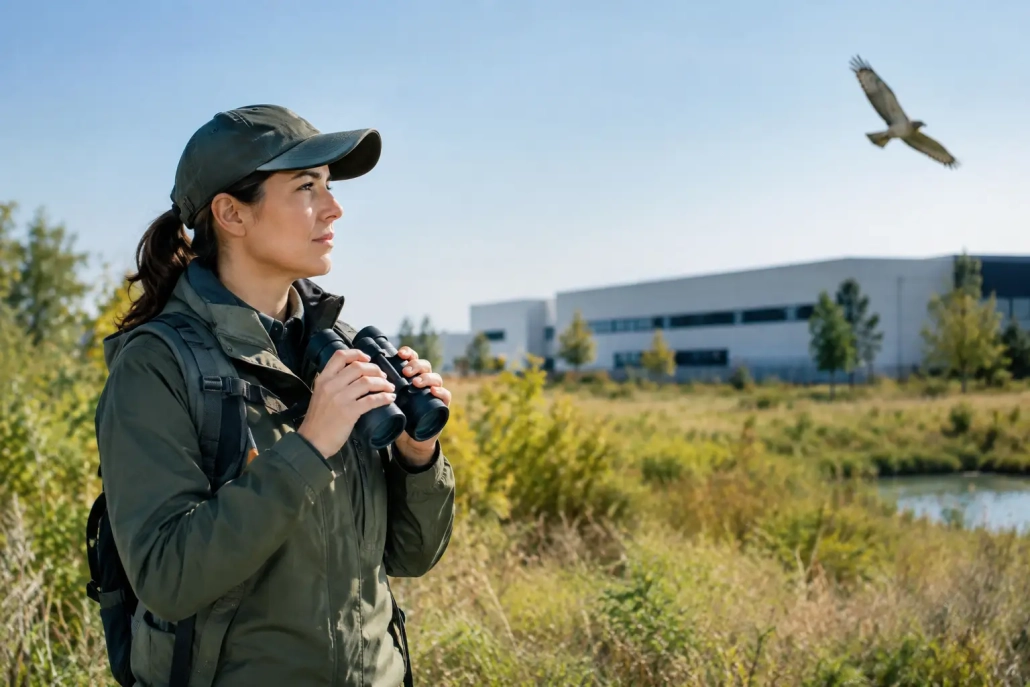
Commercial Wildlife Assessment: Protect Your Site
A burrow beside a seawall, droppings near a customer entrance, or iguanas gathering around rooftop equipment can look like separate maintenance problems. They are often signs of one active issue that needs a clear look at the whole property. A commercial wildlife assessment identifies where invasive iguanas and nuisance wildlife are active, what they are damaging, and what needs attention before a manageable problem turns into an expensive repair.
For South Florida property managers, marina operators, golf-course teams, and business owners, the goal is not paperwork. The goal is to protect the site, keep guests and employees safe, and stop damage from growing while operations continue.
What a Commercial Wildlife Assessment Looks For
A proper assessment starts with the areas wildlife uses most, not just the place where an animal was last seen. Iguanas move between food sources, sunning areas, water access, landscaping, drainage routes, and cover. On a commercial property, those paths can run through high-value infrastructure.
The inspection looks for active iguana activity, established burrows, droppings, nesting areas, damaged plant material, and access points around buildings and equipment. It also considers the property layout. A waterfront site has different pressure points than a shopping center, hotel, apartment community, or golf course.
The point is to separate a one-time sighting from an active population using the property. One large iguana on a walkway may be a visible nuisance. Several burrows near a retaining wall or recurring activity around a mechanical area is a property-protection concern.
Burrows and structural exposure
Iguanas dig. That is the issue commercial properties cannot afford to ignore. Their burrows can undermine soil around seawalls, foundations, sidewalks, pool decks, driveways, retaining walls, and drainage features. The damage may not be obvious from the surface at first.
A small opening in landscape mulch can lead to a much larger cavity below grade. Near water, repeated burrowing can contribute to erosion and instability around seawalls and banks. Near paved areas, soil loss can create settlement, cracking, or trip hazards. If the site already has aging infrastructure, the risk can be higher.
An assessment documents where burrows are located, whether they appear active, and how close they are to assets that matter. That helps a manager prioritize action instead of guessing which holes can wait and which ones need immediate attention.
Sanitation and public-facing areas
Iguana droppings are more than an appearance problem. They can create slippery walkways, foul odors, and sanitation concerns in areas used by customers, residents, guests, and staff. Reptiles can carry salmonella, so waste around patios, pool areas, docks, outdoor dining spaces, playgrounds, and entryways deserves a prompt response.
Commercial properties also have a reputation to protect. Guests do not see a wildlife-management issue when they step around droppings near a lobby or find a large iguana beside a pool. They see a property that is not being maintained. A professional assessment identifies those visible pressure points before complaints stack up.
Equipment, landscaping, and operations
Invasive iguanas can damage more than turf and ornamental plants. They may shelter around HVAC equipment, utility areas, dock structures, storage zones, and landscape beds that provide cover and warmth. Their feeding can strip valuable landscaping quickly, especially at properties that invest heavily in curb appeal.
The assessment also looks at operational friction. Can wildlife activity interfere with grounds crews? Is it creating a hazard for a technician working near equipment? Are employees repeatedly trying to handle animals themselves? Those details matter because a problem that interrupts work is already costing the business money.
Why a Site Walk Is Better Than a Quick Quote by Phone
A phone call is a good first step, especially when there is urgent activity. But commercial wildlife pressure is rarely the same across an entire property. Two buildings a few blocks apart can have very different risks based on water access, vegetation, traffic patterns, construction gaps, and available shelter.
A site assessment gives the property manager a practical picture of the conditions on the ground. It helps answer the questions that actually affect the plan: Where are the animals entering? Which areas are active now? Is there evidence of repeated burrowing? What assets are closest to damage? Can removal be completed without disrupting customers, tenants, golfers, boaters, or staff?
That last question matters. A well-run commercial job should account for the way the property operates. A marina may need work coordinated around dock access. A golf course may need attention focused away from play. A retail or hospitality site may need service planned around peak customer hours. There is no one-size-fits-all approach, and anyone promising one before seeing the site is not giving you the full picture.
What Happens After the Assessment
The assessment should lead to a straightforward plan, not a vague recommendation. The priority is typically active iguana removal in the areas creating the greatest risk, followed by steps to reduce the conditions that keep drawing animals back.
That can include addressing active burrows before they expand, reducing accessible food sources, clearing cover in targeted areas, and identifying openings or landscape features that make a location easy for iguanas to use. Property changes need to make sense for the site. Removing every bit of vegetation is not realistic for a resort, golf course, or landscaped office campus. Targeted changes are usually more practical and more effective.
Removal also needs to be handled lawfully and safely. Commercial teams should not ask maintenance staff, security guards, or tenants to deal with large iguanas on their own. That can create injury risk, animal-handling issues, and liability concerns. A licensed and insured wildlife-control provider can handle the work with the right equipment and a clear plan.
When to Schedule an Assessment
Do not wait for obvious structural failure. Call for a commercial wildlife assessment when you see recurring iguanas in one area, fresh burrows near hardscape or water, repeated droppings around guest spaces, damaged landscaping, or wildlife activity near HVAC and utility equipment.
It is also smart to schedule an inspection before a major maintenance project. If a property is repairing a seawall, replacing pavers, renovating a pool deck, or reworking landscaping, existing burrows and wildlife traffic should be identified first. Fixing the surface without dealing with the activity underneath can lead to repeat damage.
For properties that deal with recurring pressure, seasonal monitoring may make sense. South Florida iguana activity does not always announce itself with one dramatic event. It often builds gradually, then becomes urgent after burrowing, waste, or landscape loss reaches a point that can no longer be ignored.
Choose Clear Answers, Not Guesswork
The right provider should explain what was found in plain language. You should know where the problem is, what it threatens, what work is recommended, and why. You should not get scare tactics, mystery pricing, or a rushed plan that ignores the way your property runs.
Florida Iguana Ops approaches commercial sites as property-protection jobs. That means showing up on time, identifying the real pressure points, and doing the removal work with care for the people and infrastructure on site. Whether the concern is a marina seawall, a pool deck, a landscaped entrance, or a busy outdoor common area, the job is to stop the damage before it becomes the next emergency repair.
A clean, well-managed property sends a message long before anyone walks through the door. If wildlife activity is starting to change that message, getting a professional set of eyes on the site is a practical place to start.



Leave a Reply
Want to join the discussion?Feel free to contribute!