
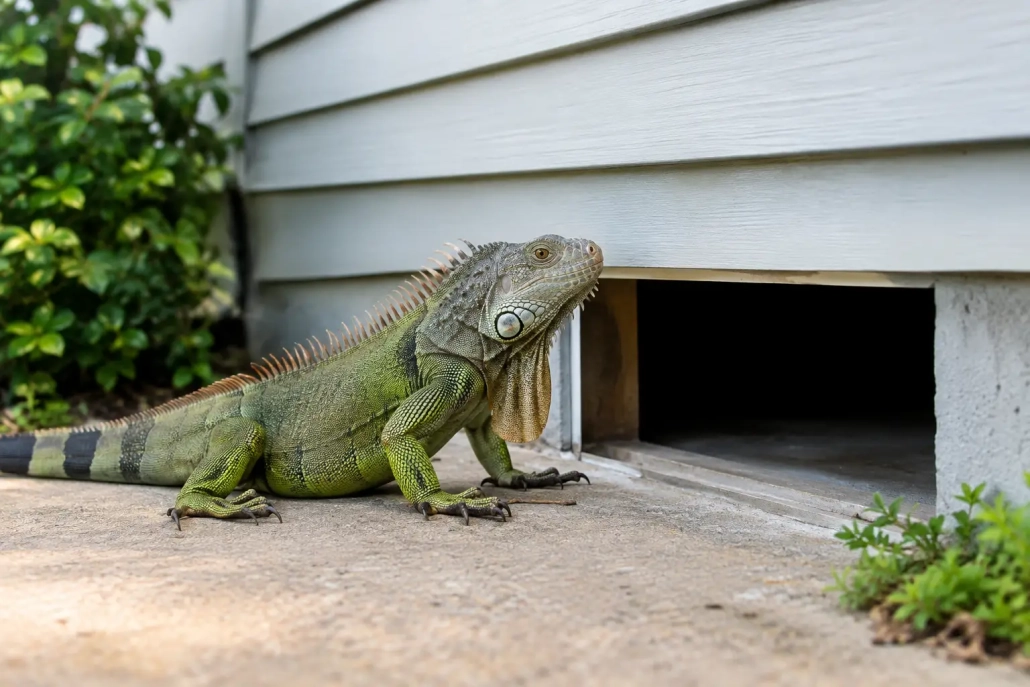
How to Stop Iguanas Entering Crawlspaces
A crawlspace is supposed to protect the underside of your property, not become shelter for invasive reptiles. If you need to stop iguanas entering crawlspaces, act before a small opening turns into a regular den site. Iguanas look for dry, shaded cover close to food, water, and warm surfaces. Once they find an easy way under a home, pool structure, office, or elevated building, they may return repeatedly.
The issue is bigger than a lizard under the floor. Iguanas can leave heavy droppings, contaminate surfaces with bacteria such as salmonella, damage insulation, chew or disturb vulnerable materials, and dig around the structure. In South Florida, a recurring iguana problem can also signal that openings, drainage issues, or landscape conditions need attention.
Why Iguanas Move Into Crawlspaces
Crawlspaces offer what iguanas want most: concealment. A gap in latticework, a loose vent cover, an opening around utility lines, or erosion beneath a slab can give them access without much effort. The space stays cooler during hot weather, blocks wind and rain, and keeps them out of sight from people and many predators.
Properties near canals, marinas, golf courses, lakes, and dense tropical landscaping tend to see more activity, but iguanas can turn up anywhere there is cover and a food source. Fallen fruit, pet food left outdoors, bird feeders, vegetable gardens, and accessible water can all keep them nearby.
A crawlspace also becomes more attractive when the surrounding ground is soft or poorly managed. Iguanas are capable diggers. They may expand an existing void or burrow near the perimeter, particularly where soil has washed out around a foundation, retaining wall, deck support, or utility penetration.
Signs You Have an Iguana Under the Structure
Do not wait until you see an iguana coming and going in broad daylight. By then, the animal may already have an established route beneath the building. Look along the crawlspace perimeter for fresh soil, disturbed mulch, drag marks, droppings, or openings that appear wider than they used to be.
Iguana droppings are often dark, tubular, and may have a lighter urate portion. They can be confused with waste from other animals, so the full picture matters. Repeated droppings near a vent, gap, or lattice panel are a strong clue that an animal is using that access point.
You may also notice scraping sounds, a musky odor in an enclosed area, damaged screening, or soil pushed out from beneath skirting. At commercial properties, inspect less obvious areas too, including equipment pads, storage buildings, raised walkways, clubhouse foundations, dock structures, and service corridors near HVAC systems.
Do Not Seal the Opening Too Soon
The most common mistake is closing the visible entry hole before confirming the crawlspace is empty. Sealing an iguana inside can create a worse problem. The animal may scratch through another weak point, become trapped, die beneath the structure, or leave you with an odor and sanitation issue that is much harder to address.
A proper exclusion job begins with an inspection. The goal is to identify active entry points, determine whether iguanas are currently inside, and find the conditions drawing them to the property. One visible gap is rarely the only concern. An animal that can enter through loose skirting may also be using a vent opening or a washed-out spot several feet away.
Active removal should come before final sealing. This is also the point where professional help matters. Handling an invasive reptile in a cramped crawlspace can be unsafe, especially when there are electrical lines, damaged supports, standing water, or limited access. A trained wildlife-control professional can remove the animal safely and then focus on keeping the area closed off.
Stop Iguanas Entering Crawlspaces With Proper Exclusion
After removal, secure every realistic access route, not just the one where the iguana was seen. The right materials depend on the structure. A raised home with decorative lattice needs a different approach than a commercial building with foundation vents and utility lines.
Use durable, corrosion-resistant hardware cloth or welded wire mesh where ventilation is needed. The mesh should be firmly fastened to framing or masonry, not loosely placed over an opening where an animal can push underneath it. Plastic garden fencing, lightweight screen, and unsecured lattice are usually temporary at best. They may look fine from a distance but will not hold up to weather, digging, or repeated animal pressure.
For gaps beneath skirting, the barrier should extend into the ground or be set in a way that prevents digging under it. The needed depth depends on soil conditions, drainage, and the shape of the perimeter. In sandy South Florida soil, a shallow, loose barrier can become exposed quickly after rain.
Pay close attention to these problem areas:
- Foundation vents with torn or missing covers
- Gaps around plumbing, conduit, and AC lines
- Loose lattice, soffit panels, or skirting sections
- Eroded soil beneath slab edges and deck steps
- Openings around access doors and utility hatches
Exclusion should not block required airflow, drainage, or service access. That is why a quick patch is not always the right fix. Closing a vent completely, for example, can create moisture problems beneath a building. A secure vent guard can keep animals out while allowing the space to function as intended.
Clean Up the Crawlspace Safely
Once iguanas are removed and the openings are secured, handle the waste and debris carefully. Do not sweep dry droppings or kick them into the air. Disturbing contaminated material can spread dust and bacteria where you do not want it.
Wear gloves and appropriate protective gear, lightly dampen affected material if needed, and remove waste according to safe cleanup practices. Hard surfaces can be cleaned and disinfected. Insulation, vapor barriers, or stored materials that are heavily contaminated may need replacement rather than a surface wipe-down.
If the crawlspace has standing water, persistent moisture, or drainage failure, solve that issue too. Wet ground and washed-out soil can undermine exclusion work and create conditions that attract other nuisance wildlife. A clean, dry, properly maintained crawlspace is easier to inspect and far less inviting to animals.
Make the Area Less Attractive From the Outside
Exclusion handles the entry point, but the property around it still matters. Trim back dense vegetation that touches or crowds the structure. Remove fallen fruit promptly, secure garbage, and avoid leaving pet food outdoors. If bird feeders are drawing iguanas to a specific area, move them away from the building or reconsider their placement.
Landscape choices involve trade-offs. Thick ground cover and ornamental plantings may look good, but they can hide burrows and give iguanas protected travel lanes. You do not need to strip your yard bare. The practical goal is a visible perimeter where you can spot droppings, soil disturbance, and new gaps early.
Inspect after major rainstorms as well. Heavy rain can shift sand, expose old holes, loosen panels, and create new access under decks or foundation edges. A five-minute walk around the structure can catch a small issue before it becomes a repeat infestation.
When to Call for Professional Iguana Removal
Call for help when you see active iguana traffic, find a burrow near structural supports, discover heavy droppings, or cannot safely inspect the crawlspace yourself. It is especially worth bringing in a professional if the area is near a seawall, pool deck, foundation, electrical equipment, or commercial operation where damage and downtime carry real costs.
Florida Iguana Ops provides local, straightforward removal and exclusion support for South Florida property owners who need the job done right. No gimmicks and no runaround: remove the active problem, identify how the animal got in, and secure the area before it becomes a repeat issue.
A crawlspace should stay dry, accessible, and animal-free. Take care of the first signs of entry now, and you protect more than the space under the building. You protect the structure, the people using the property, and your ability to avoid a much more expensive repair later.



Leave a Reply
Want to join the discussion?Feel free to contribute!