
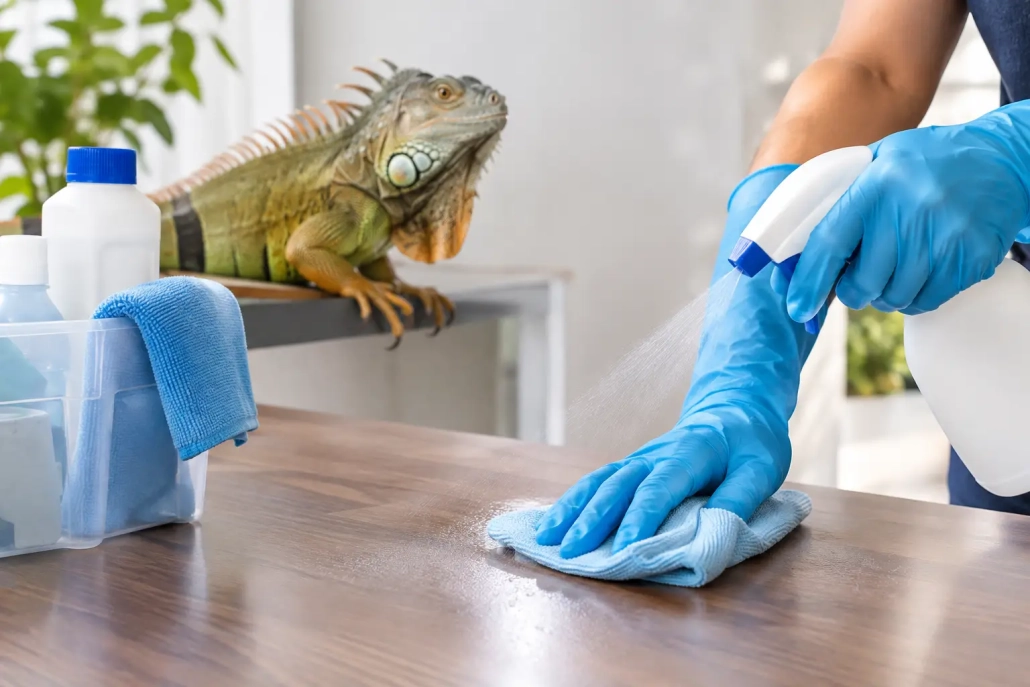
How to Sanitize Iguana-Contaminated Surfaces
Iguana droppings on a pool deck, patio, dock, walkway, or air-conditioning pad are more than an ugly cleanup job. To sanitize iguana-contaminated surfaces correctly, you need to remove the waste without spreading it, disinfect the area with the right product, and stop the animals from returning to leave more behind. That matters in South Florida, where iguanas often gather around pools, waterfront properties, landscaped common areas, and commercial equipment.
Their droppings can carry germs, including Salmonella. The risk is higher where children, pets, customers, guests, or food-service staff may touch the same surfaces. A quick rinse with a hose may make the mess disappear, but it can also spread contaminated material across the deck, into drains, or onto nearby furniture.
Start With Safety, Not a Hose
Do not sweep or dry-scrub iguana droppings. Dry waste can break apart and spread dust onto your hands, shoes, nearby surfaces, and the air around the cleanup area. Keep children, pets, and bystanders away until the work is finished.
Put on disposable gloves before you touch waste, nesting material, shed skin, or soil from an active iguana area. Closed-toe shoes are a smart choice around heavily used patios, marinas, seawalls, and mechanical yards. If droppings are dry, plentiful, or in an enclosed space, wear a well-fitting mask and eye protection as well.
Have these supplies ready before you begin:
- Disposable gloves and a trash bag
- Paper towels or disposable absorbent material
- A plastic scraper or scoop you can disinfect afterward
- Household detergent and water
- An EPA-registered disinfectant labeled for the surface and use area
- A clean cloth or disposable towels
Read the disinfectant label before using it. The product must remain wet on the surface for its listed contact time to do its job. Spraying and immediately wiping it away is one of the most common cleanup mistakes.
How to Sanitize Iguana-Contaminated Surfaces Step by Step
Start by lightly wetting droppings with disinfectant or soapy water. The goal is to keep material from becoming airborne, not to blast it across the property. Use paper towels or a scoop to pick up the waste, then place everything used for cleanup into a sealed trash bag.
Next, clean the surface with soap or detergent and water. Disinfectants work best after visible dirt, feces, and residue are gone. Pay attention to cracks in pavers, textured concrete, grout lines, chair legs, pool-equipment pads, and the underside of outdoor furniture. Iguana waste can collect where a quick visual check misses it.
Apply the disinfectant according to its label directions, including the required wet contact time. Afterward, rinse only if the product label calls for it or if the surface will be touched by children, pets, bare feet, or food-related items. Let the area dry completely before reopening it for normal use.
Finish by removing gloves carefully and washing your hands thoroughly with soap and warm water. Hand sanitizer is not a replacement for washing after handling animal waste. Clean and disinfect reusable tools, then store them away from food-prep items, pool toys, and pet supplies.
Different Surfaces Need Different Cleanup Methods
Concrete, pavers, tile, and sealed pool decks are usually straightforward because they are nonporous. Clean the visible mess first, disinfect, and give the product enough contact time. Avoid using high-pressure water on contaminated areas unless the waste has already been removed. Pressure washing too early can spray contaminated debris onto walls, windows, furniture, landscaping, and anyone nearby.
For outdoor cushions, rugs, unfinished wood, mulch, soil, and other porous materials, the answer depends on how heavily contaminated the material is. Small, isolated droppings may be carefully removed and the item cleaned according to its care instructions. Heavily soiled cushions, fabric, or loose decorative material may need to be discarded. Trying to save every contaminated item can cost more in time and risk than replacement.
Pool water is a separate issue. A single dropping on the deck does not mean the pool needs to be drained. But if feces entered the water, keep swimmers out and address the situation using a pool professional’s sanitation guidance. Do not assume normal chlorine levels automatically solve every contamination problem right away.
For marinas and waterfront properties, do not hose waste directly into the water. Collect solids first, then clean the hard surface using products appropriate for the area. Runoff can create its own sanitation and environmental problem.
Do Not Forget the Places Iguanas Hide
The visible droppings are often only part of the problem. Iguanas favor sunny, protected spots near water, retaining walls, seawalls, landscaping, sheds, docks, and air-conditioning equipment. Look behind pool pumps, under decks, around storage areas, and along fence lines.
If iguanas have been nesting or burrowing near the property, avoid stepping into soft ground or trying to fill an active burrow without checking the situation. Burrows can undermine walkways, patios, driveways, seawalls, and building foundations. At a commercial site, that creates liability as well as repair costs.
Cleaning the droppings without addressing the animals is a short-term fix. Fresh waste on a newly cleaned patio usually means the property is part of an established feeding, basking, or shelter route. Recurring droppings near an HVAC pad can also signal a bigger concern, since iguanas may damage wiring, insulation, and equipment components.
When a Professional Cleanup and Removal Makes Sense
A homeowner can handle a small amount of waste on a hard, open surface with basic protective measures. The job changes when there is widespread contamination, repeated activity, an active nest or burrow, damaged property, or waste in a high-traffic business area.
Property managers, golf courses, marinas, restaurants, and multifamily communities have another concern: consistency. Staff should not be left to guess how to handle animal waste near guest areas, pools, walkways, playgrounds, or mechanical equipment. A documented professional response helps protect the property, its visitors, and the people expected to maintain it.
Florida Iguana Ops handles invasive iguana removal with the practical goal of protecting the property after cleanup. Removing the animals from the active area helps reduce repeat droppings, new burrowing, landscape damage, and the ongoing cycle of cleaning the same spots every week. Licensed and insured local service also means you do not have to figure out wildlife handling rules or put your maintenance team in a bad position.
Keep the Area From Becoming an Iguana Stop Again
After sanitizing, make the area less attractive. Pick up fallen fruit, secure trash, avoid leaving pet food outdoors, and reduce easy hiding places around sheds, decks, and equipment. Repair damaged screens or access points where practical. These steps can help, but they will not solve an established infestation on their own.
Watch for fresh droppings, new digging, claw marks, disturbed mulch, and iguanas using the same travel path at the same time of day. Those details help identify where removal efforts need to focus. On waterfront homes and commercial properties, early action is usually less expensive than waiting until burrows compromise a seawall, pool deck, or walkway.
A clean surface is worth protecting. If you are seeing fresh iguana waste after every cleanup, treat it as a property-control problem, not just a housekeeping problem, and get the activity handled before the damage and sanitation concerns spread.



Leave a Reply
Want to join the discussion?Feel free to contribute!