
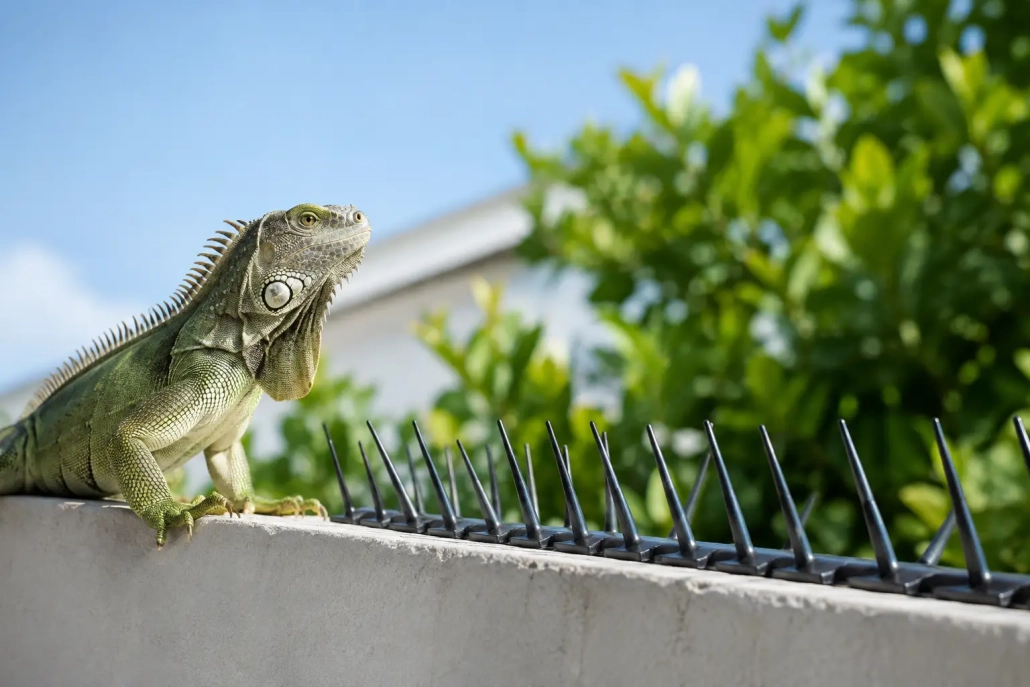
Iguana Deterrence That Protects Your Property
A few iguanas on a seawall, pool deck, or landscaped wall can turn into a property problem faster than most owners expect. Effective iguana deterrence is not about chasing one reptile out of sight. It is about stopping invasive iguanas from feeding, nesting, burrowing, and returning to the places that cost the most to repair.
In South Florida, green iguanas are established invasive reptiles. They are drawn to sunny hardscapes, dense landscaping, ornamental plants, canal edges, rooflines, and areas with easy access to food or shelter. Once they decide your property works for them, a hose spray or a plastic owl is rarely enough to change their behavior for long.
The right approach starts with understanding what is attracting them, removing active animals safely and legally, then making the site less inviting for the next one. That matters whether you manage a single-family home in Boca Raton, a marina, a golf course, a commercial building, or a multi-unit community with miles of landscaping and vulnerable infrastructure.
Why Iguana Deterrence Is a Property Protection Issue
Iguanas do more than eat flowers. Their digging and droppings can create costly, unsanitary conditions around the parts of a property people rely on every day.
Burrows are one of the biggest concerns. Iguanas dig into canal banks, seawalls, slopes, retaining areas, pool decks, driveways, sidewalks, and foundation-adjacent soil. A small opening may not look urgent, but repeated tunneling can remove support beneath concrete or weaken soil around a structure. On waterfront properties, burrowing near a seawall deserves quick attention. Waiting until a void grows or a section begins to shift can turn a manageable wildlife issue into a major repair.
Droppings create another problem. Iguana waste can collect on docks, patios, outdoor furniture, walkways, pool areas, roofs, and mechanical equipment. Besides being unpleasant for residents, guests, and employees, droppings may carry salmonella. That is a sanitation concern around children, pets, dining areas, and any shared commercial space.
Landscaping is often where the damage becomes most visible. Iguanas feed on many ornamental plants, fruits, vegetables, blooms, and tender new growth. They can strip a carefully maintained garden, damage irrigation lines while digging, and leave behind trampled beds that need repeated replacement. For a property manager, those recurring landscape costs add up quickly.
Commercial and industrial sites face another layer of exposure. Iguanas can shelter around equipment, enter protected exterior spaces, and foul HVAC units or rooftop areas. A removal plan needs to account for operations, employee safety, customer access, and the condition of the surrounding property – not just the animal seen that day.
What Actually Works for Iguana Deterrence
There is no single deterrent that works on every property. The best results come from combining professional removal with site-specific prevention. What works at a waterfront estate may not be the right answer for a restaurant patio, a golf-course pond, or a warehouse loading area.
Start by Removing Active Iguanas
Deterrents have limited value when established iguanas are still using the property as a food source, nest site, or shelter. If there are active burrows, regular sightings, fresh droppings, or visible damage, removal should come first.
This is where many property owners lose time. They install barriers or change landscaping while the same adult iguanas remain nearby. Those animals already know the access points and may simply move to another section of the property. Professional removal addresses the immediate population before prevention measures are asked to do the long-term work.
Safe, lawful removal also matters. Wildlife rules can be confusing, and handling a large iguana can lead to bites, scratches, tail strikes, or an animal escaping into a harder-to-reach area. A licensed and insured local operator can assess the site, remove nuisance iguanas responsibly, and identify the conditions bringing them back.
Remove the Easy Food Sources
Iguanas are opportunistic. If a property offers ripe fruit, accessible vegetables, pet food, birdseed, or plants they prefer to eat, it becomes part of their routine.
Pick up fallen fruit promptly and avoid leaving pet food outdoors. Bird feeders can also create a feeding opportunity when seed accumulates underneath them. Vegetable gardens may need physical protection, especially during periods when young plants are vulnerable. On commercial properties, make sure outdoor trash areas are secured and routinely cleaned.
Landscaping choices can help, but they are not a guaranteed fix. Some plants are less appealing to iguanas than others, yet a hungry or established animal may still test them. Think of plant selection as one part of deterrence, not a substitute for removal and exclusion.
Close Off Shelter and Burrowing Areas
Iguanas look for protected places to rest, hide, and nest. Dense ground cover, debris piles, open voids beneath decks, gaps around equipment pads, and loose soil along walls or banks can all make a property more attractive.
Once professionals confirm a burrow is inactive and it is appropriate to close, the area should be filled and stabilized correctly. Simply covering a hole without addressing the tunnel or surrounding soft soil may not solve the issue. The iguana may reopen it, or another animal may begin digging beside it.
Exclusion work should be matched to the site. A barrier around a garden bed is different from protection needed around a pool enclosure, dock area, HVAC equipment, or building access point. The goal is to block easy entry without creating drainage problems, maintenance headaches, or hazards for people using the property.
Use Scare Tactics Only as a Short-Term Layer
Motion-activated sprinklers, visual decoys, noise devices, and occasional water spraying may make an iguana leave temporarily. They can be useful as a short-term supplement in a small, manageable area. But iguanas often become accustomed to predictable devices, especially if food and shelter remain available.
That is the trade-off with most store-bought deterrents: they are inexpensive to try, but they can create a false sense of security when an infestation is already established. If you are seeing daily activity, repeated burrows, or animals on roofs and seawalls, the issue has moved past simple scare tactics.
Warning Signs That It Is Time to Call for Help
A single sighting does not always mean you have a major infestation. But recurring activity should not be ignored. Watch for fresh holes near foundations, seawalls, sidewalks, and pool decks; droppings in the same areas each morning; chewed plants; disturbed mulch; and iguanas gathering on warm roofs, docks, or retaining walls.
Pay close attention after heavy rain. Rain can expose soft spots around burrows, reveal erosion, and make existing ground instability easier to spot. Waterfront and canal-side properties should treat new burrows near structural edges as a priority, not a weekend project.
For commercial managers, document where and when iguanas are seen. Repeated sightings near a specific HVAC unit, trash enclosure, patio, loading zone, or guest walkway often point to a repeat access route or shelter area. That information helps build a practical removal and prevention plan without disrupting normal operations more than necessary.
A Better Long-Term Plan for Your Property
The goal is not to make a property look like a fortress. It is to make it inconvenient for iguanas to stay while protecting the areas where their activity causes real damage. That usually means targeted removal, cleanup of food sources, attention to burrows and access points, and follow-up monitoring during the times of year when activity increases.
A property with a single fenced garden needs a different plan than a waterfront community with seawalls, common areas, and dense landscaping. Honest iguana control starts with that difference. No gimmicks, no one-size-fits-all promise – just a clear look at the damage risk and the steps needed to reduce it.
Florida Iguana Ops helps residential and commercial property owners address active iguana problems before burrows, waste, and repeated damage become more expensive. If iguanas are already making themselves at home on your property, acting early gives you more options and protects the structures you worked hard to maintain.



Leave a Reply
Want to join the discussion?Feel free to contribute!