
7 Best Seawall Burrow Warning Signs to Watch
A small hole near a seawall can turn into a much bigger waterfront problem. The best seawall burrow warning signs are not always dramatic at first, but they can point to iguanas tunneling into the soil that supports your wall, walkway, dock area, or pool deck.
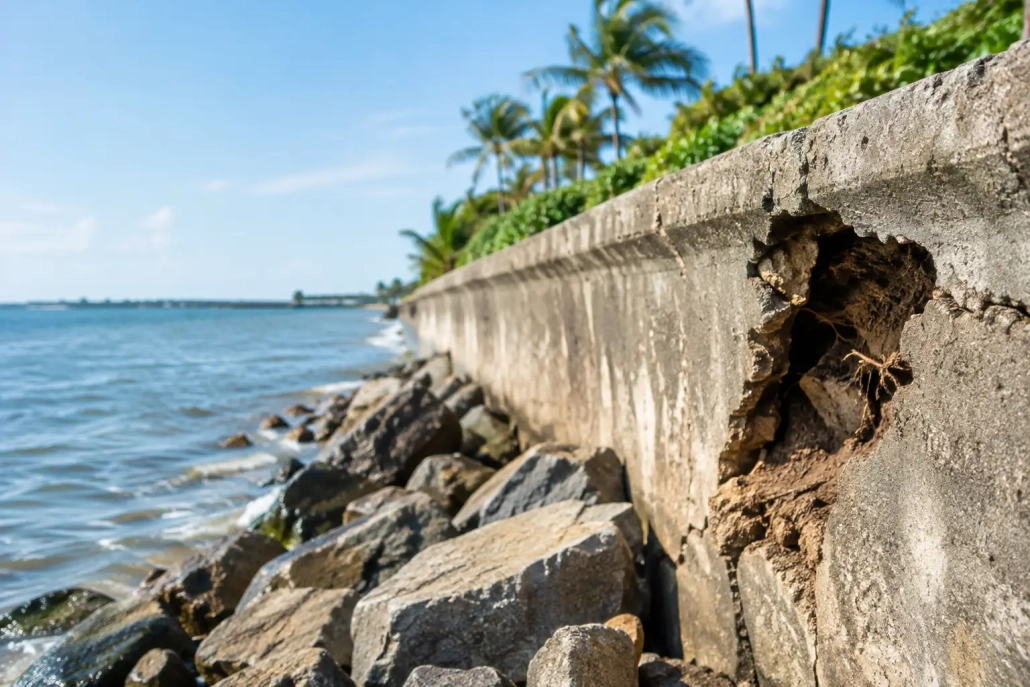
South Florida iguanas are strong, persistent burrowers. They use openings along seawalls and canal banks for shelter, nesting, and protection from weather. Left alone, repeated digging can remove soil where you need it most: behind a seawall and beneath hardscape. That is not a cosmetic issue. It can contribute to erosion, settling, cracks, trip hazards, and expensive repairs.
7 Best Seawall Burrow Warning Signs
1. Fresh holes at the base of the seawall
The clearest sign is an opening in the soil along the seawall, especially near the waterline or on the landward side of the wall. Iguana burrows are often wider than a typical rodent hole and may have loose, recently moved sand or dirt around the entrance.
One hole deserves attention. Several openings along the same stretch of wall suggest active use and a growing problem. Iguanas may return to familiar shelter areas, particularly where there is sun, nearby landscaping, food sources, and easy access to water.
Not every hole belongs to an iguana. Crabs, rats, and natural soil washout can also create openings. The concern is the pattern: larger holes, fresh excavation, iguana sightings, and repeated activity in the same area.
2. Loose soil or a sinking strip behind the wall
Burrows do not stay neatly contained at the entrance. Tunnels can extend behind the seawall, removing and loosening the soil that helps support the area above it. Watch for soft ground, a shallow depression, or soil that seems to have dropped along the wall.
This is one of the more serious seawall burrow warning signs because it may mean the damage is happening below the surface. A walkway, patio edge, fence post, or landscaped bed can begin to settle before the underlying void is obvious.
Do not assume soft soil will firm back up on its own. Heavy rain, irrigation, high water, and foot traffic can make a compromised area worse quickly.
3. Cracks in nearby concrete, pavers, or coping
A crack does not automatically mean an iguana caused it. Concrete moves for many reasons, including age, drainage, roots, and normal settling. But new cracks near active burrows should not be ignored.
Pay close attention when pavers separate, concrete starts to tilt toward a low spot, or a crack keeps widening over time. If the ground below a deck, walkway, or pool-area edge loses support, the hard surface above it may show the evidence.
Take photos as soon as you notice changes. Clear, dated photos help you track whether a crack is stable or getting worse, and they give a removal or repair professional a better picture of what is happening.
4. Soil washing out through joints or gaps
After a storm or a period of high water, inspect the seawall carefully. Soil washing through seams, weep holes, cracks, or gaps can be a sign of drainage trouble, erosion, or a void behind the wall. Burrowing activity can make that condition worse by creating more pathways for soil movement.
You may see sand at the base of the wall, a newly hollowed-out area behind it, or a section of landscaping that looks lower than it did before. These conditions call for prompt attention because seawall repairs can become far more involved once soil loss progresses.
Removal and structural repair are separate jobs, but they need to be coordinated. Filling a hole without addressing active iguanas can lead to the same burrow reopening. Removing iguanas without checking the affected ground can leave a hidden safety issue behind.
5. Repeated iguana traffic along the seawall
If you regularly see iguanas climbing out from the same area, moving along the wall, or disappearing into landscaping beside the canal, treat that as useful evidence. A single iguana passing through is different from a repeated route to and from one section of property.
Look for tracks in loose soil, droppings near the wall, claw marks, and flattened paths through groundcover. Iguanas are often active in warm, sunny conditions, so early morning and late afternoon checks can reveal patterns that are easy to miss during a quick walk outside.
Droppings create their own sanitation concern around docks, patios, pool areas, and places where children or pets spend time. Reptiles can carry salmonella, so avoid handling droppings or touching suspected burrow areas without gloves and proper handwashing.
6. Damaged landscaping close to the waterfront
Iguanas do not limit their damage to the seawall itself. They feed on many landscape plants, disturb mulch, knock over small plantings, and dig around roots. When landscaping damage appears next to burrows or soft soil, it often points to active reptile use of that part of the property.
A suddenly bare patch, displaced rock, chewed leaves, or a collapsed planting bed may seem minor. Near a seawall, though, it can be part of a bigger erosion issue. Landscaped areas help hold soil in place, and repeated digging weakens that protection.
Property managers should pay special attention to common areas and waterfront amenity spaces. A burrow behind a clubhouse patio, marina walkway, or golf-course path can create liability long before someone realizes what is underfoot.
7. A burrow that keeps coming back after being filled
A recurring hole is a strong signal that the source has not been handled. Homeowners sometimes fill an opening with dirt, gravel, or mulch, only to find it reopened days later. That may temporarily hide the issue, but it does not stop an active iguana from digging again.
It can also make inspection harder. If you cover a burrow without knowing whether an animal is inside or whether the ground has already been undermined, you may miss the extent of the problem. This is where professional assessment is worth it, especially near expensive waterfront infrastructure.
Why Seawall Burrows Need a Faster Response
Seawalls already face pressure from water, weather, soil movement, and age. Burrowing adds another weak point right where stability matters most. The risk depends on the wall’s condition, the soil type, the size and number of tunnels, recent rainfall, and what sits above the affected area.
A newer seawall with one shallow burrow is not the same as an older wall showing soil loss and settlement across several feet. Still, waiting until a section visibly fails is the costly approach. Early removal gives you a chance to stop active digging and have the site evaluated before repairs become an emergency.
For commercial properties, the stakes can be even higher. Marinas, multifamily communities, hotels, golf courses, and waterfront businesses have guests, employees, and vendors moving through these spaces every day. A soft edge near a dock or a sinking walkway is not something to put off until the next maintenance cycle.
What to Do When You Find a Suspected Burrow
Start by keeping people and pets away from soft ground, open holes, and visibly damaged edges. Do not probe deep into a burrow, pour chemicals inside, or try to force an animal out. Those actions can be unsafe, may worsen the tunnel, and can create legal or animal-handling issues.
Instead, document the location with photos and note any fresh soil, cracks, washout, or iguana activity. If there is an immediate safety concern, such as a collapsing edge, significant settlement, or a damaged walkway, restrict access and contact the appropriate seawall or structural repair professional right away.
Then arrange professional iguana removal to address the active source. Florida Iguana Ops provides local, licensed and insured removal focused on protecting South Florida homes, commercial properties, marinas, and outdoor infrastructure. No gimmicks and no runaround – just a practical plan to remove invasive iguanas and help you get ahead of recurring damage.
A burrow beside the water is never just a hole until proven otherwise. Catch it early, keep the area safe, and address the animals before another season of digging turns a manageable repair into a waterfront headache.



Leave a Reply
Want to join the discussion?Feel free to contribute!