
How to Protect HVAC From Iguanas in Florida
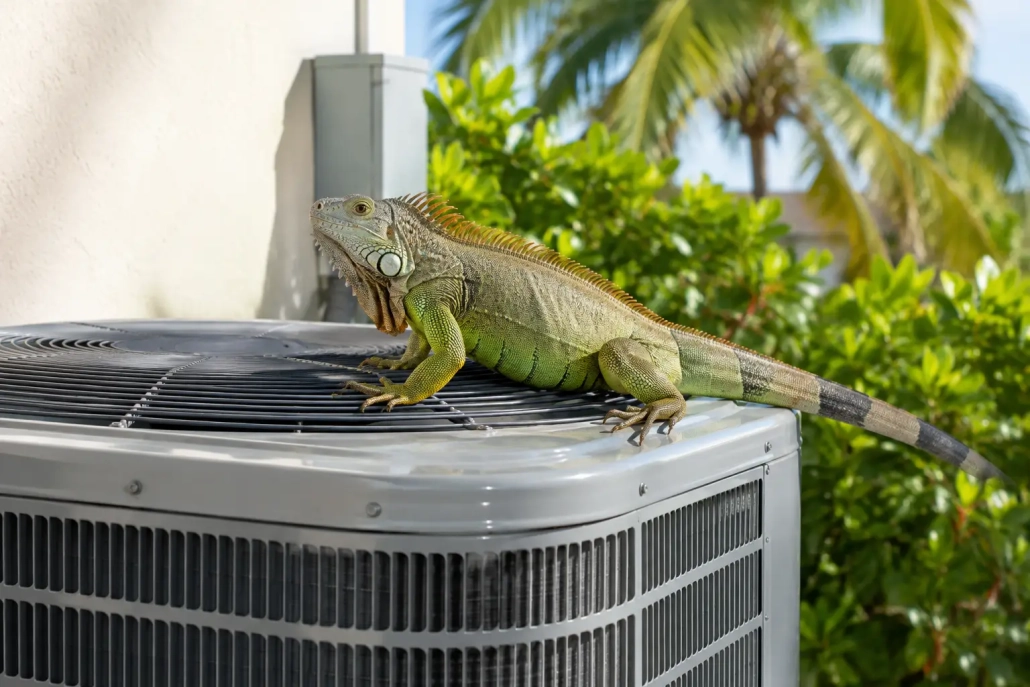
A condenser that suddenly stops cooling can be more than an HVAC problem. In South Florida, an iguana hiding beneath, behind, or inside equipment can leave droppings, block access panels, damage insulation, and create trouble around wiring and drain lines. To protect HVAC from iguanas, you need to address both the animals already using the area and the gaps that keep inviting them back.
Iguanas are invasive, strong, and comfortable around developed properties. Outdoor HVAC units give them shade, cover, warmth after dark, and a protected spot away from people and predators. On commercial sites, rooftop equipment areas and ground-level mechanical pads can offer the same shelter on a larger scale.
The goal is not to wrap your equipment in anything that restricts airflow. The goal is to remove the iguanas safely, clean up the area, and create a barrier that keeps them out without compromising the system.
Why Iguanas Target HVAC Equipment
A ground-level condenser often has exactly what an iguana wants: a solid pad, tight space beneath the unit, nearby landscaping, and protection from rain and direct sun. Larger iguanas may rest beside the unit or wedge themselves behind refrigerant lines. Juveniles can use surprisingly small openings around line sets, wall penetrations, or loose panels.
The risk increases when equipment sits beside dense shrubs, mulch beds, retaining walls, seawalls, or fence lines. Those areas give iguanas a travel route and cover as they move between water, food sources, burrows, and resting spots.
Rooftop HVAC systems are not automatically safe, either. Iguanas can climb walls, trees, pipes, and structural features to reach elevated areas. Once they find a quiet mechanical space, droppings and repeated activity can turn a small maintenance issue into a sanitation and access problem.
What Iguanas Can Damage Around an HVAC Unit
Iguanas do not cause damage in the same way rodents do. They are not known for constantly chewing wires. Their size, waste, burrowing behavior, and habit of forcing their way into sheltered spaces are the bigger concerns.
Droppings are often the first sign. Iguana waste around a condenser pad, disconnect box, or rooftop unit is unsanitary and can attract flies and other pests. It can also make routine service unpleasant and unsafe. Iguanas and their droppings may carry salmonella, so this is not something to casually hose down or sweep up without proper precautions.
Their weight can also damage vulnerable components. A large iguana climbing across lines, insulation, low-mounted disconnects, or lightweight protective panels can loosen or crack parts that were never meant to support it. If an animal gets into an electrical compartment or causes debris to collect near moving parts, you may face a no-cool call at the worst possible time.
Burrowing is another costly concern. Iguanas may dig beside a concrete pad, under nearby pavers, or around the base of walls and fencing that protect mechanical equipment. A small hole can become a recurring den site. Over time, soil movement and washout around the pad may create settling, drainage issues, or an unstable work area for HVAC technicians.
Watch for these signs near your unit:
- Fresh droppings on the pad, housing, roof, or nearby walkway
- Holes or loosened soil around the concrete pad and landscaping edge
- Scratches, shed skin, displaced insulation, or debris behind the unit
- Repeated iguana sightings near the same condenser or mechanical room
If you see one sign once, monitor it. If you see several signs or the activity keeps returning, treat it as an active property issue rather than a one-time visit.
How to Protect HVAC From Iguanas Without Hurting Airflow
The most common mistake is enclosing an outdoor condenser too tightly. Your HVAC system needs open space to pull and release air. A solid box, fine screen placed too close to the coil, or landscaping packed against the unit can make the system work harder and may contribute to overheating or poor performance.
A proper exclusion setup leaves enough clearance for airflow and future service. The right design depends on the make and placement of the equipment, local conditions, and your HVAC manufacturer’s clearance requirements. In many cases, a sturdy, corrosion-resistant barrier installed around the equipment perimeter is more effective than trying to attach screening directly to the unit.
The barrier should be secured at ground level so iguanas cannot push underneath it. If burrowing is already happening, the protection may need a buried or outward-facing ground barrier to discourage digging. This work should not crush refrigerant lines, block electrical access, or prevent an HVAC technician from reaching the unit during an emergency repair.
For a rooftop system, protection may involve securing access points, closing gaps around equipment platforms, and removing nearby debris or materials that give iguanas cover. The practical answer depends on how the roof is laid out and where the animals are entering.
Keep the Area Around the Unit Open
Landscaping helps a property look finished, but thick plant growth beside HVAC equipment creates a hidden runway for iguanas. Trim vegetation back enough that you can see the ground around the pad. Remove stacked pots, loose lumber, unused pavers, and other items that create shade and hiding spots.
This does not mean stripping the area bare. It means keeping a clean, visible service zone around the unit. Your air-conditioning contractor needs that access, and a clear perimeter makes new iguana activity easier to spot before it becomes a bigger problem.
Fix Gaps, Drainage Issues, and Loose Soil
Look beyond the condenser itself. A line-set opening through an exterior wall, a loose utility cover, a damaged fence base, or a gap beneath an enclosure can give iguanas a route into the area. Repairing these points is part of prevention.
Drainage matters as well. Repeated runoff can soften soil around an HVAC pad and make existing burrows worse. If water is washing around the equipment after storms, have the drainage issue evaluated. Iguana removal and exclusion work best when the area is stable and not constantly reopening.
Removal Comes Before Long-Term Exclusion
Do not seal an iguana inside an enclosure, wall void, or mechanical space. That can leave you with an animal that panics, damages more components, or dies in an inaccessible location. It also does not solve the larger issue if other iguanas are still using the property.
Safe removal should come first, followed by an inspection of hiding areas, burrows, access routes, and damage. Florida rules surrounding iguanas and nuisance wildlife can be specific, and handling a large, stressed reptile is not a casual DIY job. Iguanas can scratch, bite, whip with their tails, and spread bacteria through waste.
For homes, property managers, marinas, golf courses, and commercial facilities, professional removal provides a cleaner path forward. A licensed and insured local team can remove active animals, identify the pressure points around equipment, and help you avoid the cycle of seeing the same iguanas return week after week.
Florida Iguana Ops handles invasive iguana problems as property-protection work. That means looking past the visible animal and paying attention to the pad, landscaping, burrows, access gaps, sanitation concerns, and other infrastructure at risk.
Clean Up Carefully After Iguana Activity
Once the animals are gone, do not immediately blast the condenser with a pressure washer. High-pressure water can damage delicate coil fins and force water where it does not belong. Avoid opening electrical compartments unless you are qualified to do so.
Keep people and pets away from droppings until the area is cleaned. Wear gloves, avoid creating airborne dust from dried waste, and disinfect hard surfaces using a product appropriate for the material. If waste is on or inside HVAC components, contact an HVAC professional for equipment-specific cleaning and inspection.
Ask the technician to check for bent fins, compromised insulation, blocked drainage, loose panels, disturbed wiring, and any evidence that animals entered protected sections of the unit. A prompt inspection is usually far less expensive than waiting for the first major cooling failure.
When to Act Fast
Call for help quickly if an iguana is trapped in or behind equipment, if you find heavy droppings around electrical areas, or if you notice burrows undermining a pad, walkway, or nearby foundation. The same goes for commercial equipment serving tenants, guests, food operations, or critical building systems. A shutdown can create costs well beyond the repair bill.
A single iguana passing through may not require a major response. Repeated sightings, active burrowing, waste buildup, or signs of equipment interference do. The earlier you deal with the animal and secure the area, the more options you have for a simple, effective fix.
Your HVAC equipment works hard enough in South Florida heat. Keep the space around it clean, accessible, and free of invasive iguanas, and address recurring activity before a shaded hiding place turns into an expensive service call.



Leave a Reply
Want to join the discussion?Feel free to contribute!