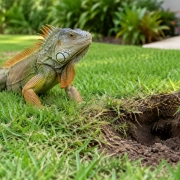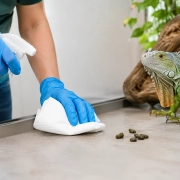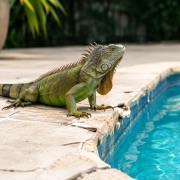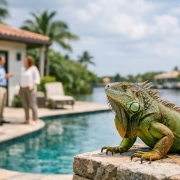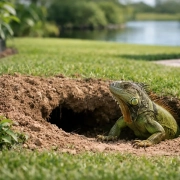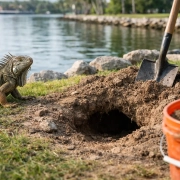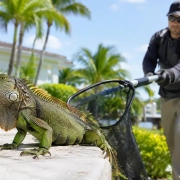
A fresh pile of sand beside a pool deck, a new hole near the seawall, or iguana droppings on a patio can look like a small nuisance at first. It usually is not. Iguana control is property protection work, especially when invasive reptiles are returning to the same food source, shoreline, roofline, or landscaped area day after day.
Green iguanas are established throughout South Florida, and they do not stay in one place once they find favorable conditions. They climb, dig, feed, and leave waste wherever the property gives them cover and access. Waiting for the problem to become obvious can turn a manageable removal job into damaged landscaping, compromised soil, unsanitary guest areas, or expensive repair work.
Iguana Control Starts With the Damage You Can See
Iguanas are strong climbers and persistent burrowers. A single animal on a fence may be annoying, but repeated activity around the ground is where the bigger property risks begin. Females can dig burrows in loose soil near seawalls, retaining areas, foundations, walkways, pool decks, and canal banks. Those burrows can weaken soil support over time, especially after heavy rain or irrigation.
On waterfront property, this matters even more. A hole near a seawall is not just an eyesore. Burrowing can contribute to soil loss behind the wall and create conditions that need prompt attention. The same problem can develop along driveways, paver areas, landscaped slopes, and utility zones where the ground must stay stable.
Iguanas also chew or damage ornamental plants, vegetables, flowers, and low-growing landscaping. Their droppings collect on docks, patios, pool areas, roofs, walkways, and outdoor furniture. Reptile waste can carry salmonella, so it should be treated as a sanitation concern, not simply swept aside with bare hands or washed toward drains and waterways.
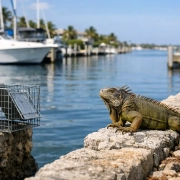
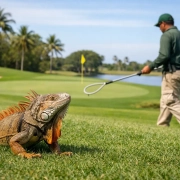
For commercial properties, the consequences can spread quickly. A marina does not need droppings on docks or customers stepping around burrows. A golf course cannot ignore damaged turf and shoreline areas. Restaurants, retail centers, apartment communities, and office properties have to protect outdoor common areas, mechanical equipment, and the customer experience. Even a damaged HVAC line or unit can mean a far more expensive problem than the original wildlife call.
Signs the Problem Is Becoming an Infestation
Seeing one iguana does not always mean a property has an infestation. South Florida has plenty of places for them to travel through. The concern rises when the same areas show fresh activity repeatedly or when several animals are using the property at once.
Look for newly disturbed soil, round or oval openings near hardscape and banks, fresh droppings in the same locations, chewed foliage, claw marks, and iguanas regularly sunning on roofs, docks, seawalls, or pool equipment. You may also notice juveniles in shrubs or adults using trees as a route to roofs and upper ledges.
The timing matters. Iguanas are more visible when conditions are warm and sunny, but a quiet period does not mean the issue is gone. If a burrow remains active or a food source stays available, the property can keep attracting new animals. Removal and prevention work best when handled before nesting activity and structural damage have time to build.
Burrows Need More Than a Quick Fill
Filling a hole without confirming it is inactive is a common mistake. If an iguana is still using the burrow, it may dig out again or create another opening nearby. In some situations, there may be eggs or more extensive tunneling than what is visible from the surface.
A proper response starts with assessing activity, removing the animal through lawful, humane methods, and then addressing the access point or damaged area. The right repair depends on where the burrow is located. Soil near a seawall, for example, deserves a different level of attention than a shallow hole in a planting bed.
Why DIY Iguana Control Often Falls Short
Homeowners and property managers understandably try to solve the problem quickly. They may chase iguanas away, hose down droppings, fill holes, or use store-bought repellents. Those steps can provide a short break, but they rarely solve repeat activity when the property still offers shelter, food, and travel routes.
Iguanas can scratch, bite, whip with their tails, and carry bacteria on their bodies and in their waste. Handling one without the right equipment is not worth the risk. Trying to catch an animal near a pool, dock, canal edge, roof, or electrical equipment also creates an unnecessary safety issue.
There is a legal side as well. Wildlife removal in Florida needs to be done with an understanding of current rules and approved methods. Property owners should not have to guess whether a trap, handling method, or relocation decision is allowed. Professional iguana removal takes that burden off the customer while keeping the work focused on the property conditions causing the repeat problem.
Repellents and visual deterrents have limits. A plastic predator, motion device, or scent product may disturb an iguana briefly, but animals accustomed to the area often return. These products are best viewed as secondary tools after removal, not as a substitute for targeted control.
What Professional Iguana Control Should Include
Good iguana control is not a gimmick and it is not a one-size-fits-all visit. A residential pool area, a waterfront estate, a condominium community, and a marina all present different access points and risks. The service should start with a clear look at where iguanas are feeding, climbing, nesting, and hiding.
From there, trained professionals can use appropriate removal methods for the site while protecting people, pets, landscaping, and daily operations. The goal is to address active animals, not just react to the one visible on a wall. On larger properties, that may mean concentrating efforts around docks, retention areas, equipment pads, roof access routes, landscape beds, and shoreline zones.
After removal, prevention makes the next difference. This can include identifying vegetation that attracts frequent feeding, reducing easy shelter around dense ground cover, securing access around vulnerable equipment, and monitoring known burrow areas. It does not mean stripping a property bare. It means making practical adjustments where repeated activity is causing damage.
Florida Iguana Ops approaches the work as a local property-protection service: show up on time, assess the real issue, remove the nuisance safely, and explain what needs attention next. Licensed and insured service matters when removal is happening around valuable homes, commercial grounds, pools, docks, and infrastructure.
Removal Frequency Depends on the Property
Some properties need a targeted visit for a specific active problem. Others benefit from ongoing service because they sit on a canal, border open land, have extensive landscaping, or manage a large outdoor footprint. There is no honest promise that a single visit will stop every iguana from passing through South Florida.
What professional control can do is reduce active pressure on the property, remove problem animals, identify recurring conditions, and help prevent a small issue from becoming structural damage. For a homeowner, that may protect a pool deck and garden. For a facilities manager, it can help avoid complaints, sanitation concerns, and disruptive repairs.
Protect the Areas Iguanas Target First
If you are seeing iguanas regularly, focus attention on the places where damage is most costly: seawalls and canal banks, pool decks, foundations, walkways, landscape beds, rooflines, docks, HVAC equipment, and outdoor guest areas. Photograph fresh burrows or damage before anyone fills or disturbs them. That record can help show whether activity is repeating and where it is spreading.
Keep pets and children away from droppings and active burrow areas. Use gloves for cleanup and wash hands thoroughly afterward. If a burrow is near a seawall, foundation, or hardscape that appears to be settling, treat it as a priority rather than a weekend chore.
The fastest way to lose control of an iguana problem is to wait until the damage is impossible to ignore. Address fresh activity early, protect the ground and structures that matter most, and get qualified help when the animals keep coming back.