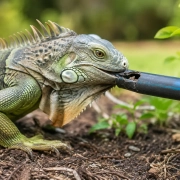
An iguana on a fence line may look like a minor maintenance issue. A row of fresh burrows along a seawall, droppings outside a restaurant entrance, or reptiles gathering around rooftop equipment is different. Knowing when businesses need wildlife professionals can prevent a nuisance animal problem from turning into damaged infrastructure, sanitation complaints, lost time, and expensive repairs.
For South Florida property owners and managers, invasive iguanas are not a problem to put off until the next landscaping visit. They dig, climb, nest, leave waste in high-traffic areas, and return to places that provide food, cover, warmth, and easy access to water. The right response depends on the property, the extent of activity, and where the animals are causing trouble. But when commercial assets, guests, employees, or structural areas are involved, professional removal is usually the practical call.
When Businesses Need Wildlife Professionals Most
A business should bring in trained wildlife professionals when the issue has moved beyond a single animal passing through the property. Repeated sightings, active burrows, visible damage, waste buildup, and animals in restricted areas are all signs that the property needs more than a quick cleanup.
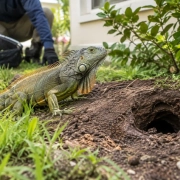
The biggest concern is not always what is visible. Iguanas can create problems below ground before anyone sees a major collapse or crack. Their burrows may undermine soil around seawalls, walkways, patios, driveways, pool decks, foundations, and canal-side structures. A manager may first notice a soft spot, settling pavers, loose edge along a retaining area, or a hole near the water. By that point, the digging may have been going on for weeks or longer.
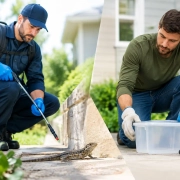
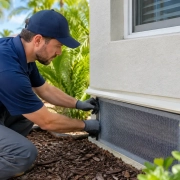
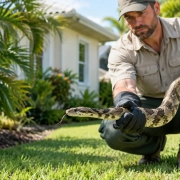
Wildlife professionals are also needed when a business cannot safely or legally handle the situation on its own. Employees should not be asked to catch reptiles, investigate deep burrows, work near water edges, or climb around rooflines and mechanical equipment. That creates injury risk, liability concerns, and an uneven result. A trained, licensed, and insured provider can assess the site, remove the animals properly, and explain where conditions are encouraging repeat activity.
Damage That Makes Waiting a Costly Choice
Commercial properties have more to lose than a few damaged plants. Iguanas can affect operations, appearance, and long-term maintenance budgets at the same time.
Seawalls, canals, and marina areas
Waterfront properties are especially vulnerable. Iguanas burrow into banks and around seawall systems because the soil is often easy to dig and the water provides a reliable habitat. Those tunnels can weaken surrounding ground and contribute to erosion. At a marina, condo community, hotel, or waterfront restaurant, an ignored burrow can become a safety concern near docks, walkways, utility lines, or retaining structures.
Seawall repair is not a small bill. When active animal burrowing is part of the problem, removal needs to happen before repairs are made. Otherwise, the property may pay to restore an area only to have the same wildlife activity start again.
Pools, decks, landscaping, and guest areas
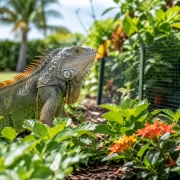
Iguanas damage landscaping by feeding on plants, digging into beds, and leaving droppings where customers, residents, and staff spend time. On golf courses, they may affect landscaped common areas, cart paths, water features, and course presentation. At apartment communities and retail centers, droppings around benches, sidewalks, pool areas, and building entrances make the property look neglected.
Appearance matters, but sanitation matters more. Iguana waste can carry salmonella and other bacteria. That is a serious concern around outdoor dining, pool decks, playground-adjacent spaces, break areas, and entrances. Maintenance staff can clean the mess, but cleaning does not stop the animals from returning.
HVAC and equipment areas
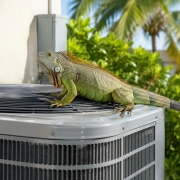
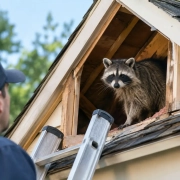
Rooftop and ground-level equipment zones can become warm shelters for nuisance wildlife. Iguanas may gather near HVAC units, piping, electrical areas, and other mechanical systems. Their presence can create mess, access issues for technicians, and damage risk around equipment that keeps a business operating.
A commercial HVAC loss can be far more expensive than the removal service that could have helped prevent it. If animals are regularly seen around units, enclosures, rooftops, or utility yards, treat it as a property-protection issue, not just a wildlife sighting.
Signs the Problem Is Becoming an Operational Issue
Not every wildlife sighting requires an immediate service call. A single iguana crossing a parking lot may not indicate an established problem. The situation changes when there is a pattern, damage, or exposure to people and property.
Call for a professional assessment when you see repeated iguanas in the same area, burrows near structures, soil washing out around canal edges, droppings in customer-facing spaces, damaged plants, or reptiles entering areas where staff work. Fast action also makes sense when animals are showing up around food service, pools, schools, marinas, HVAC equipment, loading zones, or heavily traveled walkways.
The same applies when your team is spending too much time dealing with the issue. If maintenance crews are repeatedly filling holes, cleaning waste, replacing landscaping, or trying to chase animals away, the property is already paying for the problem. Those efforts may provide a short-term improvement, but they rarely address the source of recurring activity.
Why DIY Removal Is a Bad Fit for Most Businesses
Businesses often try the simplest response first: block a hole, remove food sources, clean up droppings, or ask a staff member to scare the animals away. Good site maintenance helps, but it is not always enough. Iguanas are persistent, and a property with suitable shelter, food, water, or nesting areas can continue attracting them.
There is also a difference between making a site less inviting and physically removing established animals. Burrows must be evaluated carefully. Closing an active burrow without addressing the animal activity can lead to more digging nearby. Working around seawalls, slopes, dense landscaping, rooflines, or mechanical areas also requires the right approach to avoid creating further damage.
For a business, DIY work creates another problem: accountability. If an employee gets hurt, mishandles an animal, or damages a property feature while trying to solve the issue, the cost can outweigh any perceived savings. A professional service gives decision-makers a clearer process, safer handling, and a documented response to an active property concern.
What a Professional Wildlife Visit Should Accomplish
A legitimate wildlife-control provider should do more than show up, remove a visible animal, and leave. The first step should be a clear assessment of where the activity is happening, what is attracting it, and which assets are at risk. On a commercial property, that might include canal edges, landscaping, storage zones, roof access points, pool equipment, parking areas, dock facilities, and exterior mechanical systems.
The removal plan should fit the property. A golf course, marina, restaurant patio, office complex, and condo community do not have the same traffic patterns or risk points. Timing may matter. Access may need to be coordinated around guests, staff, vendors, residents, or scheduled maintenance.
Communication matters just as much. Property managers need straightforward answers about the scope of the issue, expected work, pricing, and practical next steps. No gimmicks, no runaround. Florida Iguana Ops provides local, licensed and insured removal with the goal of protecting the property, not selling a vague promise.
Prevention Starts After Removal
Removal is the immediate step when iguanas are actively damaging or occupying a business property. Prevention helps reduce the chances of the next problem. That can mean removing accessible food sources, improving waste handling, repairing vulnerable landscape areas, reducing hiding places where practical, and monitoring locations with prior burrows.
Still, prevention is not a guarantee. South Florida’s warm climate and abundant water make many commercial properties attractive to invasive reptiles. A waterfront site may need ongoing attention that an inland office park does not. A property with heavy vegetation may have different challenges than one with large paved areas. The point is to match the plan to the site instead of assuming one fix works everywhere.
If fresh holes appear after removal, if droppings return, or if new animals begin using the same area, act early. Quick follow-up is usually easier and less expensive than waiting for more digging, larger populations, or visible structural damage.
Protect the Property Before the Problem Spreads
Wildlife problems do not stay contained just because they start in a back corner of the property. An iguana burrow near a seawall can become a repair concern. Droppings near a patio can become a sanitation complaint. Activity around equipment can become an operations issue.
When the animals are recurring, digging, damaging assets, or creating exposure for people, bring in professionals who can handle the work safely and directly. The best time to protect a commercial property is before a small wildlife problem becomes the next costly repair.